
Boat Storage Ideas: Why Permeable Pavers Make the Best Storage Surface
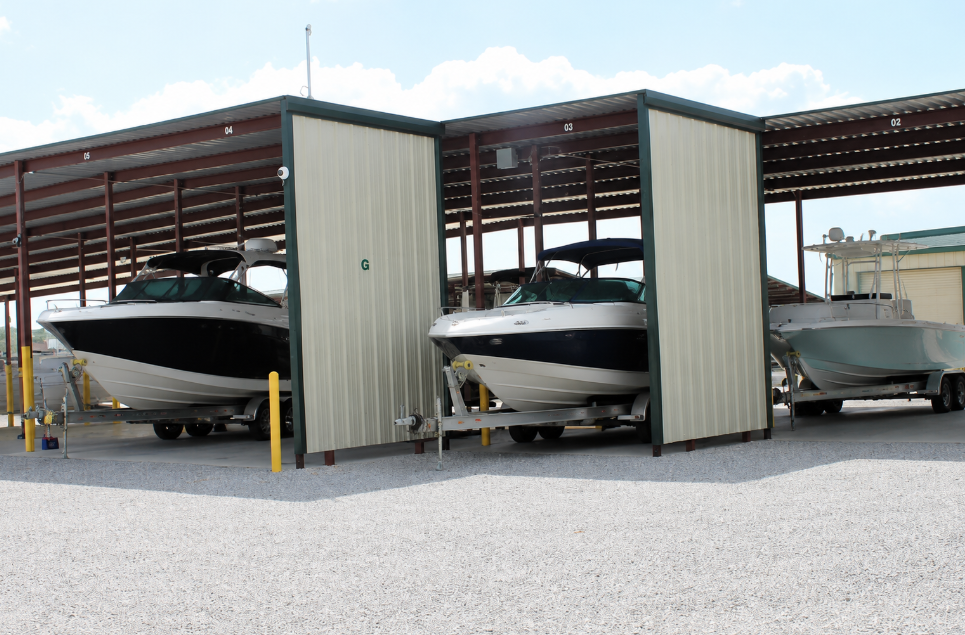
Wet ground does not stay flat under a loaded boat trailer. Standing water, displaced gravel, and unstable footing make access harder and can leave the surrounding property looking neglected. The best boat storage ideas begin with a surface that can support the trailer, manage rainfall, and remain usable through changing weather.
Why Outdoor Boat Storage Surfaces Fail
Outdoor storage failures usually begin with weak ground, repeated wheel loads, or water that has nowhere to go.
Wet Ground And Loose Aggregate
A cover, canopy, or enclosure protects a boat from direct weather exposure. It does not prevent the trailer from sinking into wet soil or creating ruts along a repeated backing path. Outdoor boat storage places concentrated weight on a relatively small area, so weak soil and poorly prepared surfaces deteriorate faster along repeated wheel paths.
Grass and bare soil lose stability when saturated, allowing trailer tires to press deep tracks into the ground. Loose gravel provides a cleaner surface, although braking, turning, and backing can push unconfined aggregate out of the tire paths. The resulting depressions collect water and contribute to erosion, washout, and repeated repairs.
Conventional Asphalt And Concrete
Conventional asphalt and concrete provide firm parking surfaces. Rainfall must flow across them toward a planned drainage point, and low spots can hold water around the trailer. Settlement, cracking, failed edges, and drainage problems may require localized repair or replacement after the pavement is installed. These surfaces are also considered impermeable, carrying pollutants collected by rain to the water.
How To Compare Boat Storage Ideas By Surface
A quality storage surface must carry the trailer load, provide dependable traction, handle repeated vehicle movement, and control water. Cost matters, but the lowest initial price may lead to more grading, resurfacing, or drainage work later.
| Surface | Drainage | Trailer Stability | Durability Concerns | Maintenance | Long-Term Fit |
|---|---|---|---|---|---|
| Grass | Depends heavily on soil and slope | Limited when wet | Mud, ruts, dead turf, erosion | Reseeding, filling ruts, mowing | Occasional use on firm, well-drained ground |
| Gravel | Allows some water movement | Fair with a prepared base | Migration, washout, tire channels | Grading, replenishment, edge cleanup | Budget-conscious pads with light to moderate use |
| Conventional asphalt | Sends water across the surface | Firm when properly installed | Cracking, softening, edge failure | Crack repair, patching, drainage upkeep | Conventional paved parking with planned runoff control |
| Conventional concrete | Sends water across the surface | Rigid and stable | Cracking, settlement, joint damage | Cleaning, joint inspection, localized repairs | Permanent pads where impervious cover is acceptable |
| Permeable pavers | Allows water into the pavement system | Stable when the full assembly is designed correctly | Sediment buildup, infill loss, edge problems | Debris removal, infill and edge checks | Residential and commercial pads needing drainage and stabilization |
For sites exposed to regular trailer traffic and rainfall, properly installed permeable pavers offer a strong balance of stability, drainage, and manageable upkeep. That is why boat storage ideas should start below the surface, with the soil, drainage, and trailer access considered from the outset. Each factor influences how the pad performs after years of rain and repeated vehicle movement.
Why Permeable Pavers Work For Boat Storage
A permeable storage surface must drain rainfall without giving up the support needed for a loaded trailer.
How The Pavement Assembly Supports The Load
Permeable pavers for boat storage are one form of permeable pavement. TRUEGRID uses an open cellular grid filled with grass or gravel. The open surface allows rainwater to enter the aggregate layers below rather than remaining entirely on top of the pad.
A properly designed TRUEGRID system can support a boat, trailer, and tow vehicle. The specified paver, infill, aggregate base, and prepared subgrade carry the load together.
How The Grid Stabilizes The Surface
The grid holds the infill in place so tires are less likely to push material aside during backing and turning. Its open structure also preserves a path for water.
The confined infill creates a more uniform driving surface than mud or loose gravel that shifts beneath the tow vehicle. This can improve traction when a driver brakes, turns, or realigns the trailer in wet conditions. Proper installation can limit common puddling and gravel migration while creating a cleaner transition between the driveway, storage pad, and surrounding landscape.
Where Rainfall Goes
A stable surface solves the immediate parking problem. Long-term boat storage ideas must answer the next question: where does the water go? A permeable design limits the amount of impervious pavement added to the property.
Allowing rainfall to enter the pavement system can reduce runoff and erosion when the underlying soil and drainage design can receive the water. Permeability still has limits. Slow-draining soil, steep slopes, incoming runoff, or a high water table may require additional aggregate storage, an underdrain, or a planned outlet. A permeable surface cannot correct poor grading without a drainage strategy beneath and around it.
How To Design A Durable Boat Storage Pad
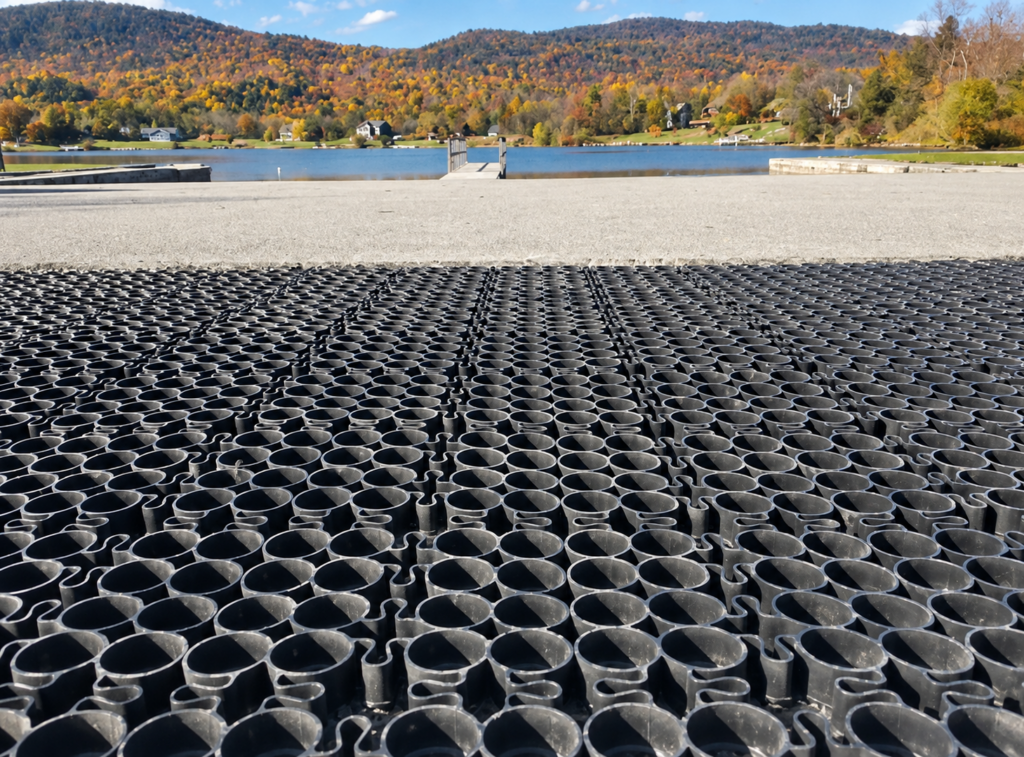
Practical boat storage ideas coordinate drainage, the trailer path, and the boat storage pad so the tow vehicle stays on the stabilized surface.
Prepare The Site From The Ground Up
Remove topsoil, roots, and other unsuitable organic material from the pad area. The exposed subgrade is the soil supporting the pavement system. The aggregate base is the compacted stone layer below the pavers.
Its depth and composition should match the soil, expected loads, product requirements, and water-management plan. Residential and commercial projects often require different base sections because traffic frequency and loading differ. Grade the surrounding site so runoff does not continually carry soil and sediment onto the new surface. Water from roofs, slopes, or neighboring pavement may overwhelm a pad designed only for the rain falling directly on it.
Size The Pad For The Complete Trailer Envelope
Measure the boat and trailer as one stored unit. Include the trailer tongue, outboard motor, swim platform, spare tire, ladder, and any projection beyond the hull. Add space for walking, tie-downs, battery access, covers, and routine maintenance. Future boat replacement should also be considered when the property can accommodate a slightly larger pad.
A stable, well-drained pad keeps the trailer tires, jack, and access area out of persistent mud and standing water. This helps reduce dirt, splash, and unstable footing around the stored boat without replacing a cover, winterization, or routine maintenance.
Plan The Approach And Backing Path
The approach matters as much as the parking area. Gates, fences, trees, walls, and neighboring vehicles can limit the angle needed to align the trailer before backing. The same principles used in large-vehicle storage layout apply to boat trailers: the driver needs enough aisle width and turning space to enter, back, and leave without cutting across weak ground.
Use A Practical Planning Checklist
Before construction begins:
- Measure the complete boat and trailer.
- Map the towing, turning, and backing path.
- Identify slopes, low spots, and incoming runoff.
- Evaluate the subgrade and base requirements.
- Select the surface and infill for the expected traffic.
- Plan edges, transitions, and future maintenance access.
Cover those six points before construction to reduce the risk of repeating the problems that prompted the project.
Choose Grass Or Gravel Infill By Use
Choose the infill based on how the area should look, how often trailers will use it, and how much upkeep is realistic.
Grass-Filled Pavers
Grass-filled pavers can blend a residential storage area into the surrounding landscape. They work best where sunlight, irrigation, climate, and traffic allow healthy turf to grow. Grass may require mowing, watering, reseeding, and recovery time after heavy use.
Gravel-Filled Pavers
Gravel-filled pavers create a consistently drivable surface and generally suit frequent trailer movement, especially where healthy turf would be difficult to maintain. Gravel needs occasional inspection for displaced or depleted infill, particularly near edges and turning points.
Match The System To Residential Or Commercial Traffic
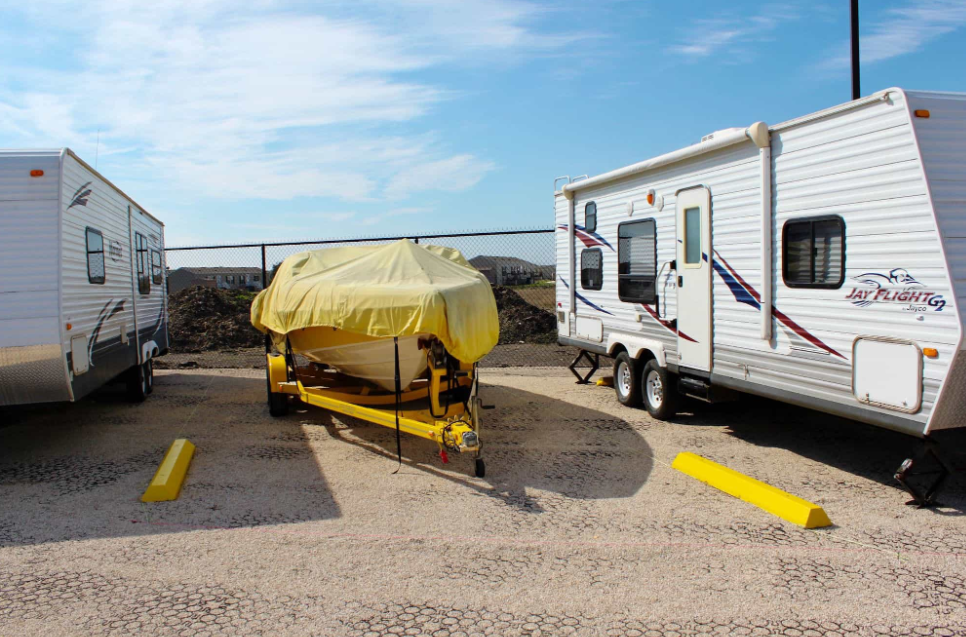
The paver and base section should match how the storage area will be used.
Residential And Lighter-Duty Applications
A homeowner who moves one boat several times a month places different demands on a surface than a facility serving multiple trailers each day. Tow-vehicle weight, turning movements, and the size of the paved area should guide system selection. TRUEGRID PRO LITE is designed for suitable residential and lighter-duty vehicle applications.
Marinas And Commercial Storage Areas
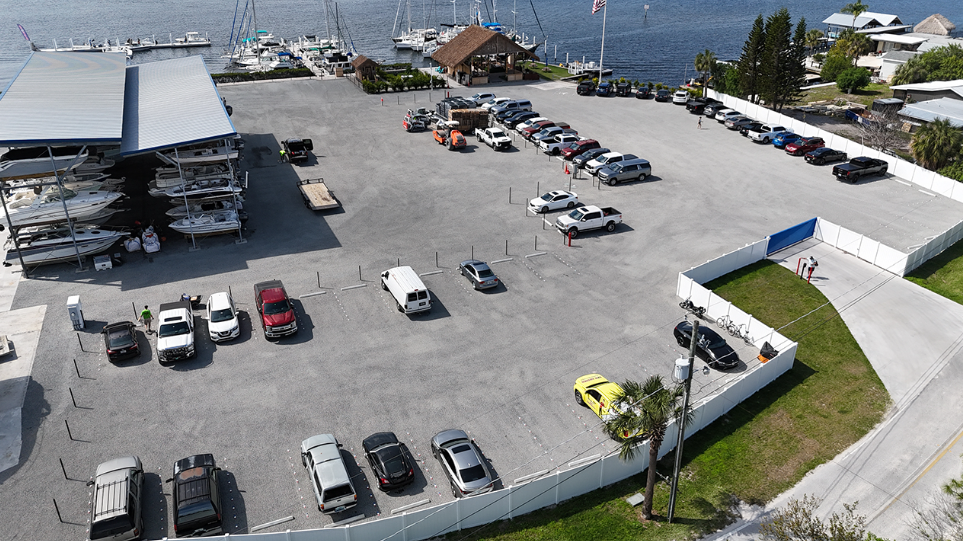
TRUEGRID PRO PLUS is intended for heavier commercial and industrial traffic, including storage lots and other large-vehicle areas. The paver must still be installed over a base designed for the site and expected loading. Marinas and storage facilities also need wider aisles, defined travel paths, and drainage planning across the full property.
Stable parking and drainage near boat ramps can reduce mud, loose aggregate, and surface deterioration along heavily used access routes. Permeable pavers for boat storage are especially useful when an operator wants to stabilize a large gravel or grass area without covering the entire site with an impervious surface. The system still has to match the site, and product selection, base preparation, and maintenance all affect performance.
Maintain The Surface And Drainage Path
Permeable storage surfaces still need routine care. Leaves, soil, mulch, and sediment can collect on the surface and reduce the rate at which water enters the system. Inspect the boat storage pad after major storms and during routine property maintenance. Replace missing infill, correct edge movement, remove accumulated debris, and watch for runoff washing material onto the surface.
Commercial sites may require more frequent inspection because traffic and sediment loads may be higher. Keeping the cells open and the infill level helps the pad drain and remain stable under trailer traffic. That routine care is what keeps permeable paving practical among long-term boat storage ideas.
Build A Better Storage Surface With TRUEGRID
TRUEGRID permeable pavers can create a stable grass- or gravel-filled surface for residential pads, marina parking, and commercial storage areas. The appropriate system depends on the site, drainage conditions, and expected traffic. Contact us today for more information.
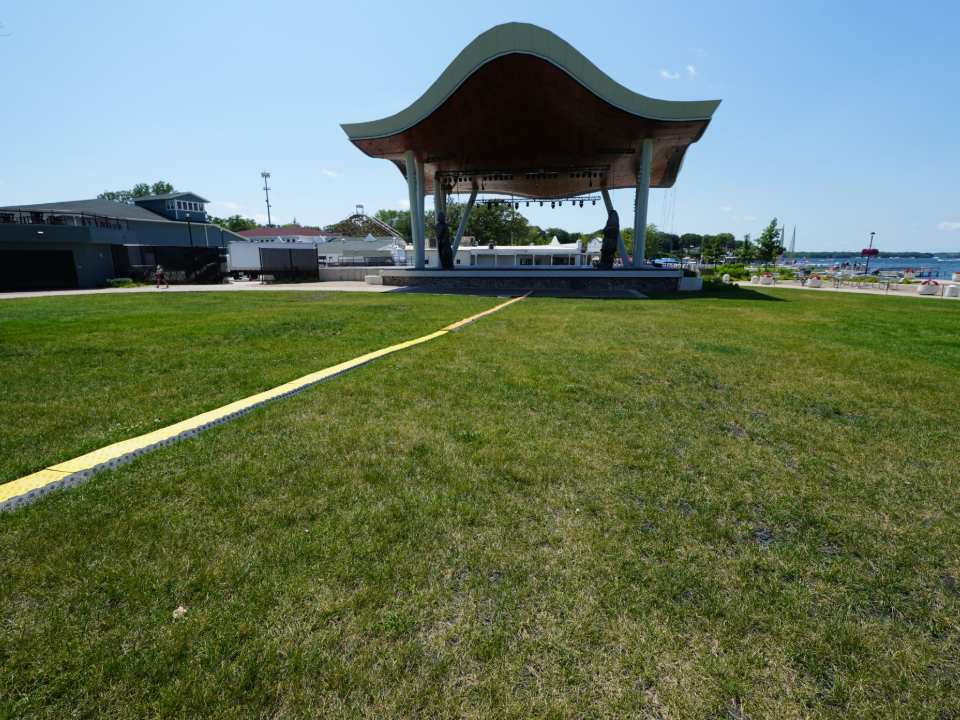
A walking route across healthy turf can become a bare strip after one season of concentrated use. Once the grass thins, the same path begins collecting mud, developing uneven spots, and requiring repairs that do not change where people walk. Effective grass pedestrian area protection addresses the traffic pattern, the soil beneath it, and the type of surface the site can support.
Why Repeated Foot Traffic Damages Grass
Repeated foot traffic damages grass by crushing the blades, stressing the crowns, and applying pressure to the roots and soil below.
Compaction Weakens Turf Recovery
Damage becomes more severe during wet weather because saturated soil compacts and shifts more easily. Soil compaction presses soil particles closer together, reducing the open space available for air, water movement, and root growth.
Turf in compacted soil has a harder time recovering, so thin areas often become bare even after reseeding.
Bare Soil Leads to Mud and Erosion
Once the protective turf cover disappears, rainfall strikes exposed soil directly. Continued traffic moves the wet material along the path, creating mud, shallow ruts, and erosion.
Lasting repairs must address the traffic pattern instead of repeatedly restoring turf along the same route.
Where Grass Pedestrian Area Protection Is Needed
Pedestrian grass protection may involve a temporary covering for short-term use or permanent reinforcement along a path people use every day.
Public, Institutional, and Commercial Landscapes
The path may be planned, or it may form as a shortcut between destinations. Municipal parks often develop worn routes near playgrounds, fields, picnic areas, parking lots, and gathering spaces.
Protecting high-traffic park grass can reduce the cycle of bare patches, mud, and repeated repair where use cannot realistically be redirected. Schools and campuses face similar damage along pedestrian pathways between buildings, beside athletic fields, and near drop-off areas. The same concentrated traffic develops around playgrounds, golf courses, public trails, commercial landscapes, fairgrounds, and event venues.
Residential Lawns
Residential properties experience the same pattern on a smaller scale. A side yard connecting the driveway to the backyard can become muddy after rain when family members, pets, service workers, or equipment follow the same narrow path.
Comparing Common Grass Protection Solutions
Grass pedestrian area protection can be temporary or permanent. The right surface depends on how often people use the path, how the site drains, what the area should look like, and how much maintenance the owner can manage. Temporary grass protection mats are removable panels or coverings used during events and other short periods of heavy foot traffic.
| Solution | Best Use | Appearance and Drainage | Maintenance and Environmental Tradeoff | Main Limitation |
|---|---|---|---|---|
| Temporary grass protection mats | Festivals, ceremonies, seasonal events, and short periods of concentrated traffic | Cover the lawn temporarily; drainage varies by product | Require placement, removal, cleaning, storage, and eventual replacement | A grass protection mat is not usually intended to create a permanent daily route |
| Gravel paths | Informal trails, garden paths, and lightly engineered walking routes | Blend into many landscapes and can drain when properly installed | May require edging, replenishment, grading, and weed control | Gravel can migrate, rut, or become difficult for some users |
| Concrete sidewalks | Formal circulation, high pedestrian volume, and routes needing a consistent hard surface | Create a predictable route but replace turf with an impervious strip | Durable, but creates permanent hardscape and directs water toward adjacent drainage areas | Installation is permanent, and drainage must be managed around the walkway |
| Grass reinforcement grids | Recurring traffic where a green, permeable surface is desired | Allow turf to grow through an open structure | Preserve living turf and permeability, but still require material, installation, and ongoing turf care | Excessive traffic or use may expose grass blades to wear. Protection is mainly for the plant roots |
Gravel can define an informal path, and concrete may be the better choice for formal circulation. A permanent grass reinforcement grid remains in place to stabilize a path exposed to recurring traffic. A reinforced grass surface keeps the area predominantly green when the turf, soil, drainage, and maintenance program can support it.
How Grass Reinforcement Grids Work
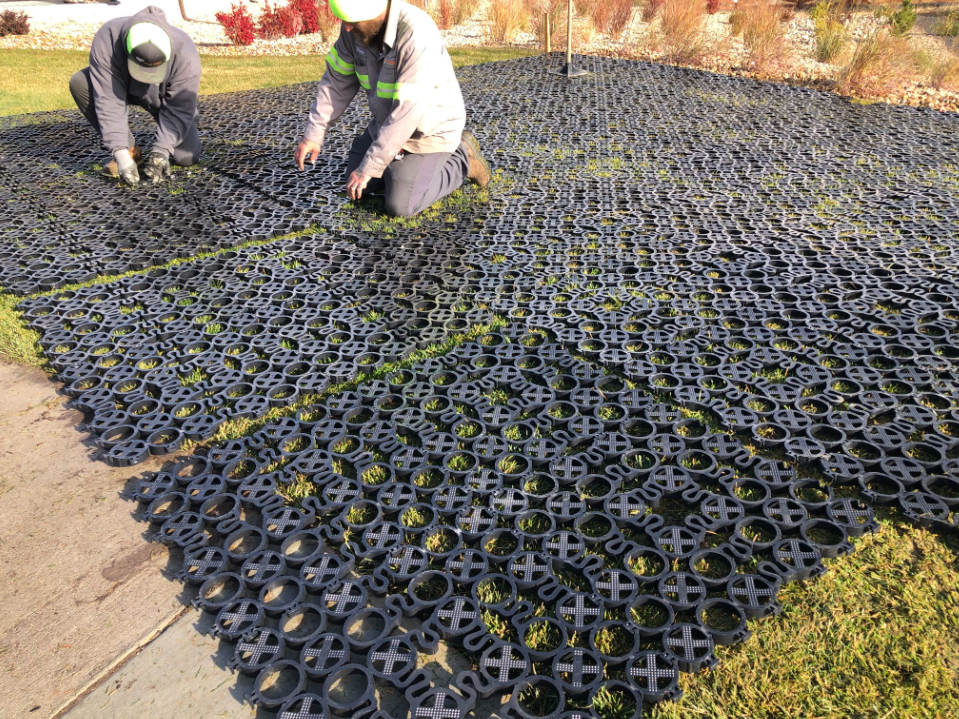
A grass reinforcement grid creates a structural framework within the upper surface.
Pressure Distribution Reduces Surface Damage
The grid cells spread foot pressure across a broader area and reinforce the upper soil layer, reducing localized displacement and rut formation. This structure can help the walking surface remain more even and limit concentrated pressure on the root zone.
By reducing concentrated wear, reinforcement may reduce the need for repeated reseeding, rut repair, and soil replacement. Normal mowing, irrigation, inspection, and other turf care are still required.
Grass Growth, Permeability, and Site Fit
Open cells leave space for grass to grow through the system, provided the site can sustain continued turf growth. The open structure also allows rainfall to pass through the reinforced surface. Those openings can support site stormwater management and permeable erosion control by helping keep soil in place and reducing exposed areas where runoff can carry loose material away. The underlying soil and base still determine how effectively water infiltrates.
A grid is a good fit only when the traffic, drainage, turf conditions, and walking-surface requirements all line up.
Choosing Grass Protection for Pedestrian Pathways
Selecting grass pedestrian area protection starts with how often people use the path and what is happening in the soil below it.
Match the System to Traffic Volume
Occasional use may call for simple turf repair, and short periods of heavy event traffic may justify removable mats. Daily traffic usually needs a permanent path.
Grass reinforcement can preserve a green route. Heavy formal circulation may require an engineered hard surface.
Evaluate Drainage and Turf Conditions
Traffic damage and drainage failure often appear together, but they are not the same problem. A worn path can become muddy because the grass has disappeared. A low area can remain muddy because water has nowhere to go.
Before choosing a surface, determine whether the site needs grading, drainage improvements, soil stabilization, or base preparation. A system intended to stabilize muddy grass can reinforce the upper surface, but persistent standing water requires a broader site solution. Deep shade, poor irrigation, unsuitable soil, or weak turf selection can prevent grass from filling in after installation.
Account for Accessibility and Maintenance
Reinforced grass is not automatically an accessible route. The finished surface must still be evaluated for firmness, stability, slope, openings, changes in level, edge transitions, and the standards that apply to the project. A well-designed and maintained reinforced surface can reduce exposed mud, shallow ruts, and displaced soil, but it does not eliminate every slip, trip, or accessibility concern.
Concrete or another engineered hard surface may be the better choice when the path must provide reliable access in all expected conditions. Reinforced turf still requires mowing, irrigation, inspection, and occasional repair, so a practical site review should answer six questions:
- Is the traffic temporary, occasional, or recurring?
- Must the path remain visibly green?
- Is the soil stable and adequately drained?
- Does the path need to meet formal accessibility requirements?
- Can healthy turf grow under the available light and irrigation conditions?
- What level of maintenance can the owner provide?
Where TRUEGRID ROOT Fits
TRUEGRID ROOT may support grass pedestrian area protection where turf health and drainage can sustain a permanent reinforced surface, including trails, event areas, fairgrounds, and other high-traffic grass locations. The system installs over existing grass and stabilizes the upper turf surface without excavation. Its open configuration keeps the grass visible and helps preserve a green, permeable surface. In those conditions, the grid spreads foot pressure across the reinforced area to reduce rutting and help limit localized soil compaction.
Sites with unstable soil, severe drainage problems, very heavy traffic, or formal accessibility requirements may need a different surface or a system installed over an excavated, prepared base.
While most turf grasses can support moderate foot traffic without showing wear, vehicle use and excessive foot traffic may degrade the grass blades themselves. Recovery time may be needed to get area fully covered with grass again. However, ROOT and other grass-root protection mat such as PRO LITE and PRO PLUS, will keep the grass roots from compaction and the plant will recover.
Protect High-Traffic Turf With TRUEGRID ROOT

Talk with the TRUEGRID team about how the path is used, why the grass is failing, and what type of reinforcement may fit the site. ROOT can reinforce frequently used grass areas without replacing the route with a conventional hard surface. Contact us today for more information.
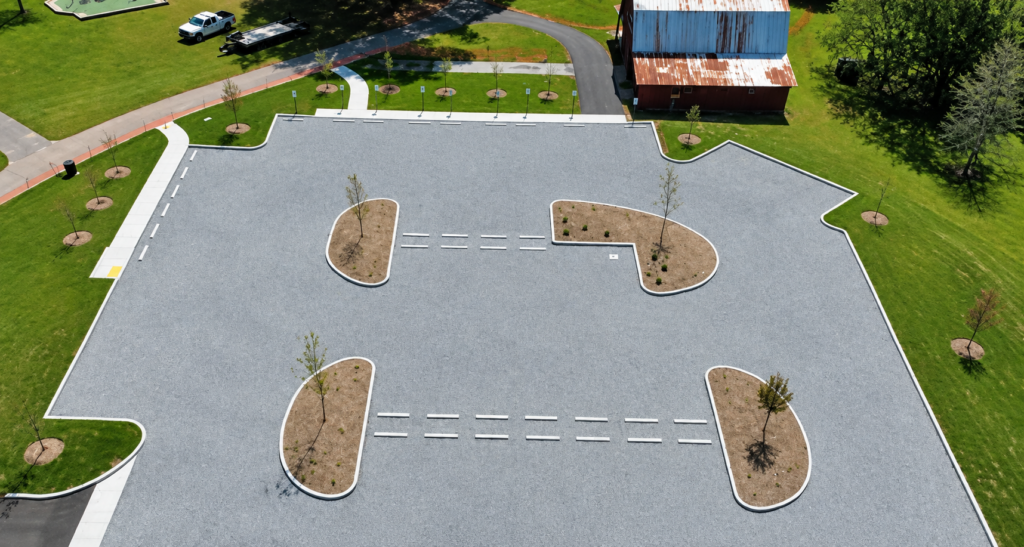
Municipal pavement decisions can lock a city into decades of drainage costs. When surface design, stormwater storage, and maintenance are evaluated separately, public agencies may use more land and capital than a project requires. Permeable pavement for municipalities gives engineers and public works teams a way to combine durable access with runoff control, groundwater recharge where conditions allow, and more efficient use of public property.
How Permeable Pavement for Municipalities Manages Stormwater
Municipal performance depends on the selected surface and the engineered pavement section beneath it.
Permeable Pavement Types and Components
Permeable pavement routes rainfall through an open surface into an engineered aggregate section. The term includes porous asphalt, pervious concrete, permeable interlocking concrete pavers, and plastic grid paving, each with different structural, installation, accessibility, and maintenance characteristics.
Surface materials, infill, base depth, and subgrade support affect structural performance. Liners, drains, outlets, and reservoir capacity determine how the pavement stores and releases water.
Infiltration, Detention, and Overflow
Where native soil can accept the design volume, an infiltrating system allows stored water to enter the ground. Lined and underdrained systems can still provide detention and controlled release when groundwater, contamination, soil conditions, or regulations limit direct infiltration.
A well-designed permeable pavement for municipalities can reduce immediate runoff by managing rainfall where it lands. Distributed storage can ease pressure on inlets, pipes, channels, and downstream low points, and a designed overflow provides a discharge route when storms exceed the system’s capacity.
How Permeable Pavement Supports Municipal Stormwater Goals
Municipal stormwater benefits depend on how the engineered system is designed, approved, and maintained.
Regulatory Coordination
Permeable paving can serve as an approved stormwater best management practice when the engineered system satisfies applicable municipal requirements. Those requirements may address runoff volume, peak discharge, water-quality treatment, overflow routing, inspection, and long-term maintenance.
A regulated MS4 operator may receive stormwater credit for permeable pavement under its NPDES permit. The local authority must recognize the design’s storage, treatment, and discharge functions.
Runoff, Recharge, and Water Quality
The system contributes to reducing stormwater runoff by placing temporary storage beneath a usable paved area. That storage can delay discharge and reduce peak flow, and groundwater recharge occurs when stored water can infiltrate suitable native soil. Lined systems and some underdrained systems may provide detention and treatment without returning a meaningful volume of water to the groundwater supply.
Water-quality improvement also depends on the complete pavement section. Sediment can collect near the surface, and aggregate layers may filter runoff as it moves through the system. Physical filtration and biological processes may provide additional treatment, but officials should evaluate the runoff source, soils, system design, and maintenance plan instead of relying on one universal pollutant-removal percentage.
Detention and Land-Use Efficiency
Permeable pavement may reduce separate detention requirements when the reservoir provides approved storage and release capacity. It should not be assumed that every project will eliminate a pond or conventional drainage feature.
Storing stormwater beneath a parking lot, fire lane, or event area allows one part of the site to serve two functions. That can preserve land for recreation, buildings, landscaping, or other public needs.
Where Permeable Pavement for Municipalities Fits in Public Infrastructure
Permeable pavement works best when each application is matched to its traffic, accessibility, sediment, spill, and maintenance conditions.
| Municipal Application | Primary Design Concern | Stormwater Opportunity |
|---|---|---|
| Public parking lots | Repeated loading, turning, accessibility | Large subsurface storage area |
| Alleys | Utilities, sediment, service vehicles | Runoff control where drainage space is limited |
| Maintenance yards | Heavy loads, spills, and tracked sediment | Clean parking or access zones may provide detention or infiltration |
| Parks and trails | Accessibility, bicycles, leaf debris | Infiltration near recreational land |
| Fire lanes and emergency roads | Apparatus loads, edge support, approval | Storage beneath required access |
| Sidewalks | Smoothness, slopes, transitions | Reduced runoff from pedestrian routes |
| Transit facilities | Frequent traffic, buses, snowplowing | Storage beneath parking and access areas |
| Utility access roads | Heavy equipment, concentrated loads | Stable access with infiltration or detention |
| Public event spaces | Crowds, temporary equipment, surface stability | Subsurface storage beneath flexible public space |
Parking lots are often strong candidates because their area can provide meaningful subsurface storage. Trails, sidewalks, and event spaces require closer review of opening size, infill, transitions, slope, and long-term surface condition.
What Public Works Officials Should Evaluate
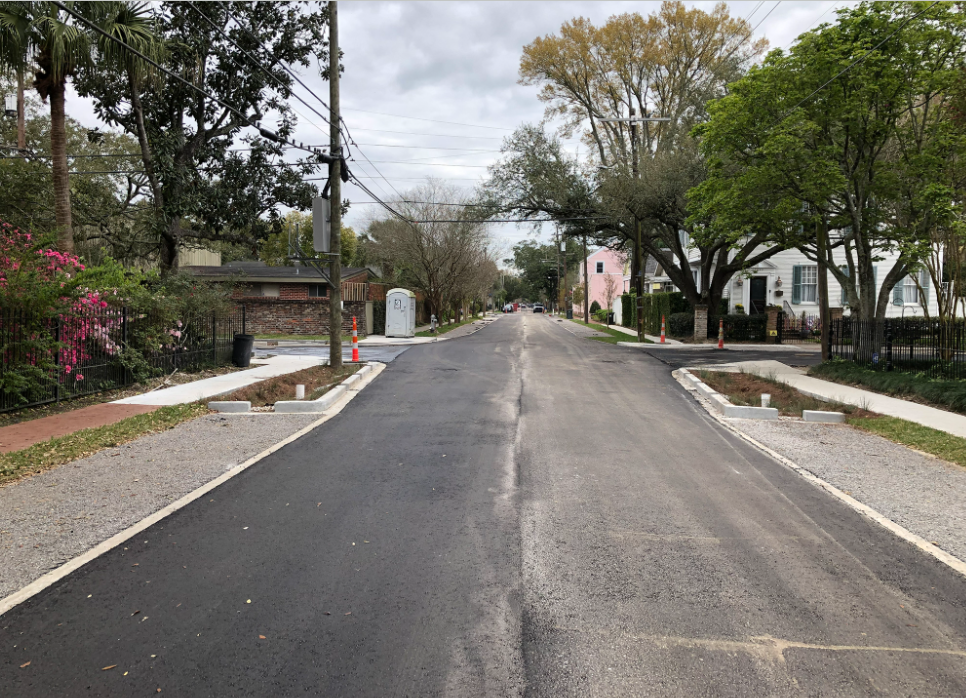
Municipal selection should begin with project loading, drainage, public use, and maintenance requirements rather than a product data sheet viewed alone.
Load Capacity and Traffic
Some permeable pavement systems can carry heavy municipal traffic when the surface, aggregate section, subgrade, edge restraint, and drainage are designed for the expected loads. The same principle applies to fire apparatus, which requires a pavement section engineered for the applicable vehicle loads and approved by the fire authority.
Axle weight and traffic frequency tell only part of the structural story. Repeated turning, braking, snowplowing, and confined movement can place additional stress on fleet yards, transit facilities, and parking areas. The City of Capitola installation reflects this type of mixed use, combining public parking with access for police, fire, and maintenance vehicles.
Durability and Localized Repair
Stable edges, aggregate confinement, adequate drainage, and correct installation protect long-term durability. Poor subgrade preparation, prolonged saturation, insufficient base support, or displaced infill can reduce stability even when the paver or grid carries a high product-level load rating.
Modular paver and grid systems may allow crews to remove and replace a localized section instead of disturbing a larger continuous pavement area. The repair area and method will vary with the selected surface, the extent of the damage, and the availability of compatible materials.
Site Hydrology and Drainage
Soil infiltration, groundwater depth, contributing drainage area, design-storm volume, and outlet capacity determine how the system should handle water. Where native soil drains slowly, the design may require an underdrain, raised outlet, liner, or controlled discharge.
A municipal stormwater management plan should establish the required storage volume, discharge route, overflow provisions, documentation requirements, and approval process before the pavement section is finalized.
Freeze-Thaw Conditions and Winter Operations
Permeable pavement can perform in freeze-thaw climates when the section drains properly and winter maintenance does not introduce clogging material. Saturated base layers, frost-sensitive soils, snow piles, and repeated sanding can reduce performance.
Snowplow procedures, edge conditions, deicing materials, and spring inspection belong in the operations plan. TRUEGRID’s Rockaway Ferry parking installation provides a transit example involving frequent public use and winter plowing.
Accessibility
Vehicle capacity does not establish pedestrian accessibility. Municipalities should evaluate opening size, fill, transitions, slope, stability, and long-term surface condition for sidewalks, trails, transit facilities, and event spaces.
The finished route must remain suitable for the people expected to use it. Surface movement, displaced infill, or poorly maintained transitions can undermine an initially accessible design.
Installation and Construction Controls
Construction quality shapes long-term structural and hydraulic performance. Subgrade disturbance, contaminated aggregate, poor compaction, missing edge restraint, incorrect infill, and construction sediment can create problems before the facility opens.
Protecting the pavement from sediment during surrounding construction is especially important. Once fine material enters the openings and aggregate layers, restoring infiltration may require more than routine cleaning.
Maintenance Must Be Planned Before Construction
Municipal permeable pavement requires inspection, sediment control, sweeping, and periodic vacuum cleaning to preserve infiltration. The schedule should reflect traffic, nearby soil, tree cover, winter practices, and measured surface performance.
Preventive maintenance begins outside the pavement. Stabilized shoulders, protected planting beds, erosion control, and limits on winter sand can keep fine material from reaching the openings. Before project acceptance, public works departments should assign responsibility, inspection frequency, cleaning equipment, corrective procedures, recordkeeping, and long-term funding.
Compare Lifecycle Cost at the System Level
A fair comparison must distinguish routine pavement maintenance from the complete cost of constructing and owning the pavement and stormwater systems.
Compare Pavement Maintenance Profiles
Asphalt may require crack repair, patching, sealing, rut correction, and resurfacing. Concrete can create costs related to joint maintenance, cracking, settlement, and slab replacement. Permeable pavement shifts part of its ownership cost toward sediment management, inspection, and periodic vacuum cleaning.
That different maintenance profile may reduce some repair expenses on suitable projects. Whether it lowers total maintenance cost depends on sediment control, inspection, cleaning, and infill or surface repairs.
Calculate the Complete Project Cost
Surface price alone excludes excavation, aggregate storage, inlets, pipes, detention land, drains, outlets, cleaning, rehabilitation, and replacement. Permeable pavement for municipalities often presents its strongest financial case when the paved area also satisfies approved stormwater-storage requirements.
A higher paving cost may remain competitive when the same area also performs a stormwater function. The comparison must use the project’s actual traffic, climate, drainage, maintenance, and rehabilitation assumptions because no pavement category is automatically the least expensive over its full service life.
How Permeable Pavement Supports Sustainability and Resilience
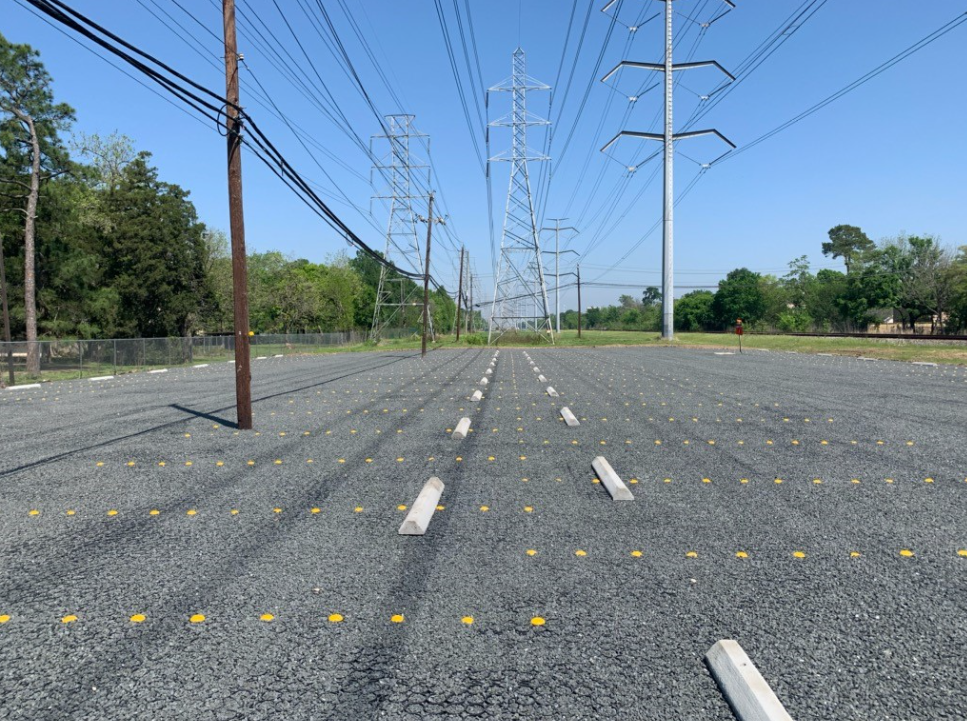
Distributing stormwater storage across parking areas, fire lanes, and other paved public sites can reduce the amount of runoff reaching the municipal drainage network at one time. That added capacity can support local flood-mitigation and resilience goals. Larger storms, drainage failures, and watershed conditions can still exceed the system’s design.
Where Permeable Pavement May Need Modification
Direct infiltration is not appropriate for every public site. Fueling areas, chemical-handling zones, contaminated soils, high groundwater, uncontrolled sediment, or significant spill risk may require a liner, pretreatment, controlled drainage, or an impervious surface. Maintenance yards deserve particular attention, although permeable paving may still fit clean parking or access zones when runoff from higher-risk operations is managed separately.
Some roadway uses may also exceed the selected system’s practical range. High speeds, intense repeated loading, unusual braking forces, or limited maintenance access can make another pavement type more appropriate.
Why Heavy-Duty Grid Systems Fit Some Municipal Projects
Once the project team confirms that the site can support permeable paving, officials can compare the available surface systems. Heavy-duty plastic grids are one option for confining aggregate, maintaining openings for rainfall, and allowing localized repair.
TRUEGRID PRO PLUS is designed for commercial and heavy-use applications, and the company publishes technical information for loading, fire lanes, installation, and maintenance. PRO PLUS is manufactured from recycled HDPE, but municipalities should still evaluate the material alongside the system’s structural and stormwater performance. Product documentation should show that the proposed grid, base section, installation method, and maintenance plan fit the conditions at the site.
Public Works Selection Checklist
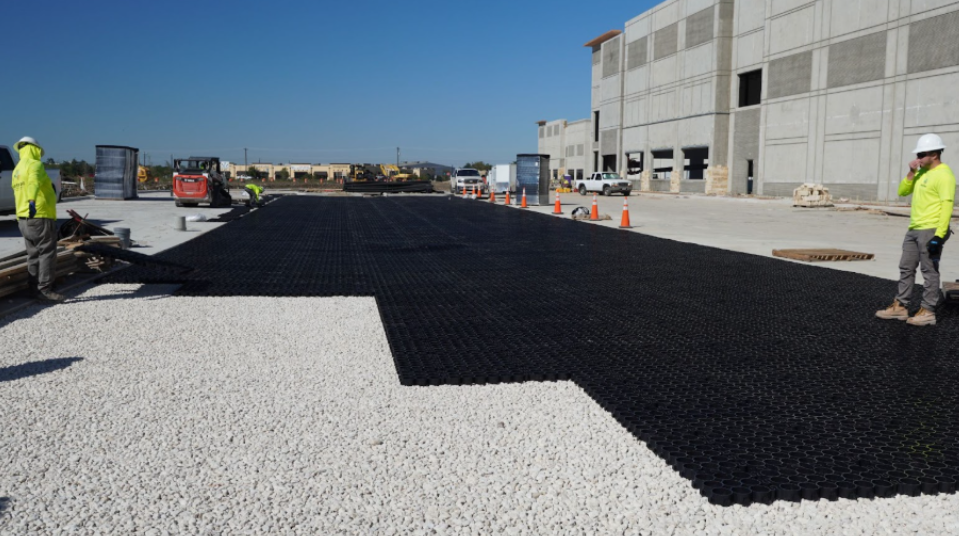
Before specifying permeable pavement for municipalities, the project team should confirm the following conditions. Each item affects structural performance, stormwater function, or long-term maintenance. The project team should close any remaining information gaps before approving the pavement section.
- Expected axle loads, traffic repetitions, turning, and braking
- Emergency vehicles, snowplows, buses, and maintenance equipment
- Subgrade support, soil infiltration, groundwater, and contamination
- Required storage, underdrains, liners, outlets, and overflows
- Freeze-thaw exposure and winter-maintenance practices
- Accessibility for the intended public route
- Sediment sources and construction-stage protection
- Cleaning equipment, staffing, records, and long-term funding
- Manufacturer testing, details, and comparable projects
- Local stormwater, pavement, fire-access, and accessibility approval
- Complete lifecycle cost for pavement, drainage, land, and maintenance
Evaluate Your Municipal Paving Project With TRUEGRID
TRUEGRID can provide product data, section details, installation guidance, and project examples for public parking, emergency access, transit, and other heavy-use applications. Our team can help project stakeholders evaluate how a grid paving system may fit the site’s loading, drainage, maintenance, and land-use goals. Contact us today for more information.
