A permeable paver project can look right on installation day and still begin to fail months later. Settlement, rutting, shifting, drainage problems, erosion, and early repairs usually point back to decisions made before the first grid was placed. Understanding permeable paver installation failure helps homeowners, contractors, developers, and property managers prevent avoidable problems before they become expensive surface repairs.
Why Permeable Paver Installation Failure Usually Starts Below The Surface
Most paving problems start where the finished surface hides the real issue. The grid, infill, base stone, subgrade, drainage path, and geotextile fabric all work together as one system. If one layer is skipped, undersized, poorly compacted, or mismatched to the traffic load, the surface eventually shows the weakness.
Most failures are preventable when the base, drainage path, infill, permeable geotextile fabric, and product selection are planned as one pavement system. A strong permeable surface still depends on stable soil support, correct material selection, and water movement that fits the site. The best results come from planning the entire pavement section instead of treating the grid as a surface-only product.
TRUEGRID systems are designed to simplify that process by combining open-cell load distribution with practical installation guidance.
The product helps support drainage and surface stability, but the site still has to be evaluated correctly. Soil conditions, slope, traffic loads, water flow, and the intended use all shape the installation.
Common Installation Mistakes That Lead To Premature Failure
Many permeable paver installation mistakes follow the same pattern: something gets rushed below the surface, and the finished area pays for it later. The table below connects the most common field errors to the failures they can cause.
| Installation Mistake | Likely Failure | Prevention Method |
|---|---|---|
| Inadequate base preparation | Settlement, rutting, uneven surface | Evaluate soil, excavate to the right depth, stabilize the subgrade, and use the proper base section |
| Poor compaction | Low spots, wheel ruts, surface movement | Compact the subgrade and base in controlled lifts |
| Improper drainage design | Ponding, erosion, poorly draining existing soil conditions | Evaluate the infiltration rate of the existing soils to match the site’s needs. Plan how water moves through the grid, into the base, and away from sensitive areas |
| Geotextile fabric separator missing, not porous, or not overlapped | Mixing and contamination of adjacent soils into base, weakening of base structure at perimeter, loss of structural support | Use geotextile fabric, overlapped, pinned if needed, and installed in the excavation floor and up the sides |
| Incorrect infill selection | Cell movement, reduced stability, poor infiltration | Use clean angular aggregate where specified |
| Wrong system for traffic load | Premature deformation or failure | Match the grid system to residential, commercial, sloped, or turf-use conditions |
This cause-and-effect view is useful because permeable paver installation failure rarely comes from one vague problem. It usually traces back to a specific installation decision that can be corrected before the system is built.
Base Preparation And Compaction Control Long-Term Stability
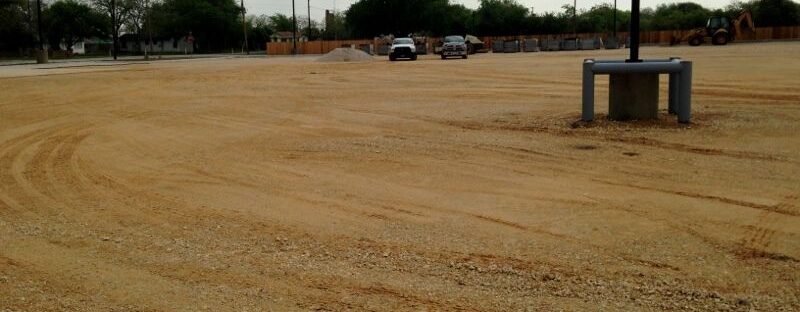
The base carries the load before the surface ever does. If the subgrade, or prepared soil layer, is weak, the system can settle under repeated traffic. If the base is too shallow or uneven, vehicle loads can push the surface into low areas.
Proper permeable paving installation starts with site evaluation, excavation depth, soil conditions, and intended use. A patio, residential driveway, commercial parking area, and sloped vehicle surface do not place the same demand on the base. The base must match the project.
Compaction is one of the most common hidden failure points. Stone placed too thick at once may appear firm at the surface while staying loose below. Rutting and settlement usually appear at the surface after weak subgrade, shallow base stone, or loose lifts compress under repeated wheel loads.
Geotextile fabric does important work below the surface. It separates native soil from the base stone so fines do not migrate upward into the open aggregate. That separation helps protect both stability and infiltration over time.
Drainage Design Still Matters With Permeable Pavers
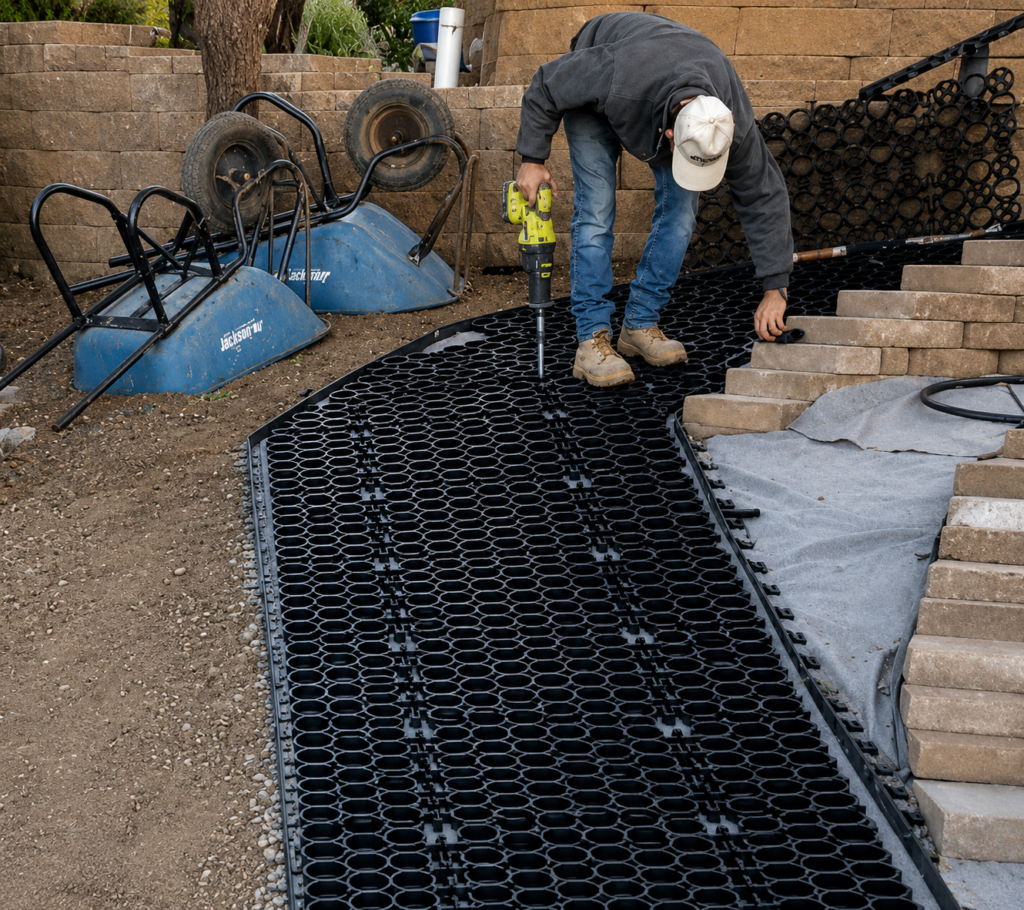
A permeable surface lets water pass through the top layer. The project still needs a drainage path below that surface. Water must move through the grid, into the stone base, and into the soil or an approved outlet without weakening the pavement section.
Poor drainage planning can create the same symptoms people expect permeable paving to solve. Water may collect in low spots, erode edges, saturate weak soil, or move toward structures. Those conditions can turn a drainage feature into a pavement problem.
This is where site evaluation matters. Grades, roof runoff, nearby foundations, soil infiltration, and stormwater flow all affect the design. TRUEGRID’s work with drainage failures in traditional pavement systems reinforces the same core point: surface water management has to be handled as part of the full system.
Permeability helps, but it cannot make up for a poorly planned drainage path. A successful installation gives water a controlled route through and away from the paved area.
Use of Permeable Geotextile Landscape Fabric or Loading and Separation
Placement, proper overlap or connection, and pinning of a geotextile fabric can add to long-term success and reduce potential problems with both the components in the permeable system and adjacent soils.
The use of open-graded clean stone as a base in a permeable paver system, adjacent to existing soils or engineered soils of a different type, will require separation to prevent contamination of the base layer. Geotextile fabrics prevent smaller particles from entering the base layer, potentially clogging the system and weakening of the adjacent soils, preventing collapse.
The separation of the un-like materials, prevents contamination for both the floor and the walls of the excavated area into the base layer (and fill) of a TRUEGRID system.
Placing the fabric all the way to grade, next to the height of the permeable grid system, will also prevent the fill material from migration and mitigate soil and vegetation from contaminating the clean stone infill of the grid.
An additional benefit of a geotextile filter fabric can be seen in the lessening of the occurrence of weeds or unwanted vegetation.
The Grid Must Match The Expected Load
A walking path, residential driveway, and commercial parking area place very different demands on a permeable grid. Traffic load, vehicle weight, turning movement, slope, and frequency of use all affect product selection. Ignoring those conditions can create permeable paver installation failure even when the base and surface look clean at the start.
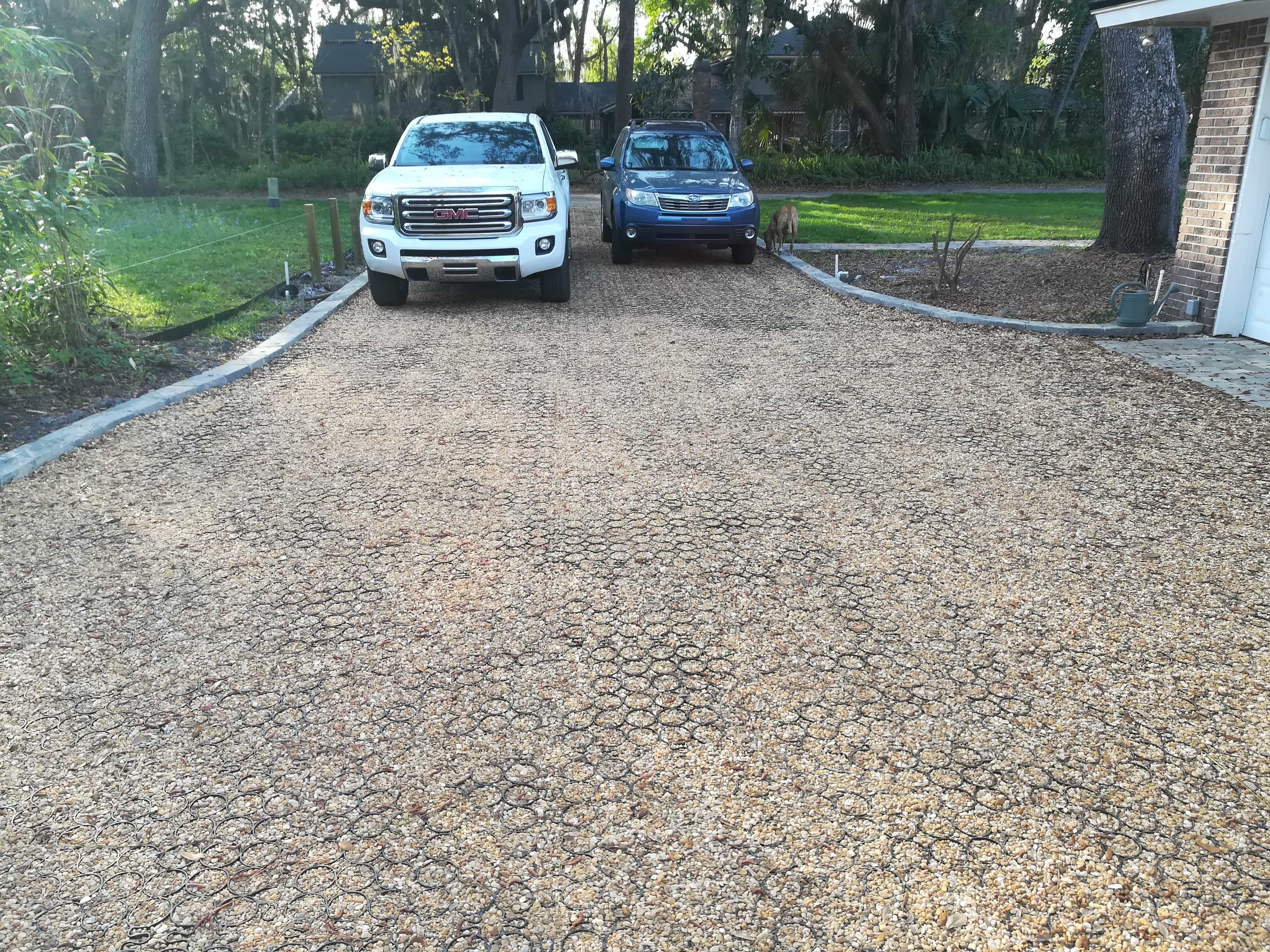
TRUEGRID’s product guidance separates lighter residential uses from heavier vehicle applications. PRO LITE is suited to lighter residential use, while PRO PLUS is the better fit for heavier loads, vehicles, and sloped driveways. That distinction matters because load distribution depends on the full system being matched to the job.
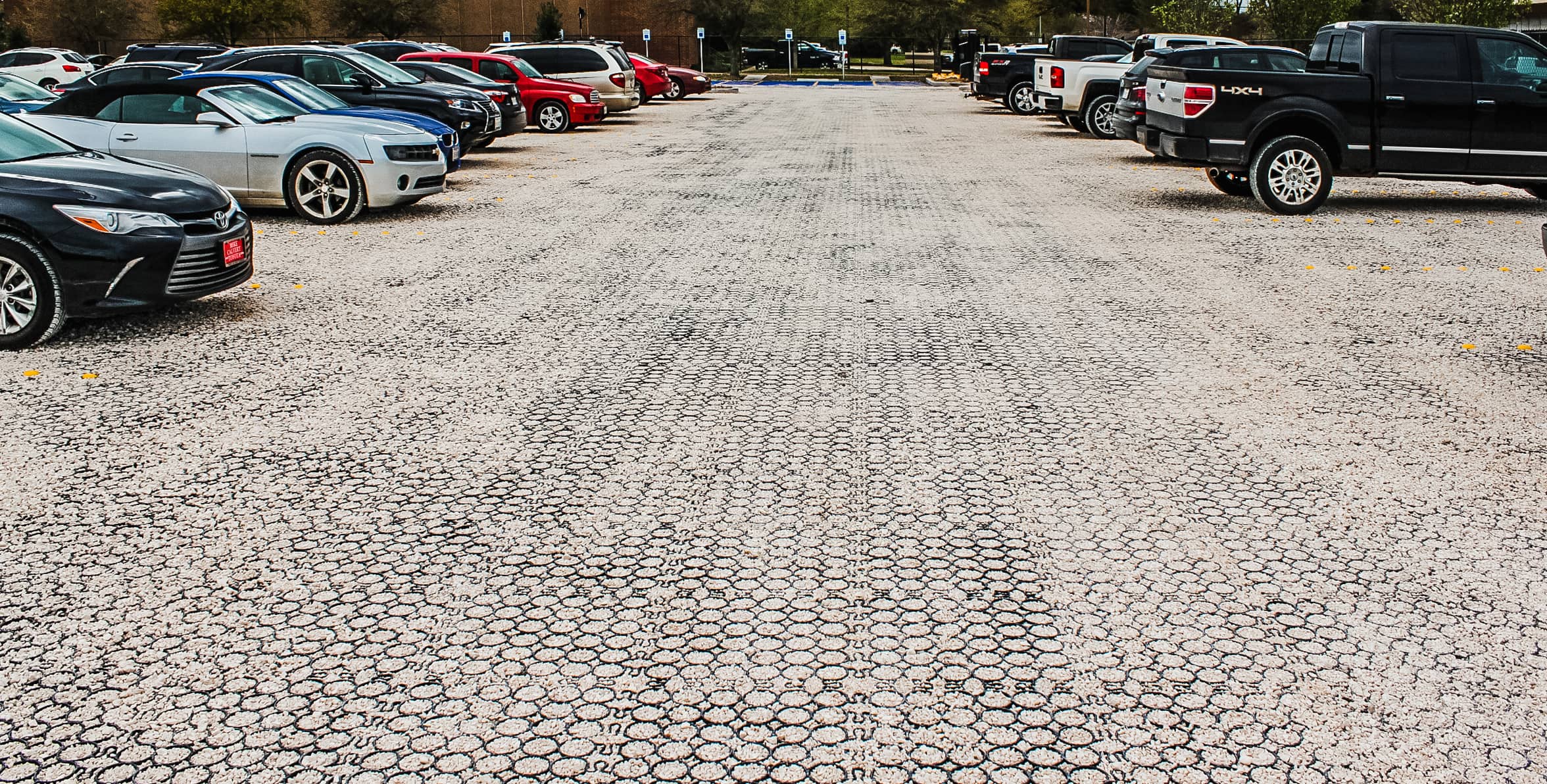
Commercial and multi-use sites need especially careful planning. Parking areas, access drives, equipment routes, and fire lanes may carry loads and higher traffic frequencies that a basic residential surface would not see. The comparison of commercial paving methods is useful here because it keeps the focus on pavement performance, preparation, drainage, and long-term maintenance.
Some projects are not gravel-filled vehicle surfaces at all. Turf and grass stabilization applications need their own installation approach. TRUEGRID ROOT installation follows a process designed for existing grass applications, including surface preparation, rut repair, trimming, and pinning where needed. TRUEGRID PRO PLUS grass infill installation and TRUEGRID PRO LITE grass infill installation components and installation methods are adjusted to provide drainage, load capacity, and grass growth.
How TRUEGRID Helps Reduce Installation Failure Risk
TRUEGRID reduces installation-related risk by pairing an open-cell grid with practical installation guidance.
Open-Cell Design And Installation Guidance
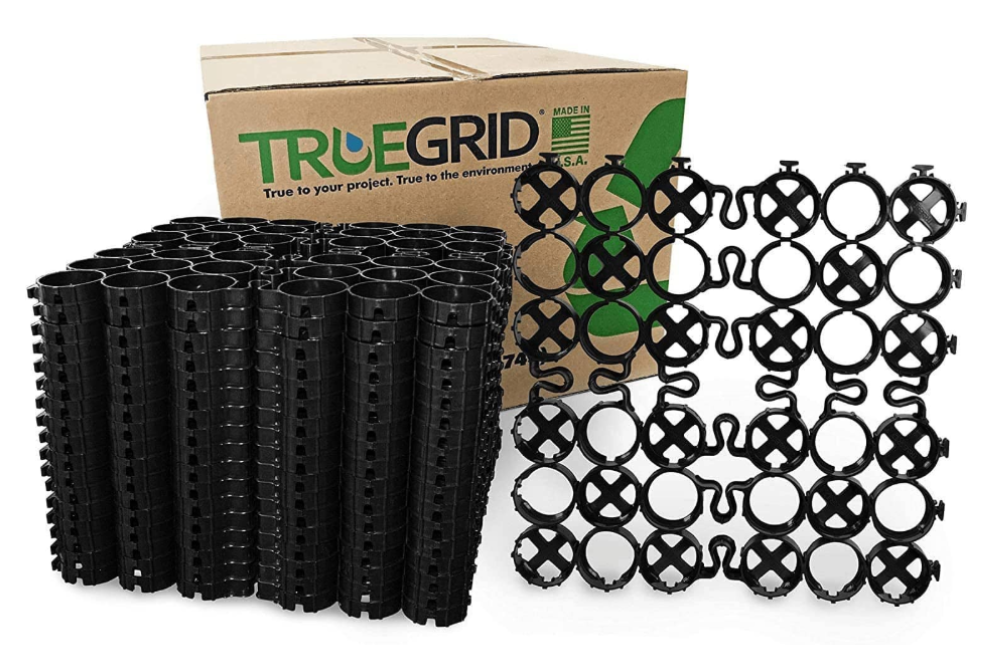
The open-cell grid distributes loads across the surface. The permeable structure allows water to move through the pavement section instead of forcing runoff across the top.
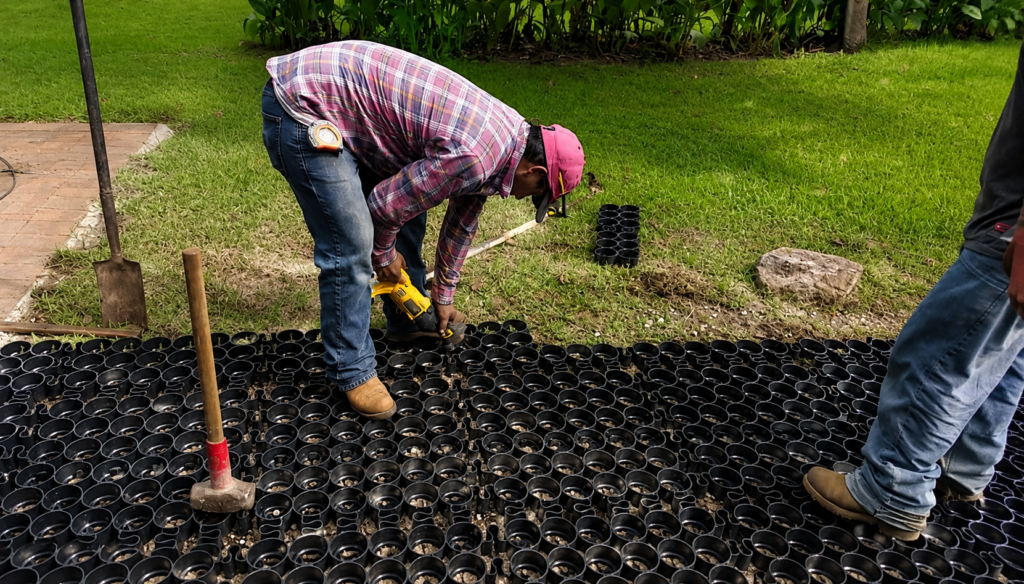
That structure gives installers fewer chances to guess. TRUEGRID guidance turns those variables into a practical sequence: check drainage, prepare the site, place the fabric, build the base, select the infill, restrain the perimeter (if needed), add drainage( if needed), and match the system to the application. Those details help installers avoid choices that can lead to settlement, rutting, shifting, erosion, and premature repair.
Performance Depends On The Whole Installation
Together, those steps help the finished surface stay aligned, keep infill seated, and move water through the pavement section as intended. This does not mean the product replaces good installation practice. It means the grid performs best when the installation supports the way the system manages load and water.
When the site is evaluated correctly, the base is built properly, the infill is selected well, the perimeter is restrained, and the right grid is chosen, the risk of permeable paver installation failure drops significantly because the product is supported by the full installation.
Installation Quality And Product Quality Work Together
A permeable paver system should be judged as a complete pavement section. The surface grid matters, but so do the layers below it. Subgrade stability, geotexile fabric, base stone, compaction, water movement, edge restraint (if needed), infill, and traffic load all affect long-term performance.
That pattern shows up in most failed installations: the visible damage may be rutting, settlement, shifting, drainage trouble, or erosion. The actual cause is usually a decision made during planning, material selection, or installation. TRUEGRID gives property owners and installers a clearer path from site conditions to product choice, helping prevent permeable paver installation failure from becoming a costly surprise after the project is complete.
Find The Right TRUEGRID System For Residential And Commercial Projects
TRUEGRID offers engineered permeable paver systems for residential, commercial, and turf stabilization applications. The right solution starts with the site, then accounts for traffic, drainage, and the way the finished surface will be used. TRUEGRID helps simplify the path from planning to installation by giving each project a clear structure for base preparation, infill, drainage, and product fit.
When the system matches the site, permeable paving can support long-term durability, stable load distribution, and practical stormwater management. Contact us today to discuss the best permeable paver option for your next residential or commercial project.