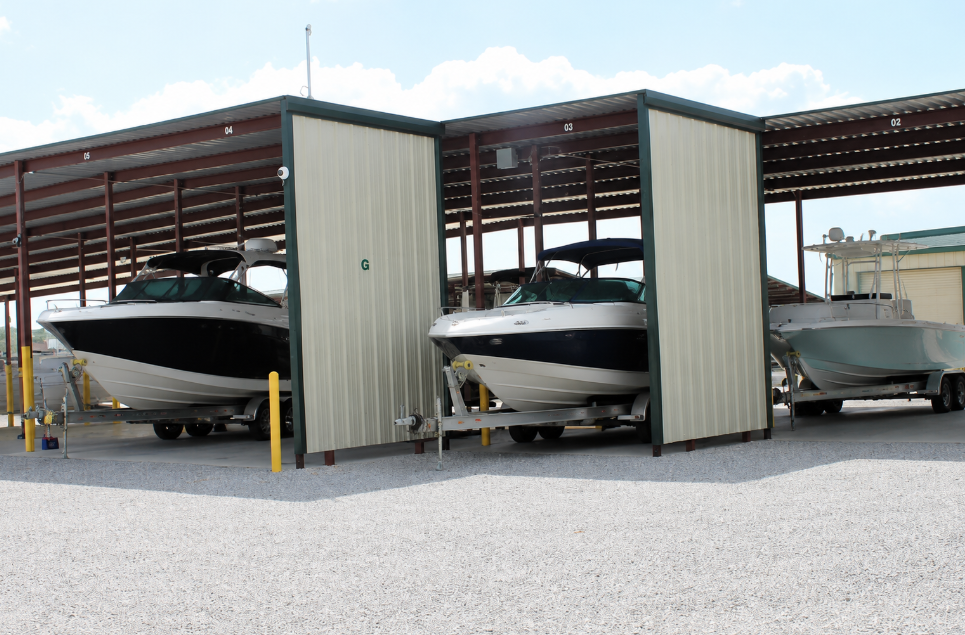
Wet ground does not stay flat under a loaded boat trailer. Standing water, displaced gravel, and unstable footing make access harder and can leave the surrounding property looking neglected. The best boat storage ideas begin with a surface that can support the trailer, manage rainfall, and remain usable through changing weather.
Why Outdoor Boat Storage Surfaces Fail
Outdoor storage failures usually begin with weak ground, repeated wheel loads, or water that has nowhere to go.
Wet Ground And Loose Aggregate
A cover, canopy, or enclosure protects a boat from direct weather exposure. It does not prevent the trailer from sinking into wet soil or creating ruts along a repeated backing path. Outdoor boat storage places concentrated weight on a relatively small area, so weak soil and poorly prepared surfaces deteriorate faster along repeated wheel paths.
Grass and bare soil lose stability when saturated, allowing trailer tires to press deep tracks into the ground. Loose gravel provides a cleaner surface, although braking, turning, and backing can push unconfined aggregate out of the tire paths. The resulting depressions collect water and contribute to erosion, washout, and repeated repairs.
Conventional Asphalt And Concrete
Conventional asphalt and concrete provide firm parking surfaces. Rainfall must flow across them toward a planned drainage point, and low spots can hold water around the trailer. Settlement, cracking, failed edges, and drainage problems may require localized repair or replacement after the pavement is installed. These surfaces are also considered impermeable, carrying pollutants collected by rain to the water.
How To Compare Boat Storage Ideas By Surface
A quality storage surface must carry the trailer load, provide dependable traction, handle repeated vehicle movement, and control water. Cost matters, but the lowest initial price may lead to more grading, resurfacing, or drainage work later.
| Surface | Drainage | Trailer Stability | Durability Concerns | Maintenance | Long-Term Fit |
|---|---|---|---|---|---|
| Grass | Depends heavily on soil and slope | Limited when wet | Mud, ruts, dead turf, erosion | Reseeding, filling ruts, mowing | Occasional use on firm, well-drained ground |
| Gravel | Allows some water movement | Fair with a prepared base | Migration, washout, tire channels | Grading, replenishment, edge cleanup | Budget-conscious pads with light to moderate use |
| Conventional asphalt | Sends water across the surface | Firm when properly installed | Cracking, softening, edge failure | Crack repair, patching, drainage upkeep | Conventional paved parking with planned runoff control |
| Conventional concrete | Sends water across the surface | Rigid and stable | Cracking, settlement, joint damage | Cleaning, joint inspection, localized repairs | Permanent pads where impervious cover is acceptable |
| Permeable pavers | Allows water into the pavement system | Stable when the full assembly is designed correctly | Sediment buildup, infill loss, edge problems | Debris removal, infill and edge checks | Residential and commercial pads needing drainage and stabilization |
For sites exposed to regular trailer traffic and rainfall, properly installed permeable pavers offer a strong balance of stability, drainage, and manageable upkeep. That is why boat storage ideas should start below the surface, with the soil, drainage, and trailer access considered from the outset. Each factor influences how the pad performs after years of rain and repeated vehicle movement.
Why Permeable Pavers Work For Boat Storage
A permeable storage surface must drain rainfall without giving up the support needed for a loaded trailer.
How The Pavement Assembly Supports The Load
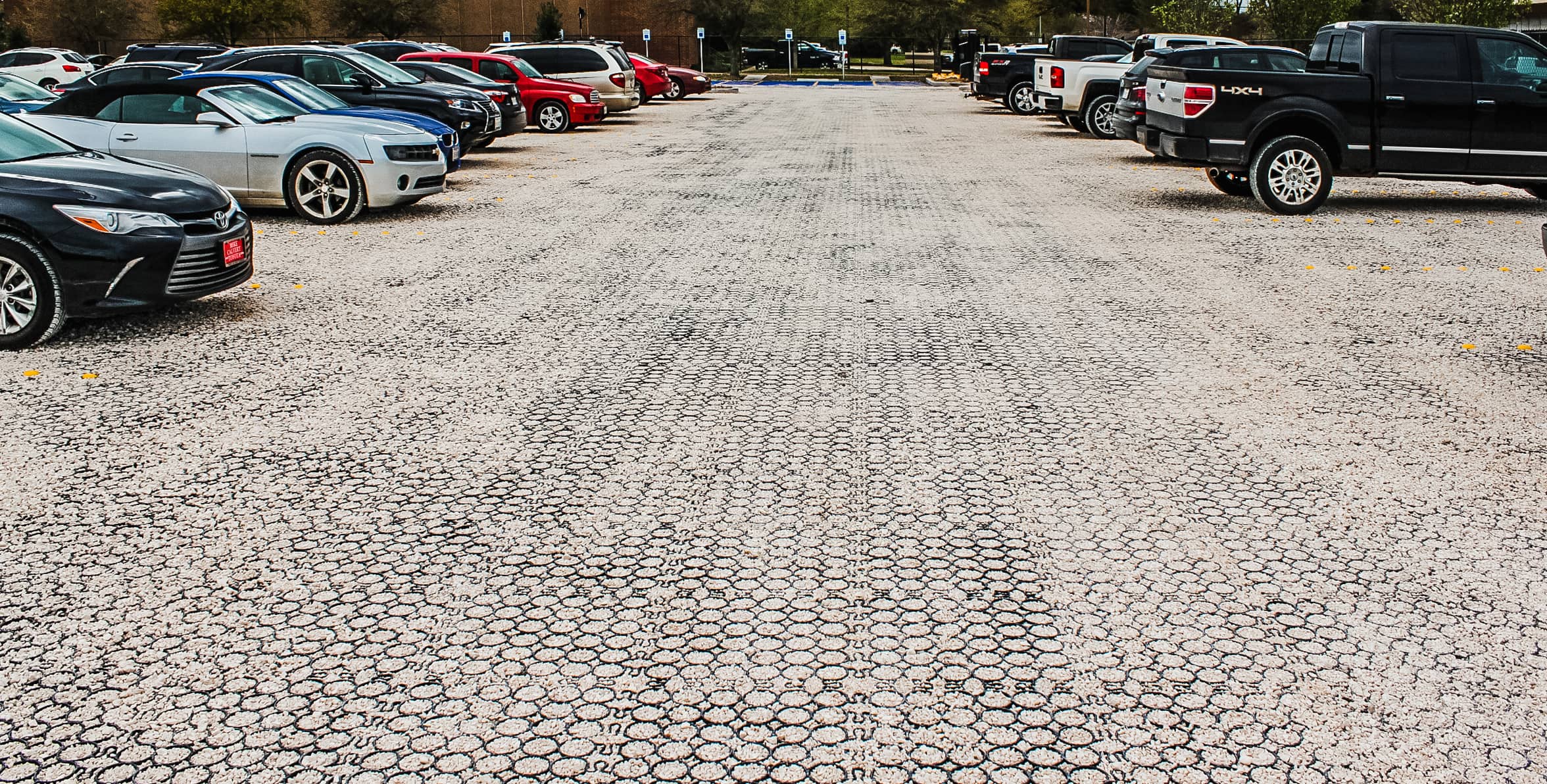
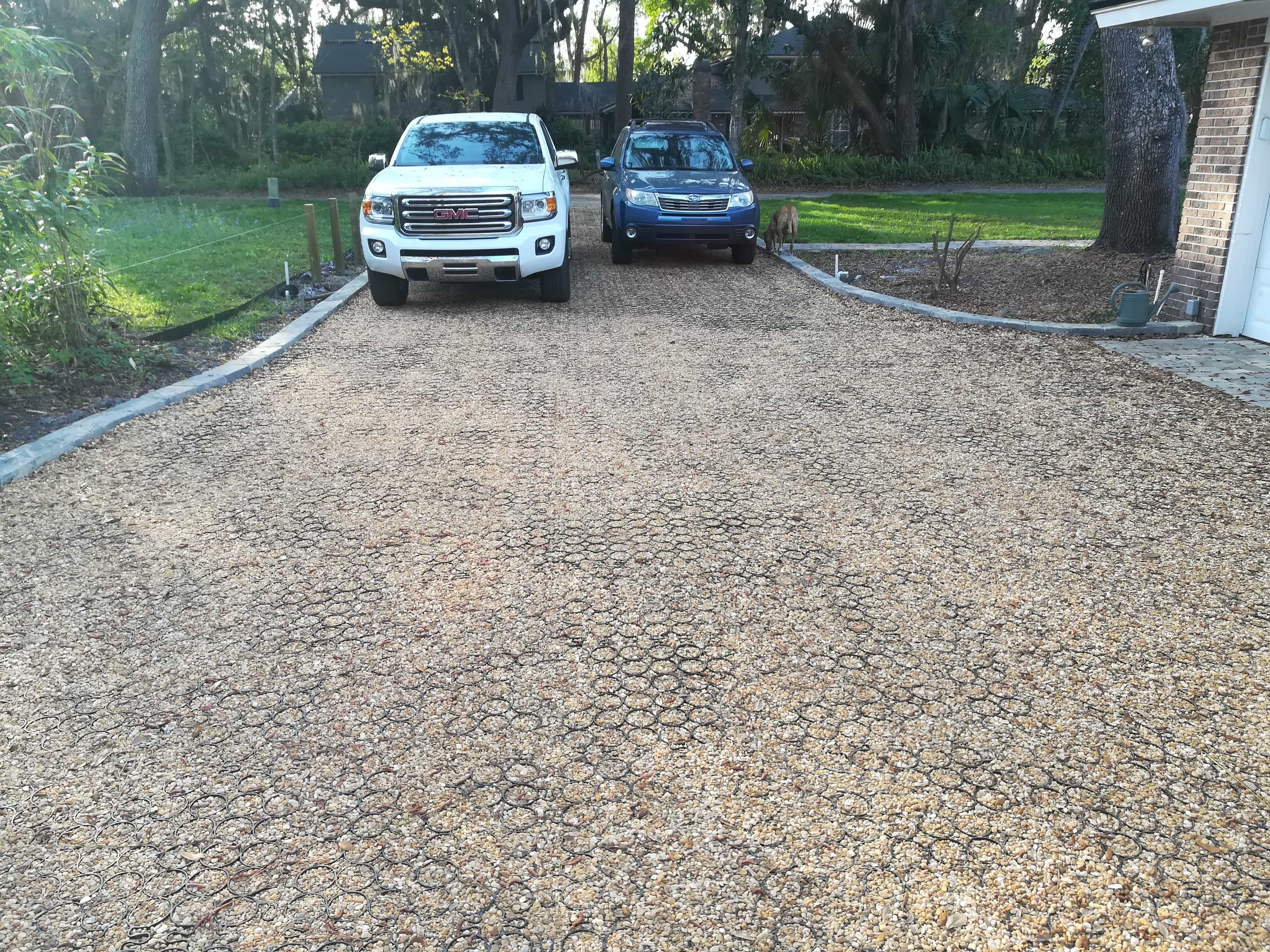
Permeable pavers for boat storage are one form of permeable pavement. TRUEGRID uses an open cellular grid filled with grass or gravel. The open surface allows rainwater to enter the aggregate layers below rather than remaining entirely on top of the pad.
A properly designed TRUEGRID system can support a boat, trailer, and tow vehicle. The specified paver, infill, aggregate base, and prepared subgrade carry the load together.
How The Grid Stabilizes The Surface
The grid holds the infill in place so tires are less likely to push material aside during backing and turning. Its open structure also preserves a path for water.
The confined infill creates a more uniform driving surface than mud or loose gravel that shifts beneath the tow vehicle. This can improve traction when a driver brakes, turns, or realigns the trailer in wet conditions. Proper installation can limit common puddling and gravel migration while creating a cleaner transition between the driveway, storage pad, and surrounding landscape.
Where Rainfall Goes
A stable surface solves the immediate parking problem. Long-term boat storage ideas must answer the next question: where does the water go? A permeable design limits the amount of impervious pavement added to the property.
Allowing rainfall to enter the pavement system can reduce runoff and erosion when the underlying soil and drainage design can receive the water. Permeability still has limits. Slow-draining soil, steep slopes, incoming runoff, or a high water table may require additional aggregate storage, an underdrain, or a planned outlet. A permeable surface cannot correct poor grading without a drainage strategy beneath and around it.
How To Design A Durable Boat Storage Pad
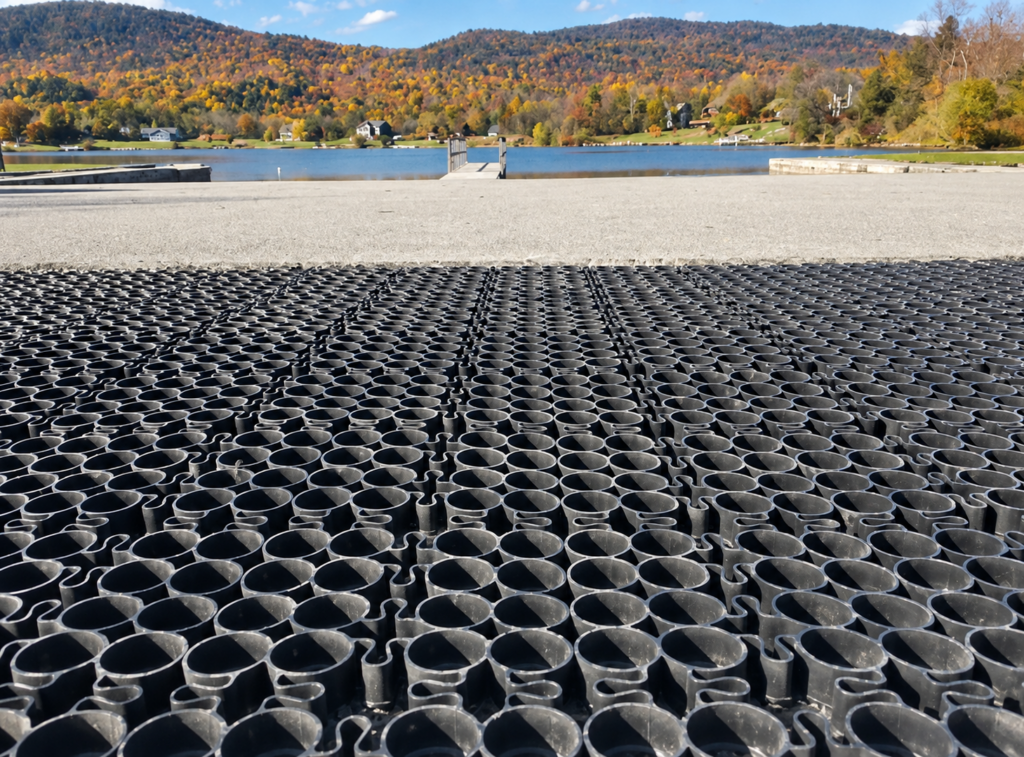
Practical boat storage ideas coordinate drainage, the trailer path, and the boat storage pad so the tow vehicle stays on the stabilized surface.
Prepare The Site From The Ground Up
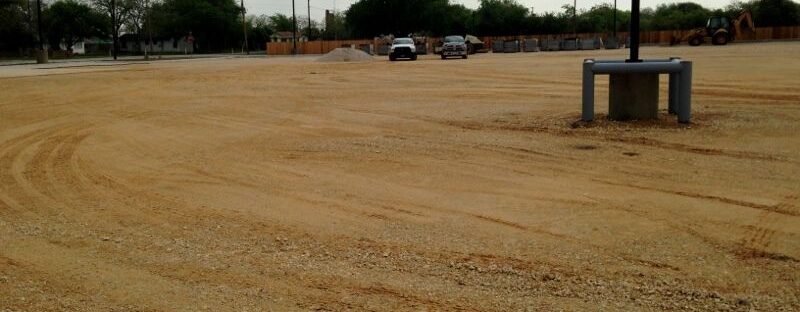
Remove topsoil, roots, and other unsuitable organic material from the pad area. The exposed subgrade is the soil supporting the pavement system. The aggregate base is the compacted stone layer below the pavers.
Its depth and composition should match the soil, expected loads, product requirements, and water-management plan. Residential and commercial projects often require different base sections because traffic frequency and loading differ. Grade the surrounding site so runoff does not continually carry soil and sediment onto the new surface. Water from roofs, slopes, or neighboring pavement may overwhelm a pad designed only for the rain falling directly on it.
Size The Pad For The Complete Trailer Envelope
Measure the boat and trailer as one stored unit. Include the trailer tongue, outboard motor, swim platform, spare tire, ladder, and any projection beyond the hull. Add space for walking, tie-downs, battery access, covers, and routine maintenance. Future boat replacement should also be considered when the property can accommodate a slightly larger pad.
A stable, well-drained pad keeps the trailer tires, jack, and access area out of persistent mud and standing water. This helps reduce dirt, splash, and unstable footing around the stored boat without replacing a cover, winterization, or routine maintenance.
Plan The Approach And Backing Path
The approach matters as much as the parking area. Gates, fences, trees, walls, and neighboring vehicles can limit the angle needed to align the trailer before backing. The same principles used in large-vehicle storage layout apply to boat trailers: the driver needs enough aisle width and turning space to enter, back, and leave without cutting across weak ground.
Use A Practical Planning Checklist
Before construction begins:
- Measure the complete boat and trailer.
- Map the towing, turning, and backing path.
- Identify slopes, low spots, and incoming runoff.
- Evaluate the subgrade and base requirements.
- Select the surface and infill for the expected traffic.
- Plan edges, transitions, and future maintenance access.
Cover those six points before construction to reduce the risk of repeating the problems that prompted the project.
Choose Grass Or Gravel Infill By Use
Choose the infill based on how the area should look, how often trailers will use it, and how much upkeep is realistic.
Grass-Filled Pavers
Grass-filled pavers can blend a residential storage area into the surrounding landscape. They work best where sunlight, irrigation, climate, and traffic allow healthy turf to grow. Grass may require mowing, watering, reseeding, and recovery time after heavy use.
Gravel-Filled Pavers
Gravel-filled pavers create a consistently drivable surface and generally suit frequent trailer movement, especially where healthy turf would be difficult to maintain. Gravel needs occasional inspection for displaced or depleted infill, particularly near edges and turning points.
Match The System To Residential Or Commercial Traffic
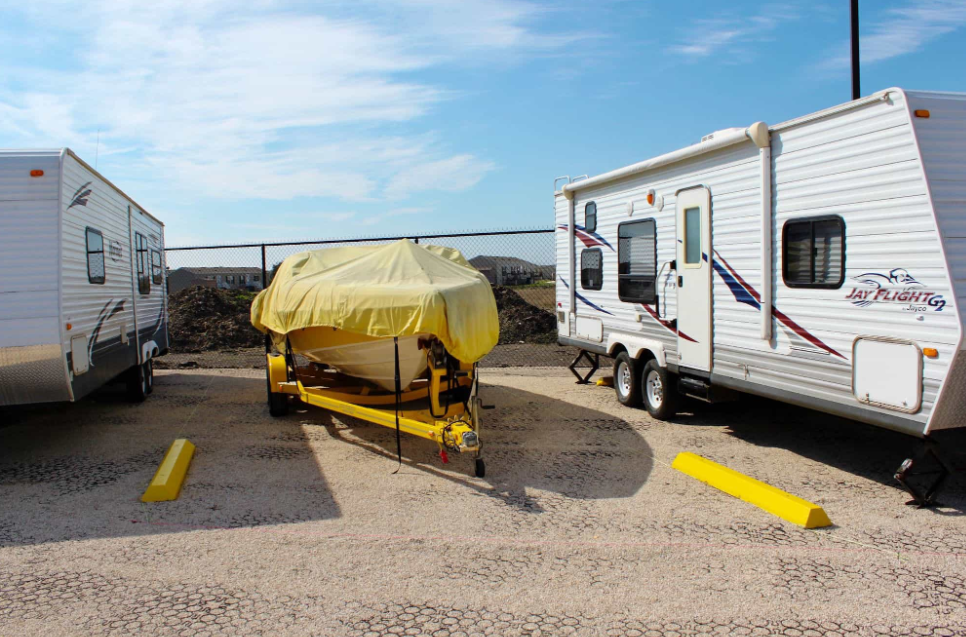
The paver and base section should match how the storage area will be used.
Residential And Lighter-Duty Applications
A homeowner who moves one boat several times a month places different demands on a surface than a facility serving multiple trailers each day. Tow-vehicle weight, turning movements, and the size of the paved area should guide system selection. TRUEGRID PRO LITE is designed for suitable residential and lighter-duty vehicle applications.
Marinas And Commercial Storage Areas
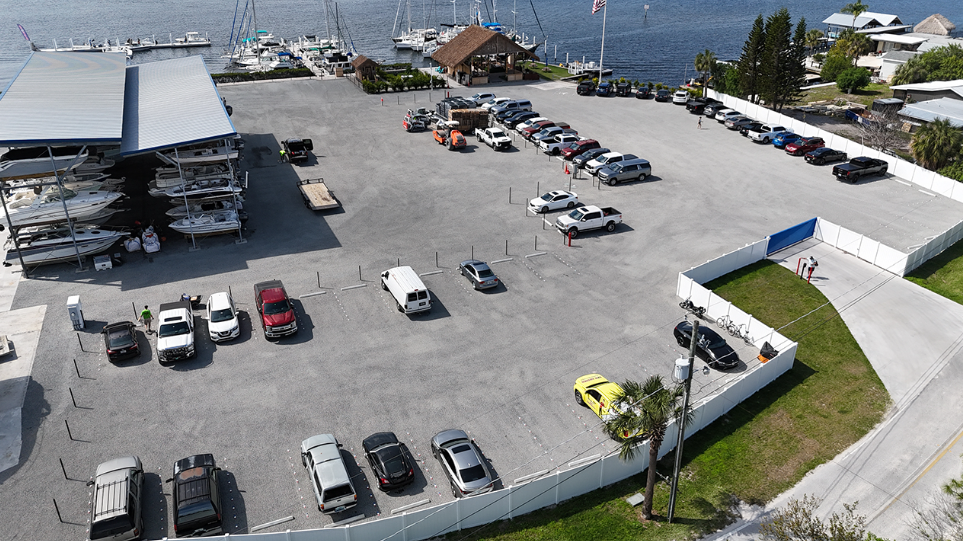
TRUEGRID PRO PLUS is intended for heavier commercial and industrial traffic, including storage lots and other large-vehicle areas. The paver must still be installed over a base designed for the site and expected loading. Marinas and storage facilities also need wider aisles, defined travel paths, and drainage planning across the full property.
Stable parking and drainage near boat ramps can reduce mud, loose aggregate, and surface deterioration along heavily used access routes. Permeable pavers for boat storage are especially useful when an operator wants to stabilize a large gravel or grass area without covering the entire site with an impervious surface. The system still has to match the site, and product selection, base preparation, and maintenance all affect performance.
Maintain The Surface And Drainage Path
Permeable storage surfaces still need routine care. Leaves, soil, mulch, and sediment can collect on the surface and reduce the rate at which water enters the system. Inspect the boat storage pad after major storms and during routine property maintenance. Replace missing infill, correct edge movement, remove accumulated debris, and watch for runoff washing material onto the surface.
Commercial sites may require more frequent inspection because traffic and sediment loads may be higher. Keeping the cells open and the infill level helps the pad drain and remain stable under trailer traffic. That routine care is what keeps permeable paving practical among long-term boat storage ideas.
Build A Better Storage Surface With TRUEGRID
TRUEGRID permeable pavers can create a stable grass- or gravel-filled surface for residential pads, marina parking, and commercial storage areas. The appropriate system depends on the site, drainage conditions, and expected traffic. Contact us today for more information.