A walking route across healthy turf can become a bare strip after one season of concentrated use. Once the grass thins, the same path begins collecting mud, developing uneven spots, and requiring repairs that do not change where people walk. Effective grass pedestrian area protection addresses the traffic pattern, the soil beneath it, and the type of surface the site can support.
Why Repeated Foot Traffic Damages Grass
Repeated foot traffic damages grass by crushing the blades, stressing the crowns, and applying pressure to the roots and soil below.
Compaction Weakens Turf Recovery
Damage becomes more severe during wet weather because saturated soil compacts and shifts more easily. Soil compaction presses soil particles closer together, reducing the open space available for air, water movement, and root growth.
Turf in compacted soil has a harder time recovering, so thin areas often become bare even after reseeding.
Bare Soil Leads to Mud and Erosion
Once the protective turf cover disappears, rainfall strikes exposed soil directly. Continued traffic moves the wet material along the path, creating mud, shallow ruts, and erosion.
Lasting repairs must address the traffic pattern instead of repeatedly restoring turf along the same route.
Where Grass Pedestrian Area Protection Is Needed
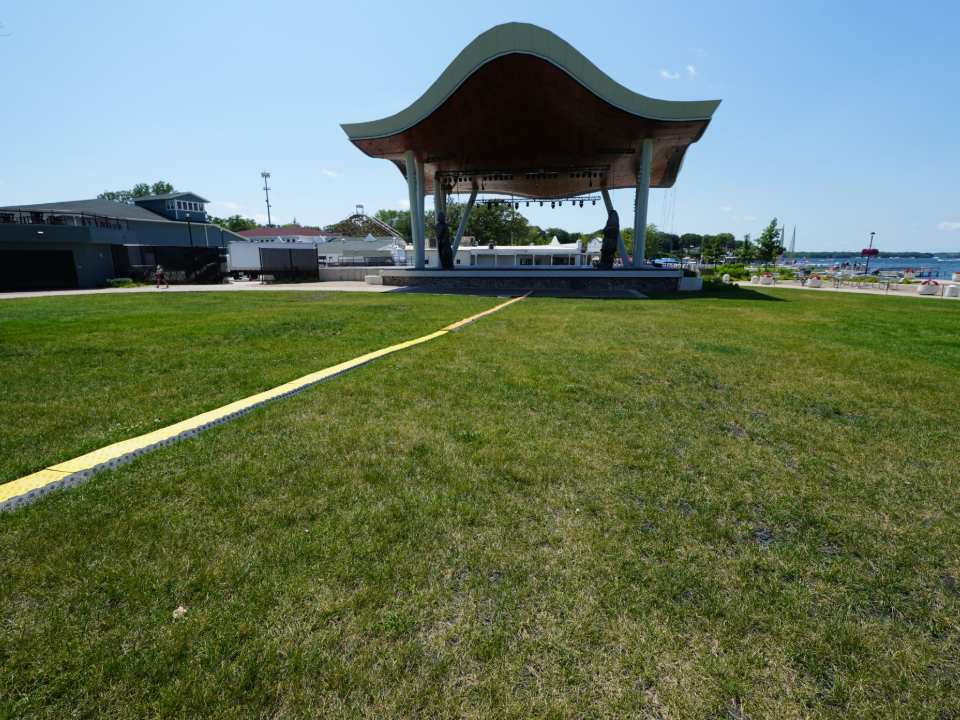
Pedestrian grass protection may involve a temporary covering for short-term use or permanent reinforcement along a path people use every day.
Public, Institutional, and Commercial Landscapes
The path may be planned, or it may form as a shortcut between destinations. Municipal parks often develop worn routes near playgrounds, fields, picnic areas, parking lots, and gathering spaces.
Protecting high-traffic park grass can reduce the cycle of bare patches, mud, and repeated repair where use cannot realistically be redirected. Schools and campuses face similar damage along pedestrian pathways between buildings, beside athletic fields, and near drop-off areas. The same concentrated traffic develops around playgrounds, golf courses, public trails, commercial landscapes, fairgrounds, and event venues.
Residential Lawns
Residential properties experience the same pattern on a smaller scale. A side yard connecting the driveway to the backyard can become muddy after rain when family members, pets, service workers, or equipment follow the same narrow path.
Comparing Common Grass Protection Solutions
Grass pedestrian area protection can be temporary or permanent. The right surface depends on how often people use the path, how the site drains, what the area should look like, and how much maintenance the owner can manage. Temporary grass protection mats are removable panels or coverings used during events and other short periods of heavy foot traffic.
| Solution | Best Use | Appearance and Drainage | Maintenance and Environmental Tradeoff | Main Limitation |
|---|---|---|---|---|
| Temporary grass protection mats | Festivals, ceremonies, seasonal events, and short periods of concentrated traffic | Cover the lawn temporarily; drainage varies by product | Require placement, removal, cleaning, storage, and eventual replacement | A grass protection mat is not usually intended to create a permanent daily route |
| Gravel paths | Informal trails, garden paths, and lightly engineered walking routes | Blend into many landscapes and can drain when properly installed | May require edging, replenishment, grading, and weed control | Gravel can migrate, rut, or become difficult for some users |
| Concrete sidewalks | Formal circulation, high pedestrian volume, and routes needing a consistent hard surface | Create a predictable route but replace turf with an impervious strip | Durable, but creates permanent hardscape and directs water toward adjacent drainage areas | Installation is permanent, and drainage must be managed around the walkway |
| Grass reinforcement grids | Recurring traffic where a green, permeable surface is desired | Allow turf to grow through an open structure | Preserve living turf and permeability, but still require material, installation, and ongoing turf care | Excessive traffic or use may expose grass blades to wear. Protection is mainly for the plant roots |
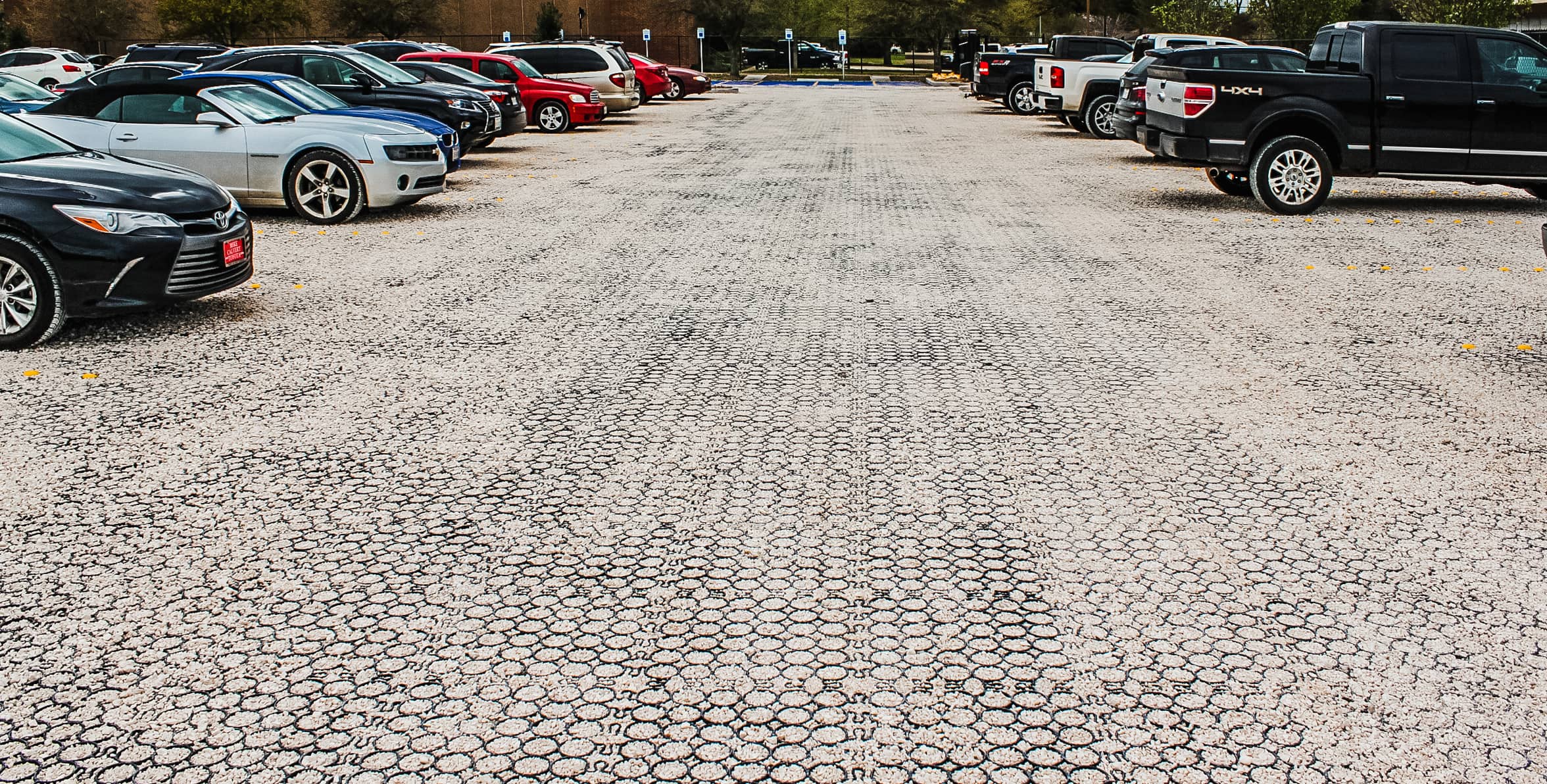
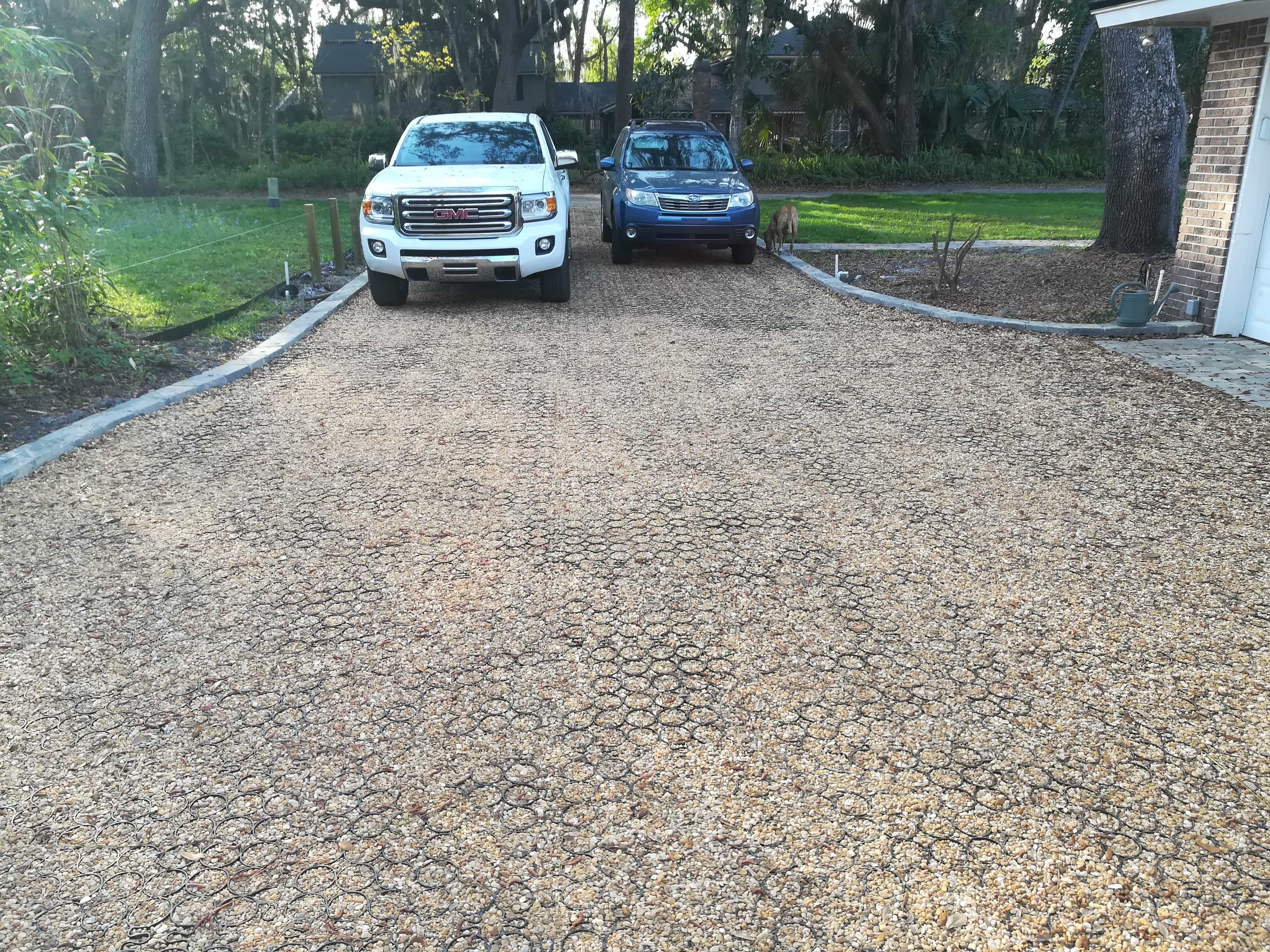
Gravel can define an informal path, and concrete may be the better choice for formal circulation. A permanent grass reinforcement grid remains in place to stabilize a path exposed to recurring traffic. A reinforced grass surface keeps the area predominantly green when the turf, soil, drainage, and maintenance program can support it.
How Grass Reinforcement Grids Work
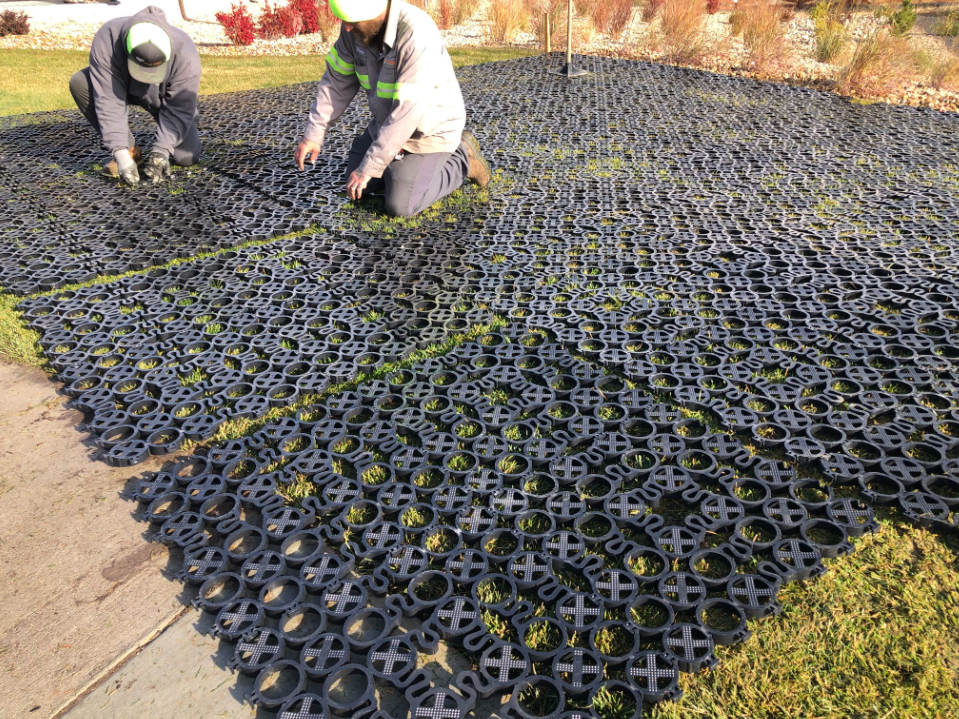
A grass reinforcement grid creates a structural framework within the upper surface.
Pressure Distribution Reduces Surface Damage
The grid cells spread foot pressure across a broader area and reinforce the upper soil layer, reducing localized displacement and rut formation. This structure can help the walking surface remain more even and limit concentrated pressure on the root zone.
By reducing concentrated wear, reinforcement may reduce the need for repeated reseeding, rut repair, and soil replacement. Normal mowing, irrigation, inspection, and other turf care are still required.
Grass Growth, Permeability, and Site Fit
Open cells leave space for grass to grow through the system, provided the site can sustain continued turf growth. The open structure also allows rainfall to pass through the reinforced surface. Those openings can support site stormwater management and permeable erosion control by helping keep soil in place and reducing exposed areas where runoff can carry loose material away. The underlying soil and base still determine how effectively water infiltrates.
A grid is a good fit only when the traffic, drainage, turf conditions, and walking-surface requirements all line up.
Choosing Grass Protection for Pedestrian Pathways
Selecting grass pedestrian area protection starts with how often people use the path and what is happening in the soil below it.
Match the System to Traffic Volume
Occasional use may call for simple turf repair, and short periods of heavy event traffic may justify removable mats. Daily traffic usually needs a permanent path.
Grass reinforcement can preserve a green route. Heavy formal circulation may require an engineered hard surface.
Evaluate Drainage and Turf Conditions
Traffic damage and drainage failure often appear together, but they are not the same problem. A worn path can become muddy because the grass has disappeared. A low area can remain muddy because water has nowhere to go.
Before choosing a surface, determine whether the site needs grading, drainage improvements, soil stabilization, or base preparation. A system intended to stabilize muddy grass can reinforce the upper surface, but persistent standing water requires a broader site solution. Deep shade, poor irrigation, unsuitable soil, or weak turf selection can prevent grass from filling in after installation.
Account for Accessibility and Maintenance
Reinforced grass is not automatically an accessible route. The finished surface must still be evaluated for firmness, stability, slope, openings, changes in level, edge transitions, and the standards that apply to the project. A well-designed and maintained reinforced surface can reduce exposed mud, shallow ruts, and displaced soil, but it does not eliminate every slip, trip, or accessibility concern.
Concrete or another engineered hard surface may be the better choice when the path must provide reliable access in all expected conditions. Reinforced turf still requires mowing, irrigation, inspection, and occasional repair, so a practical site review should answer six questions:
- Is the traffic temporary, occasional, or recurring?
- Must the path remain visibly green?
- Is the soil stable and adequately drained?
- Does the path need to meet formal accessibility requirements?
- Can healthy turf grow under the available light and irrigation conditions?
- What level of maintenance can the owner provide?
Where TRUEGRID ROOT Fits
TRUEGRID ROOT may support grass pedestrian area protection where turf health and drainage can sustain a permanent reinforced surface, including trails, event areas, fairgrounds, and other high-traffic grass locations. The system installs over existing grass and stabilizes the upper turf surface without excavation. Its open configuration keeps the grass visible and helps preserve a green, permeable surface. In those conditions, the grid spreads foot pressure across the reinforced area to reduce rutting and help limit localized soil compaction.
Sites with unstable soil, severe drainage problems, very heavy traffic, or formal accessibility requirements may need a different surface or a system installed over an excavated, prepared base.
While most turf grasses can support moderate foot traffic without showing wear, vehicle use and excessive foot traffic may degrade the grass blades themselves. Recovery time may be needed to get area fully covered with grass again. However, ROOT and other grass-root protection mat such as PRO LITE and PRO PLUS, will keep the grass roots from compaction and the plant will recover.
Protect High-Traffic Turf With TRUEGRID ROOT
Talk with the TRUEGRID team about how the path is used, why the grass is failing, and what type of reinforcement may fit the site. ROOT can reinforce frequently used grass areas without replacing the route with a conventional hard surface. Contact us today for more information.