
Brick For Driveway Price: Cost Breakdown And Affordable Alternatives
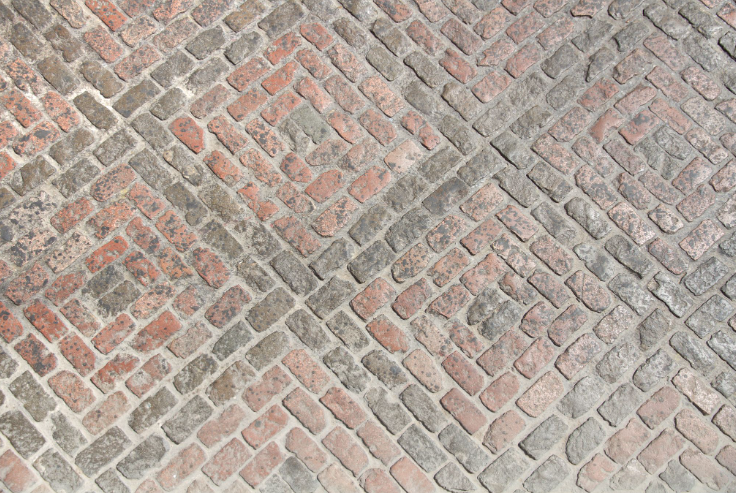
Driveway projects often begin with a visual goal, then quickly collide with budget realities. Brick remains one of the most requested materials because it delivers a timeless, upscale appearance. Cost expectations, however, are frequently based on material pricing alone rather than full installation scope. Understanding the brick for driveway price requires examining labor, site preparation, design complexity, and long-term maintenance exposure.
Understanding The Brick For Driveway Price
Brick driveways typically fall within a moderate-to-premium cost range compared with other residential paving materials. While regional differences apply, installations often fall between $10 and $30 per square foot installed. This figure reflects not only brick costs but excavation, aggregate base construction, bedding layers, edge restraints, and skilled labor.
Material-only estimates rarely capture the full investment. A pallet price for brick may appear reasonable, yet installed pricing rises once base preparation and crew hours are included. Soil stability, access limitations, and drainage corrections can push projects toward the upper end of the range. A detailed breakdown of typical installation considerations appears in discussions surrounding a properly designed brick driveway.
What Drives Brick Driveway Costs
Price variability in brick driveway projects rarely stems from a single factor.
Material Selection And Brick Type
Clay bricks generally command higher prices than concrete bricks due to firing processes, density, and long-term durability characteristics. Load-rated paving bricks designed for vehicle traffic also cost more than thinner architectural bricks.
Color blends, specialty finishes, and reclaimed brick selections influence pricing tiers further. Lower-cost decorative bricks may reduce initial material spend but can introduce cracking or spalling concerns under repeated loading. Material comparisons often arise when evaluating bricks vs pavers for driveway applications.
Site Preparation And Base Construction
Excavation depth significantly affects total cost. Residential driveways require a compacted aggregate base capable of distributing vehicle loads while resisting settlement. Weak, expansive, or moisture-sensitive soils demand thicker base layers.
Drainage adjustments, geotextile stabilization, and grading corrections add equipment time and material volume. Attempts to reduce upfront cost by minimizing base thickness often produce uneven settlement, shifting bricks, and corrective repair expenses later.
Labor And Installation Complexity
Brick driveway installation is labor-intensive. Individual units require careful placement, alignment, spacing, cutting, and joint preparation. Pattern selections such as herringbone increase cutting waste and placement time.
Curved edges, decorative borders, and intricate layouts extend crew hours further. What initially appears to be a manageable brick for driveway price frequently expands once design decisions increase labor complexity.
Hidden Costs That Affect Long-Term Spend
Long-term ownership costs often exceed initial installation expenses. Brick joints rely on sand or polymeric fillers that can erode, migrate, or support weed growth. Periodic re-sanding, leveling, and weed management become recurring maintenance tasks.
Surface staining, moss growth, and localized settlement corrections also contribute to lifecycle expenses. Over time, these maintenance patterns reshape how homeowners evaluate the brick for driveway price, shifting focus from installation cost to long-term upkeep demands.
Cost Comparison With Other Driveway Materials
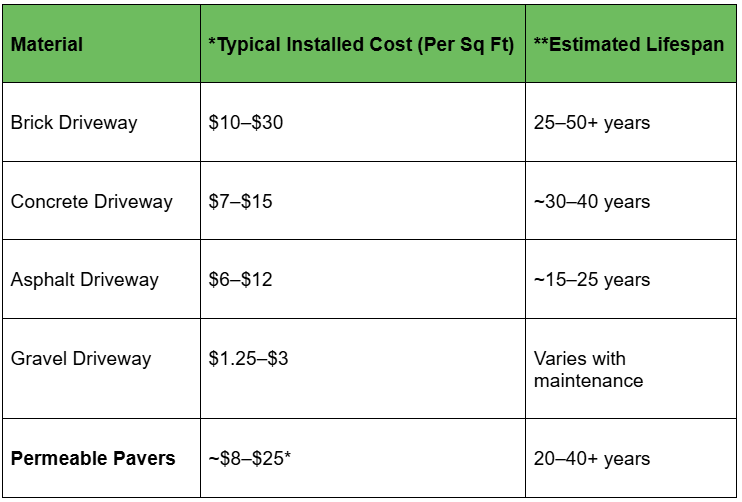
*Driveway paver prices vary widely within brick and concrete paver categories depending on thickness, strength ratings, and regional labor rates.**Service life varies by conditions, including climate exposure, base construction quality, traffic loads, and ongoing maintenance practices.
Lower-cost materials may reduce upfront investment but introduce resurfacing cycles, crack repairs, replenishment needs, or grading corrections. Brick delivers durability yet remains sensitive to base stability and joint maintenance.
Affordable Alternatives To Traditional Brick Driveways
Budget-driven projects often benefit from evaluating lower-cost surface options.
Gravel And Crushed Stone
Gravel offers one of the lowest initial installation costs. Material expenses are modest, and installation complexity is reduced. Maintenance demands, however, include periodic grading, replenishment, and migration control.
Loose aggregate surfaces may rut under repeated traffic without structural stabilization. Surface reinforcement strategies are often discussed among practical driveway alternatives.
Concrete And Asphalt
Concrete and asphalt commonly present moderate upfront pricing. Concrete provides compressive strength but may crack under freeze-thaw stress. Asphalt resists cracking initially yet requires sealing and resurfacing cycles over time.
Temperature fluctuations, UV exposure, and subgrade movement influence durability and repair frequency.
Permeable Grid Paver Systems
Permeable grid systems stabilize aggregate while allowing water infiltration. Installation often requires less excavation depth for many residential applications, particularly where heavy-duty traffic is limited.
Reduced base requirements can lower trucking, aggregate, and labor expenses. When evaluated against the brick for driveway price, permeable grids frequently deliver cost advantages while improving drainage performance and limiting maintenance corrections.
Projects focused on expanding parking or access areas frequently evaluate methods to extend driveway with pavers using grid-based systems.
Performance And Maintenance Differences
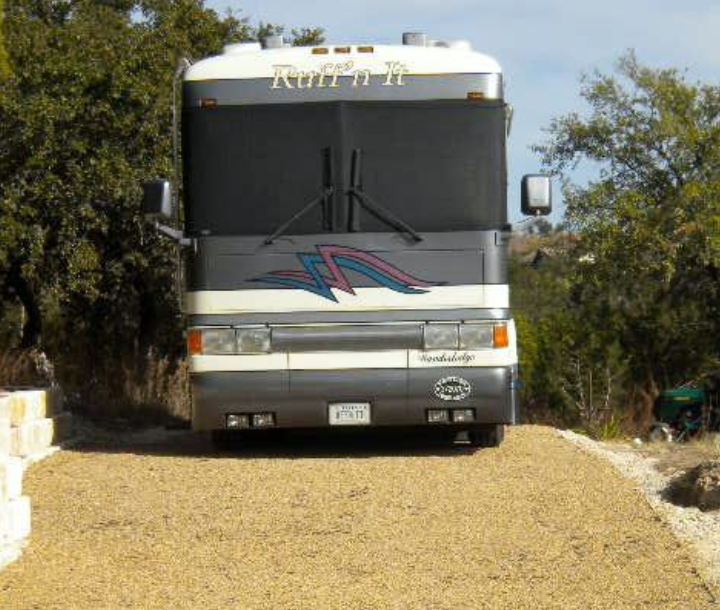
Surface durability is shaped by both material properties and the structural design beneath the driveway.
Brick driveways deliver excellent compressive strength and long-term visual appeal, yet their performance depends heavily on proper base preparation. Settlement, joint erosion, and isolated movement can introduce maintenance demands that accumulate gradually over time.
How Common Materials Behave Over Time
- Brick Driveways – Durable surface units, but sensitive to base movement and joint erosion
- Gravel Driveways – Low upfront cost with recurring grading and replenishment needs
- Concrete Driveways – Strong slab performance with crack potential under stress
- Asphalt Driveways – Flexible surface requiring sealing and resurfacing cycles
Permeable grid systems approach durability differently by stabilizing aggregate within a load-distributing matrix. This structure helps limit rutting, displacement, and standing water, supporting more consistent surface performance under repeated vehicle traffic.
Regional And Seasonal Cost Influences
Driveway installation costs rarely remain static because environmental conditions and scheduling variables exert measurable influence.
In freeze–thaw climates, deeper excavation and thicker aggregate bases are commonly required to prevent heaving and settlement. Soil composition, drainage behavior, and moisture retention further shape stabilization needs.
Key Variables That Affect Pricing
- Climate Zone – Freeze/thaw intensity impacts base depth requirements
- Soil Conditions – Expansive or weak soils increase stabilization costs
- Drainage Characteristics – Poor drainage adds corrective preparation steps
- Seasonal Timing – Labor rates may fluctuate with contractor demand
Labor pricing may shift seasonally. Periods of lower demand sometimes create cost advantages, although weather constraints can influence installation timelines and compaction quality.
These regional and seasonal factors help explain why the brick for driveway price varies substantially across projects.
How To Choose Based On Budget And Project Goals
Selecting a driveway surface involves balancing aesthetic priorities, installation cost, durability expectations, and maintenance exposure. Brick remains appealing for traditional architectural character and long service life potential. That investment requires acknowledging higher upfront cost and ongoing joint maintenance.
Decision Priorities To Consider
- Appearance Goals – Traditional brick vs modern or natural finishes
- Budget Constraints – Upfront installation vs lifecycle costs
- Maintenance Tolerance – Willingness to re-level, reseal, or replenish
- Drainage Needs – Runoff reduction and permeability benefits
Gravel surfaces support lower initial budgets but introduce recurring upkeep. Concrete and asphalt offer moderate entry pricing with distinct repair patterns. Permeable grid systems combine structural stability, drainage performance, and predictable installation workflows.
Understanding these tradeoffs allows homeowners and contractors to align driveway decisions with realistic financial and functional objectives.
TRUEGRID® Permeable Pavers: A Cost-Competitive Alternative
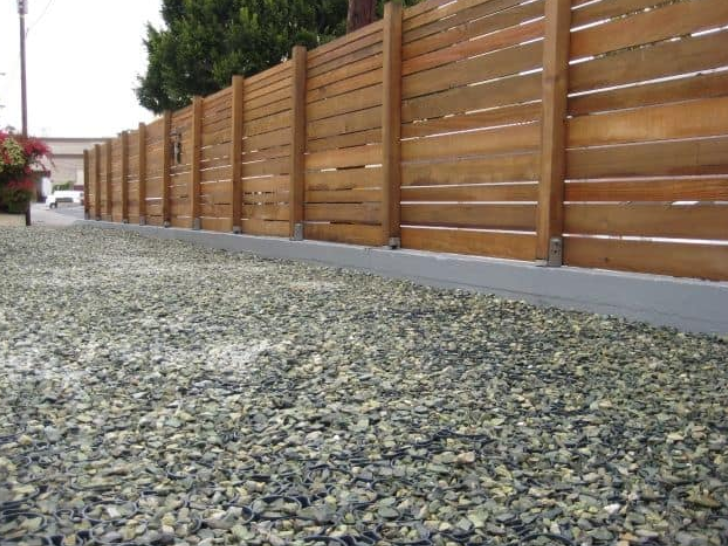
TRUEGRID® permeable pavers stabilize gravel surfaces while supporting natural drainage and long-term load distribution. The interconnected grid structure reduces rutting, migration, and repeated leveling common with loose aggregate driveways. TRUEGRID is also tested to be many times stronger than concrete or asphalt in compressive strength. Contact us today to explore driveway designs that balance durability, appearance, and predictable installation costs.
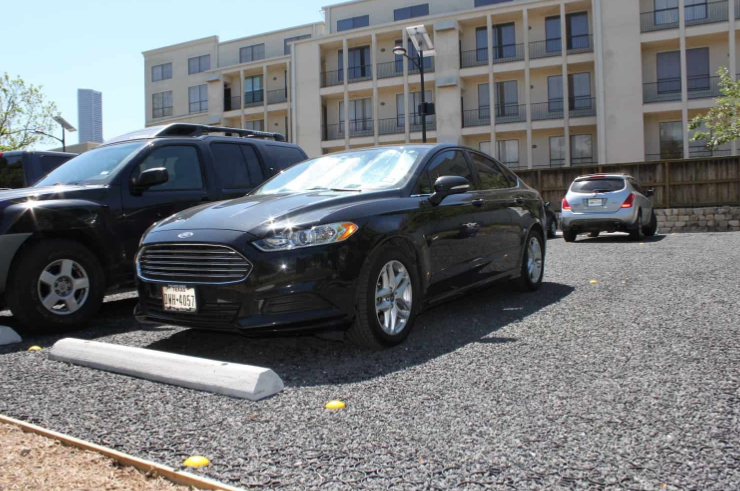
Low budgets reshape paving decisions. Homeowners prioritize affordability while contractors evaluate installation efficiency, durability risks, and maintenance exposure. When projects are constrained by cost, low cost permeable pavers become an essential part of the conversation because material selection, base design, labor requirements, and long-term surface performance all influence total project value.
What Low Cost Permeable Pavers Really Mean for a Project Budget
Cost-focused projects often begin with a narrow definition of value. Many buyers equate affordability with choosing the cheapest visible surface. In permeable paving, total project cost responds to excavation depth, aggregate volume, crew hours, equipment demand, and future maintenance exposure. An apparently inexpensive surface can become expensive surprisingly fast if installation complexity or correction cycles increase.
Why Initial Material Cost Alone Can Be Misleading
Material price represents only one portion of the total spend. Excavation, base preparation, trucking, compaction, edge restraint, and long-term corrections frequently exceed the cost of the visible surface itself. Budget performance improves when material selection reduces these downstream expenses.
Material Choices That Influence Affordability
Material selection governs much of a project’s financial outcome.
- Concrete and stone pavers carry higher placement and handling costs.
- Porous concrete and permeable asphalt shift expense toward specialized mixes.
- Plastic grid systems alter the equation by reducing material volume and stabilizing aggregate infill.
For budget-sensitive installations, low cost permeable pavers built around modular grid structures frequently reduce handling time while maintaining structural stability.
Comparing Traditional vs Grid-Based Systems
Traditional individual pavers require careful alignment, spacing, and leveling across the entire surface. Small inconsistencies in base elevation often lead to additional adjustments during installation. Grid-based systems rely on interlocking panels that distribute loads through compacted aggregate, reducing placement corrections and improving installation speed.
Installation Factors That Drive Cost Up or Down
Excavation and base construction represent major budget drivers because depth requirements and aggregate quantities determine shipping/delivery demand, compaction cycles, and machine hours. Permeable surfaces rely on an open-graded stone base engineered for both load transfer and infiltration. Systems that streamline base preparation or tolerate reduced excavation often generate measurable savings across materials, labor, and equipment time.
How Base Design Affects Labor Efficiency
Those base-level efficiencies influence crew productivity directly. Segmental pavers demand alignment, spacing, and leveling across the entire surface. Segmental pavers often times require multiple courses of base materials, with different aggregate sizes and compositions making extending installation time and adding to material costs. Elevation inconsistencies increase adjustment time. Grid-based permeable systems reduce many of these corrections through interlocking panels that distribute loads across a wider footprint. Faster placement shortens crew hours, lowering installation expense where low cost permeable pavers are selected specifically to control labor intensity. Grid-based permeable systems rely on a single base material in most cases – no bedding layer or separation fabrics are needed.
Balancing Price with Long-Term Performance
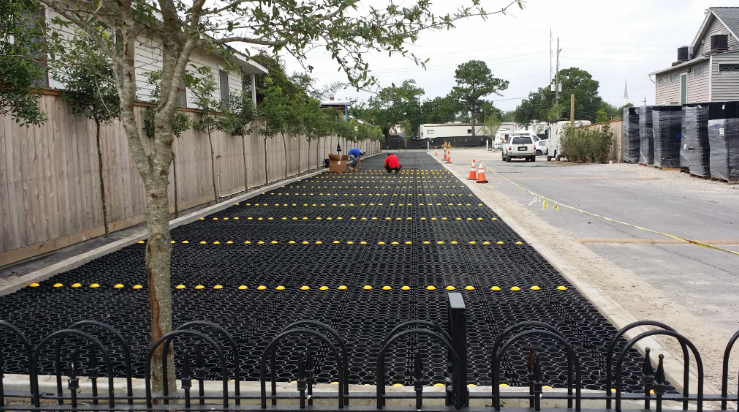
Drainage performance shapes project economics in important ways.
- Poor water management accelerates rutting, settlement, and surface degradation.
- Repairs introduce costs rarely captured in initial estimates.
- Impervious cover limits, implemented by municipalities, can increase taxes, fees, or service charges.
Low-cost permeable pavers designed for consistent vertical infiltration reduce these risks by allowing water to move through the surface rather than across it. Consistent infiltration also reduces runoff volume, which can limit erosion, pooling, and drainage stress on surrounding landscape areas.
Durability as a Budget Protection Strategy
Durability remains central to budget efficiency. Materials that deform under repeated vehicle loading introduce rutting, displacement, and structural instability. Premature cracking reverses early savings and accelerates maintenance cycles.
Lifecycle Cost and Maintenance Realities
Load expectations must align with structural capacity. Passenger vehicles, delivery trucks, and occasional service equipment impose different stresses. Grid-based permeable paving filled with properly compacted stone distributes loads while maintaining drainage pathways. Consistent structural support limits deformation, which directly reduces maintenance frequency and long-term repair expense.
Lifecycle cost offers a clearer measure of value. Initial material savings lose significance when recurring repairs or premature replacement enter the picture. Durable permeable paving systems reduce long-term expenditures by stabilizing aggregate, supporting load transfer, and minimizing corrective upkeep. This is why many homeowners prioritize low-maintenance paving strategies when evaluating permeable surface options.
Budget-Friendly Design Applications
Project scale amplifies every cost variable. Smaller patios may tolerate higher material costs because labor remains manageable. Larger driveways magnify installation complexity, trucking/delivery, and crew hours.
In these scenarios, low-cost permeable pavers capable of rapid installation deliver stronger financial advantages as square footage increases. These installations maintain a clean, finished appearance while preserving the natural texture and drainage advantages of gravel surfaces.
Common Cost-Effective Installations
Gravel driveways, garden walkways, RV parking pads, utility paths, and overflow parking areas benefit from permeable grid systems that minimize concrete volume and reduce excavation intensity. These installations deliver a finished appearance while preserving drainage performance.
How Layout and Coverage Decisions Control Total Project Cost
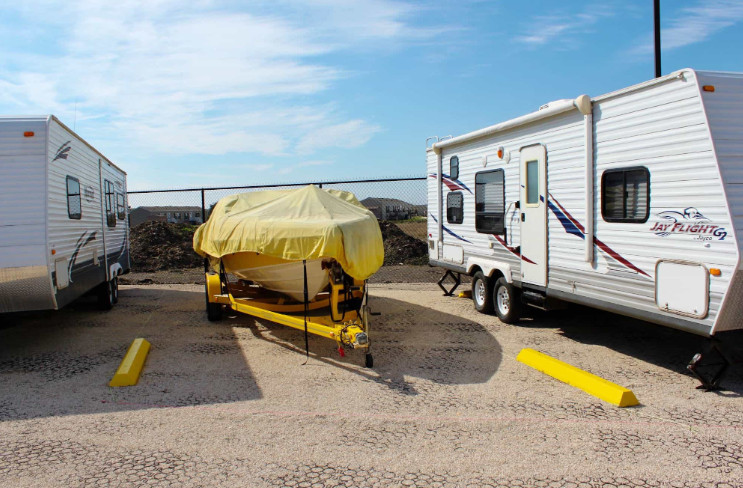
Budget performance is not dictated by material choice alone. Layout efficiency plays a decisive role. Many successful projects limit permeable paving coverage to areas that actually experience vehicle loading, such as tire paths, parking pads, or access lanes. Surrounding zones can remain gravel or landscaped without compromising function.
Hybrid layouts reduce excavation volume, aggregate demand, and installation time. Contractors often phase installation to match immediate use needs, allowing homeowners to spread costs while maintaining drainage performance. For long driveways and access lanes, narrowing paved widths while preserving structural support delivers measurable savings. Strategic layout decisions frequently lower total project cost more effectively than switching materials.
Maximizing Value Without Cutting Corners
DIY installation frequently appears as a direct path to savings. Eliminating labor can reduce upfront expense, yet performance depends on proper excavation, grading, and compaction. Homeowners evaluating DIY permeable pavers benefit from systems designed for simplified placement, predictable alignment, and forgiving tolerances.
Value maximization strategies further improve project economics. Optimizing excavation depth, selecting locally available aggregates, staging deliveries efficiently, and reducing waste generate cumulative savings without sacrificing durability. Contractors call this value engineering. Homeowners simply call it staying on budget.
Why TRUEGRID® Systems Support Budget Goals
Climate exposure introduces additional performance variables. Freeze-thaw cycles, heavy rainfall, and heat stress affect paving materials differently. Permeable systems engineered for efficient subsurface drainage protect structural layers while reducing weather-related maintenance demands.
Cost comparisons between permeable systems reveal meaningful differences. Buyers reviewing pervious pavers cost often find that grid-based systems deliver competitive upfront pricing alongside reduced long-term ownership expenses.
How TRUEGRID® Aligns With Budget-Conscious Priorities
TRUEGRID® systems are designed to support long-term value through:
- Gravel infill stabilization
• Load distribution across the surface
• Consistent water infiltration
• Reduced crew hours during installation
• Resistance to cracking and displacement
Get Long-Term Value with TRUEGRID® Permeable Paver Systems
TRUEGRID® permeable paver systems are engineered to stabilize gravel surfaces, manage drainage, and support vehicle loads while avoiding the cost and complexity of traditional hardscaping. Their modular design simplifies installation and reduces long-term maintenance exposure. Contact us today for more information.
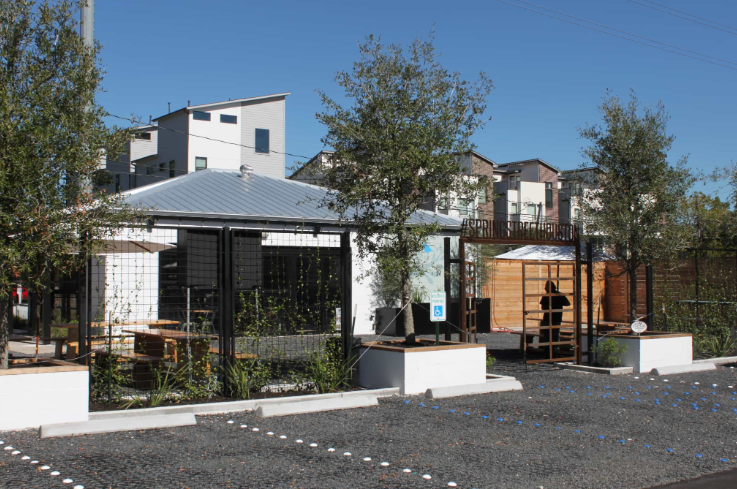
Unstable ground conditions rarely resolve without intervention. Water movement, surface wear, and repeated loading steadily weaken exposed soil and aggregate surfaces. Erosion control pavers provide a stabilization strategy designed to reinforce the ground while supporting drainage and long-term durability.
Why Erosion Damages Landscapes And Building Sites
Erosion alters both surface appearance and structural performance. Soil displacement reduces load support, destabilizes vegetation, and increases maintenance demands. Runoff-driven movement also creates uneven settlement, rutting, and exposed subgrades.
These effects tend to appear in predictable locations. Sloped yards develop channels and thinning turf. Gravel driveways show washouts, depressions, and migrating edges. Parking areas experience rutting where tires repeatedly stress weakened surfaces. Drainage exits become focal points for soil loss as water concentrates and accelerates.
Runoff Velocity And Soil Displacement
Runoff velocity directly governs erosion intensity. As runoff accelerates across slopes or smooth surfaces, shear stress increases. Higher energy flow detaches soil particles and transports them downslope or toward drainage discharge points.
Left unaddressed, these processes compound. Minor washouts evolve into channeling, base loss, and surface failure. Stabilization becomes a protective requirement rather than a cosmetic upgrade.
How Erosion Control Pavers Stabilize Soil
Erosion control pavers stabilize the ground by confining infill materials within an interconnected structural grid, a design approach commonly used in engineered systems such as TRUEGRID® erosion control pavers. Aggregate or soil placed inside the cells resists lateral displacement. This confinement transforms loose materials into a stabilized composite layer.
Load distribution is central to performance when the system is installed over a properly prepared base. Traffic forces spread across the grid instead of concentrating at isolated contact points. Reduced pressure concentrations limit rutting, shifting, and surface deformation.
Material Confinement And Surface Integrity
Material confinement adds another layer of stabilization. Confined infill materials remain locked in position even during saturation cycles. Fewer movement pathways directly reduce erosion susceptibility.
This reinforced behavior improves durability across multiple applications. Driveways maintain grade integrity. Access lanes resist tire rutting. Slopes preserve surface stability under rainfall exposure.
Drainage Performance And Runoff Management
Surface permeability changes how water interacts with the pavement. Solid concrete and asphalt shed rainfall immediately, often concentrating runoff at edges or low points. Concentrated discharge increases erosion risk at transitions into exposed soil.
Erosion control pavers allow rainfall to infiltrate vertically through open grid spaces. Subsurface layers absorb and temporarily store water before gradual release. This moderates runoff volume under conditions where base and soil infiltration rates are properly matched.
Runoff Energy Reduction And Surface Protection
Runoff moderation reduces the severity of common site failures. Lower discharge volumes limit edge erosion. Reduced surface velocity decreases soil detachment. Stabilized infill materials resist washout during heavy rainfall events.
Reduced surface flow velocity further limits erosion forces. Water passing through the system carries less energy across the pavement face. Lower shear stress means fewer detached soil particles.
Vegetation Integration With Erosion Control Grass Pavers
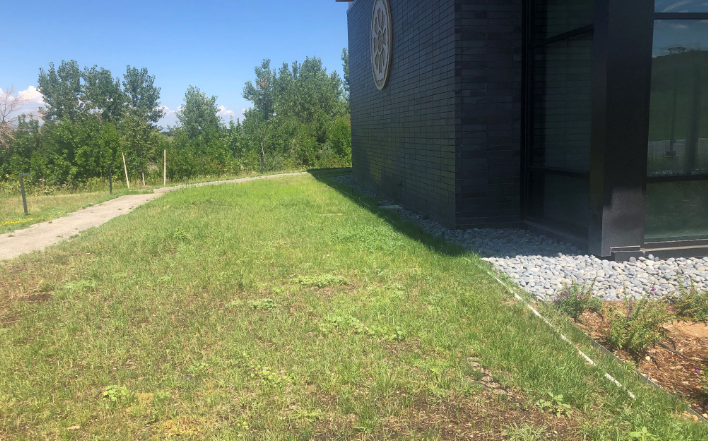
Vegetation strengthens erosion resistance through root reinforcement and rainfall dissipation.
- Conventional hardscape installations eliminate plant growth, removing a natural stabilizing mechanism.
- Bare surfaces remain vulnerable to runoff energy, raindrop impact, and gradual soil destabilization.
Erosion control pavers designed for turf support allow grass to grow within the structural grid. Root systems anchor soil while the grid protects against compaction and displacement. Healthy vegetation further improves erosion resistance by dissipating rainfall impact and increasing surface roughness. This combination performs especially well on slopes and low-impact traffic zones.
Design Considerations For Effective Erosion Control
Designing for erosion control requires aligning surface stabilization with site-specific environmental and load conditions.
Site And Soil Evaluation
Successful installations begin with site evaluation. Slope gradient influences runoff velocity and shear stress, with steeper grades requiring stronger stabilization and base preparation strategies. Soil characteristics further affect infiltration and confinement behavior. Clay-heavy soils drain slowly, while granular soils permit faster percolation, making base design selection directly dependent on subsurface conditions.
Drainage And Load Variables
Drainage pathways also require attention. Water concentration zones, discharge points, and transitions between surfaces often experience the highest erosion forces. Load expectations further guide system selection, since pedestrian zones, vehicle access areas, and emergency routes impose different structural demands.
Installation Factors That Influence Long-Term Performance
Base preparation largely determines surface stability. Proper grading establishes drainage direction and prevents standing water, while compaction ensures consistent load support across the system. Subbase materials must balance structural capacity with drainage performance. Inadequate support allows settlement, and insufficient permeability restricts infiltration. Both conditions compromise erosion resistance.
Edge restraint preserves confinement by preventing lateral spread that weakens load distribution effectiveness. Installation precision directly affects long-term outcomes. Minor base irregularities, insufficient compaction, or missing restraints can introduce movement, displacement, and localized surface failure.
Comparing Erosion Control Pavers To Traditional Methods
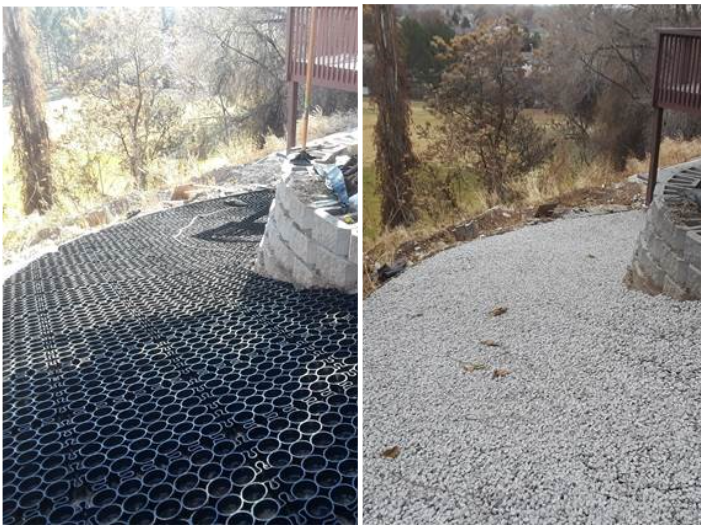
Traditional erosion mitigation methods address specific problems but often leave secondary vulnerabilities. Performance differences typically emerge under runoff exposure, traffic loading, and maintenance cycles.
- Retaining walls resist soil movement but do not stabilize runoff-exposed surfaces
- Riprap dissipates flow energy yet limits accessibility
- Gravel surfaces migrate under traffic and rainfall
- Solid pavements intensify runoff and edge erosion
Erosion control pavers combine stabilization, drainage, and usability within a single system.
Partner With TRUEGRID® For Reliable Ground Stabilization
TRUEGRID® permeable paving systems are engineered to stabilize surfaces exposed to runoff, loading, and environmental stress. Our structural grid design supports aggregate or vegetation while maintaining consistent drainage behavior. Contact us today to evaluate erosion control strategies designed for long-term surface performance and ground protection.
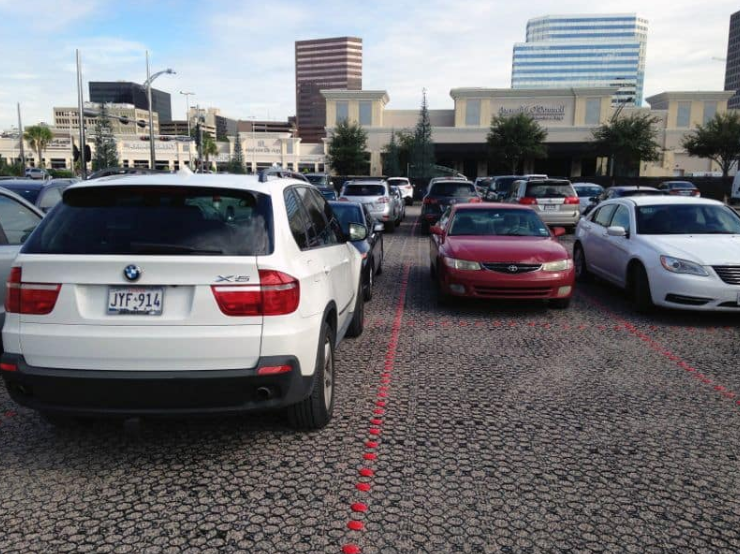 Commercial parking areas must withstand constant vehicle traffic while addressing drainage demands, maintenance exposure, and regulatory pressure tied to stormwater management. Conventional asphalt and concrete surfaces often introduce compounding costs through runoff mitigation requirements and recurring repairs. Parking lot permeable pavers provide a different design strategy by integrating structural durability with surface-level water infiltration.
Why Conventional Parking Lots Create Long-Term Challenges
Traditional asphalt and concrete lots shed water immediately, converting rainfall into runoff that must be captured, conveyed, and managed through drains, piping networks, and detention systems. These components increase construction complexity while consuming valuable site area. Over time, surface deterioration introduces another financial burden as cracking, rutting, and patching cycles steadily raise maintenance expenditures.
Runoff behavior also affects operational reliability.
- Ponding stresses pavement surfaces and increases hydroplaning risk.
- In colder climates, trapped surface moisture can refreeze, accelerating pavement damage and creating safety concerns.
What begins as minor wear frequently develops into resurfacing or full replacement.
How Parking Lot Permeable Pavers Alter Site Drainage Behavior
A permeable parking lot allows water to pass vertically through the pavement structure instead of forcing it across the surface.
- Rainfall infiltrates through void spaces and enters an engineered aggregate base designed to temporarily store and disperse moisture.
- Peak runoff volumes decline, and the pavement begins functioning as part of the site’s drainage strategy.
This infiltration mechanism explains how permeable parking lots manage runoff directly at the surface level.
This hydrologic shift changes how commercial properties respond to storm events. Instead of overwhelming downstream systems with rapid discharge, infiltration moderates flow rates and reduces surface accumulation.
Stormwater Management and Regulatory Implications
Municipal regulations increasingly restrict impervious surface coverage and impose runoff mitigation requirements on new developments. A pervious parking lot can contribute toward compliance objectives by reducing surface discharge and supporting groundwater recharge. These characteristics may:
- simplify approvals
- decrease detention system requirements
- preserve buildable land otherwise allocated to stormwater infrastructure
Broader site-planning strategies tied to drainage efficiency are central to making parking lots more sustainable.
Permeable pavement parking lots also help stabilize drainage behavior during heavy rainfall. Water moves beneath the surface rather than collecting at low points, reducing flood risk, limiting hydrostatic pressure buildup, and protecting pavement integrity.
Water Quality Considerations
Runoff from conventional parking areas frequently carries sediment, hydrocarbons, and surface contaminants into municipal drainage systems. The issue extends beyond drainage volume alone. Infiltration-based pavement structures introduce a filtering effect as water migrates through aggregate layers and underlying soils.
For commercial developments facing water quality mandates, this characteristic links drainage control with pollutant mitigation. The pavement structure participates in both hydraulic and environmental performance objectives.
Comparing Permeable Pavement Categories

Not all permeable systems perform identically under traffic and environmental exposure.
Pervious Concrete
Designed with interconnected voids that allow infiltration. Structural rigidity can limit tolerance to subgrade movement, and cracking may occur under repeated heavy loading.
Porous Asphalt
Provides permeability through reduced fine aggregates. Long-term performance depends heavily on proper base design and maintenance practices that prevent clogging.
Grid-Supported Systems
Parking lot permeable pavers supported by structural grids stabilize aggregate infill while distributing loads across a flexible, open-graded base. This configuration supports infiltration while resisting rutting and localized deformation. Structural and hydraulic performance variables associated with a permeable parking lot depend heavily on base design and load distribution.
Grid systems are commonly selected for parking environments where durability, drainage reliability, and maintenance stability are primary priorities.
Durability Under Commercial Traffic
Commercial parking surfaces endure repeated loading from passenger vehicles, delivery trucks, service vehicles, and emergency apparatus. Traditional pavements rely on slab rigidity or layered flexibility, both of which remain vulnerable to fatigue cracking and stress concentration.
Parking lot permeable pavers distribute loads differently because structural grids disperse vehicle weight through a combination of the grid and infill and into the engineered aggregate base. This load distribution reduces rut formation, surface depressions, and shear-related failures.
For property owners, improved durability directly influences lifecycle costs by reducing repair frequency and extending service life.
Design Factors That Influence Long-Term Performance
Successful permeable parking design begins beneath the surface.
Subgrade Evaluation
Soil infiltration capacity determines how water behaves once it enters the base. Lower-permeability soils may require thicker aggregate layers or underdrain strategies.
Aggregate Base Construction
Open-graded, angular stone creates interconnected void spaces that provide both structural support and temporary water storage capacity. Base thickness must reflect anticipated traffic loads.
Surface Stabilization
Grid or paver selection governs infill confinement, resistance to lateral movement, and preservation of infiltration pathways. Layout geometry, circulation flow, and stall configuration influence system behavior, factors addressed when planning how to design a parking lot.
Each component influences structural performance and drainage behavior simultaneously.
Installation Practices That Protect Pavement Integrity
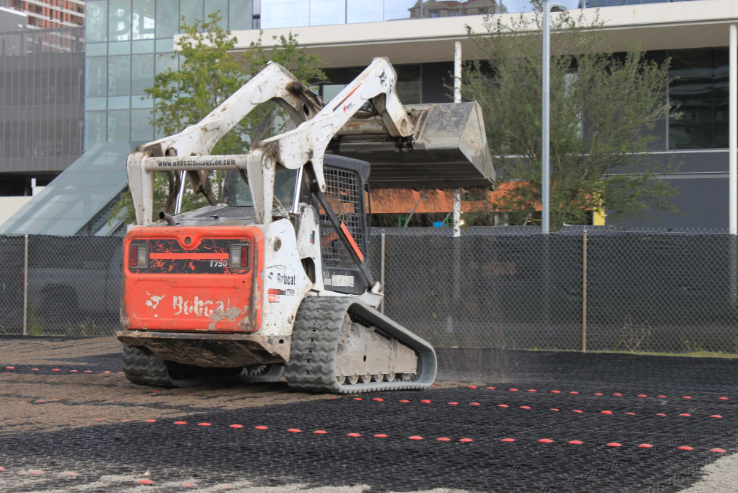
Installation sequencing plays a defining role in system longevity. Each phase influences structural stability and long-term permeability.
- Subgrade Preparation
Uniform grading, typically through excavation, and compaction establish consistent support conditions and reduce the risk of localized settlement. Geotextile fabrics lining the area are used to add loading capacity and separation of materials.
- Aggregate Base Placement
Open-graded stone is installed in controlled lifts to achieve load-bearing stability while preserving void spaces required for infiltration. Base depths are determined by loading requirements and detention volume requirements.
- Edge Restraints – If needed
Defined pavement boundaries prevent lateral movement and maintain surface geometry under traffic loads. This is needed if the grids are installed above grade or for special requirements.
- Grid or Paver Placement
Modular components are positioned according to layout plans, completing the load-distribution and stabilization structure. Grid pavers will then be filled with gravel or soil (for grass) or sometimes with specialty fills.
When executed correctly, this sequence preserves both permeability and pavement integrity.
Maintenance Expectations for Permeable Parking
Maintenance planning remains essential for preserving infiltration performance, particularly in environments exposed to sediment, debris, and seasonal contaminants. Routine sweeping or vacuuming helps prevent fine sediment accumulation that could restrict drainage pathways. Organic materials such as leaves should be removed periodically prior to decomposition. Non-organic materials, such as plastic bottles, while typically not harmful to the performance, need to be removed to prevent downstream contamination. Aggregate replenishment is very rare, but gravel infill should be maintained level to the top of the grids and isolated area can be re-filled easily.
Compared with sealed pavements, permeable systems will not need crack sealing, patching, and resurfacing cycles are typically not needed. The absence of rigid slab deterioration mechanisms reduces many recurring repair demands, simplifying long-term maintenance planning.
Climate and Safety Performance
Surface drainage characteristics influence safety during wet and cold conditions. Parking lot permeable pavers reduce standing water by allowing rainfall to infiltrate rather than accumulate, which lowers slip hazards and limits surface refreezing risks.
In freeze–thaw environments, rapid drainage also limits moisture entrapment within the pavement structure. Reduced saturation decreases expansion pressures associated with cracking and spalling.
Why TRUEGRID® Systems Are Specified for Parking Applications
Permeable parking designs rely on consistent load support and long-term stability to maintain drainage performance. Grid-based systems address these requirements by stabilizing aggregate infill within a defined structural framework. This confinement reduces lateral displacement under braking and turning forces, particularly in entrances, drive aisles, and high-traffic zones. The grids protect the gravel infill from pulverization reducing gravel loss from erosion and dust entrainment.
System selection often depends on constructability and maintenance expectations. Modular grid components allow predictable installation workflows while supporting heavy vehicle loads. The resulting pavement structure maintains permeability without introducing the cracking mechanisms associated with rigid slabs or the deformation patterns common to flexible asphalt surfaces.
Request TRUEGRID® Project Support
TRUEGRID® permeable paving systems are designed for commercial projects requiring structural durability and dependable drainage performance. Project teams receive guidance on layout planning, base design considerations, and installation practices aligned with long-term pavement stability. Contact TRUEGRID® today to evaluate permeable solutions for your next development.
