
The Best Driveway Material for Cold Weather: What Holds Up Through Winter
If you live in an area that experiences a lot of cold weather, you know all too well the effects of freezing temperatures on exterior materials. Cold can make surfaces more vulnerable to damage over time, especially when they are exposed to repeated freeze/thaw cycles. Driveways take daily vehicle loads, constant surface friction, and ongoing winter exposure, so the material you choose has a major effect on long-term maintenance and durability.
For homeowners comparing options, the best driveway material for cold weather is usually the one that can manage freeze/thaw exposure, drain meltwater efficiently, and remain serviceable during winter maintenance. The comparison below makes those differences easier to see.
Driveway Material Comparison for Winter Conditions
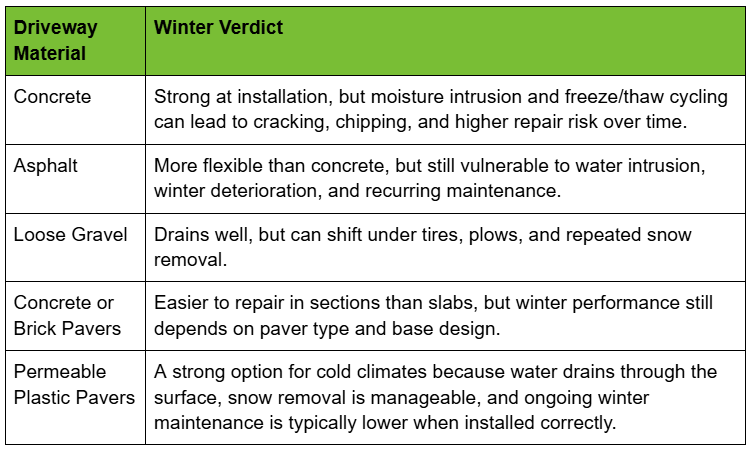
That comparison shows why slab-style surfaces often struggle in winter, especially when moisture, freeze/thaw cycling, and repeated snow removal are part of the yearly load.
Asphalt and Concrete Can’t Hack the Cold
Concrete and asphalt are common driveway materials, but both can struggle in harsh winter conditions. In freeze/thaw-heavy climates, moisture intrusion and repeated temperature swings can increase maintenance demands and shorten long-term service life.
Concrete Performance in Freeze/Thaw Conditions
Concrete becomes more vulnerable when moisture enters the surface and temperatures drop below freezing. As that moisture freezes and expands, repeated freeze/thaw cycles can worsen cracking, chipping, and other forms of surface deterioration over time.
Severe cracking or subsurface damage can lead to expensive repairs and, in some cases, full replacement. De-icing salts can also affect surface appearance and contribute to long-term wear, especially when winter exposure is repeated year after year.
Asphalt Performance in Cold Climates
Asphalt can be used in cold climates, but it is still susceptible to water intrusion and freeze/thaw-related distress. When moisture works its way into the pavement structure, seasonal temperature swings can accelerate deterioration and increase the likelihood of repairs.
As subsurface damage becomes more severe, the driveway may require major resurfacing or replacement depending on the extent of the wear. Cold weather can also shorten the interval between maintenance cycles, which is why asphalt surfaces are often resealed periodically to help limit water penetration. De-icing salts and chemicals can speed up asphalt degradation and shorten the lifespan.
Why Drainage Matters in Freeze/Thaw Conditions
The biggest winter problem is not cold alone. It is cold combined with trapped moisture. When porous concrete becomes saturated and then freezes, the expanding water can create internal pressure that contributes to cracking, delamination, and surface deterioration over repeated freeze/thaw cycles.
That is why drainage changes the performance equation. When snowmelt or winter rain cannot move away from the driveway surface, water remains in or on the pavement longer, which increases the chance of refreezing, slick spots, and material breakdown.
A system that moves water through the surface rather than leaving it on top is often a stronger long-term choice, which is one reason permeable systems are candidates for the best driveway for cold climate applications. Competitor coverage also leans on drainage as a winter-performance differentiator, which reinforces the need to address it directly here.
Pavers Provide a Superior Option for Cold-Weather
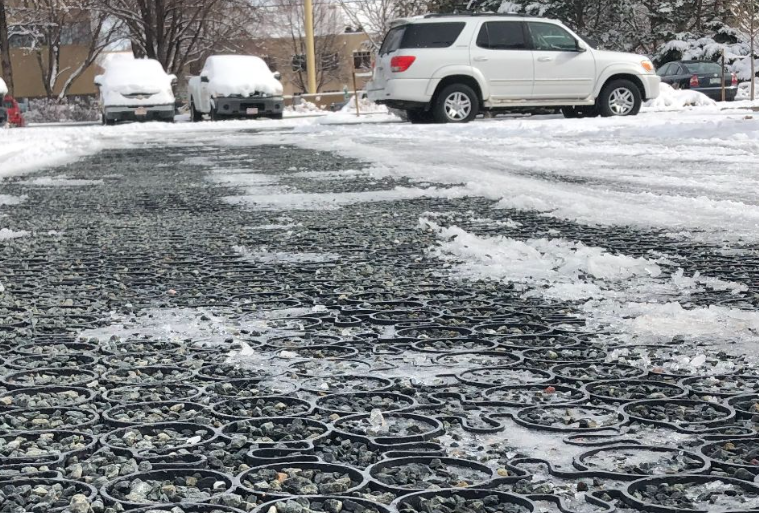
Pavers are one of the strongest driveway options for cold weather, but not all pavers are created equal. Some systems perform better than others, and cold-weather results depend on material type, permeability, and base design. Concrete and brick pavers can perform well when they are properly selected and installed, but winter durability still depends on how the full system manages drainage and freeze/thaw movement.
Why Permeable Pavers Perform Better in Winter
Permeable plastic pavers are designed to perform in a wide range of weather conditions. TRUEGRID states that its pavers are made from 100% recycled HDPE plastic and are engineered to withstand repeated sub-zero temperatures and freeze/thaw cycles without the same cracking risks associated with slab-style surfaces.
Because these systems allow precipitation to drain through the surface and into the base below, they can help reduce standing water, surface ice, and winter maintenance demands. Freeze/thaw cycles do not affect high-quality permeable paver systems in the same way they affect rigid slab surfaces, which is a major advantage in cold-weather driveways.
Long-Term Maintenance and Appearance Benefits
Gravel-filled TRUEGRID pavers do not require resurfacing in the way asphalt does and typically need minimal maintenance when properly installed. TRUEGRID says its systems can last up to 60 years, making them a long-term pavement option for driveways that need durability with lower ongoing maintenance.
Another reason why these pavers make the best driveway for a cold climate is that they will not fade or stain in the same way many traditional slab surfaces can over time. You can also use a variety of different-colored aggregates that will remain visually consistent for many years, which gives homeowners more style options than a typical black asphalt or gray concrete driveway.
Snow Removal on a Permeable Driveway
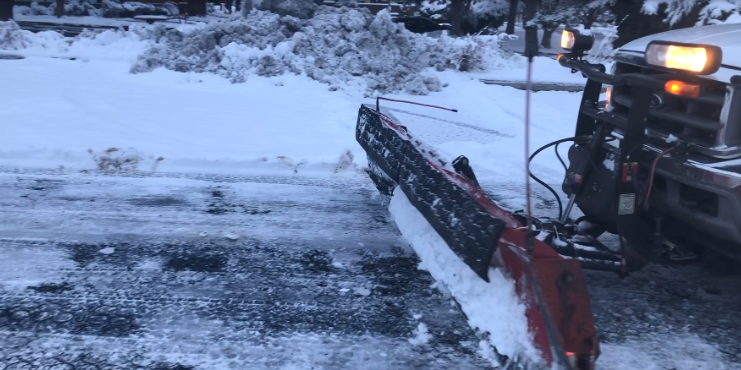
For homeowners trying to choose the best driveway for snow, one of the biggest questions is how the surface handles plowing, shoveling, and snow blowing over time. A driveway that looks durable at installation can become much less practical if routine winter clearing damages the surface season after season.
TRUEGRID’s snow-plowing guidance states that a correctly installed surface can be plowed if the blade is raised about 2 inches, and the company’s snow-removal article says shovels, snow blowers, and snowplows can all be used on the surface when handled properly. Both resources also emphasize that if a section is damaged, repair is easier than replacing a cracked slab.
Proper blade height matters during snow plowing a TRUEGRID surface because the system is designed to be cleared without dragging the plow edge directly across the grid.
Routine winter clearing on a permeable driveway also follows the practices used for paver driveway and snow removal, including plowing, shoveling, and snow blowing when the surface is handled correctly.
Ice Melt and Winter Maintenance Guidance
Winter maintenance products also affect long-term driveway performance. The challenge with slab surfaces is not just snow accumulation. It is the combination of moisture, surface wear, and repeated freeze/thaw exposure, which can be aggravated when water remains trapped near or on the pavement.
With permeable paver systems, winter care should begin with prompt snow removal and surface clearing, followed by conservative de-icer use only as needed and in line with the manufacturer’s guidance. That approach helps reduce unnecessary chemical exposure while keeping the focus on routine winter maintenance.
Permeable plastic grid pavers are typically made from recycled HDPE plastic, a durable material that holds up well against de-icing chemicals and salt. While de-icing products will not damage the grid pavers themselves, it’s still best to use them sparingly, especially on grass-infill surfaces, to help maintain healthy grass growth and overall surface appearance.
TRUEGRID Outperforms Asphalt and Concrete in Cold Weather
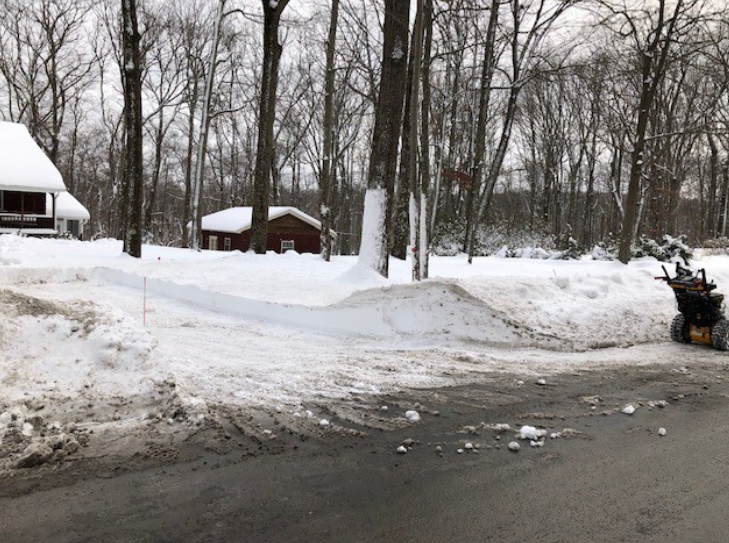
If you’re in need of a driveway that’s specifically suited to remain durable and serviceable in cold weather, look no further than TRUEGRID permeable pavers. In freeze/thaw-heavy, snow-prone conditions, they can require less maintenance and offer better winter performance than many conventional concrete or asphalt surfaces.
If you want a driveway that costs less to maintain, will look better, and last longer in cold climates, contact us today to get in touch with a pavement professional.
FAQ
What is the best driveway material for cold climates?
Permeable paver systems are often one of the strongest options because they manage drainage, reduce standing water, and avoid many of the freeze/thaw problems that damage slab-style surfaces over time. That makes them a practical choice for homeowners who want fewer winter repairs and more reliable cold-weather performance.
What are the best pavers for snow removal?
The best pavers for snow removal are the ones that can handle plowing, shoveling, and snow blowing without repeated surface damage when installed correctly. Systems that also drain meltwater and allow easier section-by-section repair are better suited to long winters than slab surfaces that can crack and require larger repairs.
What’s the safest ice melt for pavers?
The safest ice melt for pavers is the one that aligns with the manufacturer’s guidance for the surface. In practice, it is best to use only what is needed after snow removal rather than depending heavily on de-icers throughout the winter.
