Outdoor surfaces rarely fail all at once. Water collects where it shouldn’t, soil softens beneath rigid materials, and small shifts gradually turn into visible damage across driveways, patios, and walkways. For homeowners evaluating 24×24 plastic pavers, long-term performance depends on how a paving system manages weight, movement, and drainage together rather than how the surface looks on day one.
Why Size Matters When Choosing Residential Pavers
Choosing 24×24 plastic pavers is first a sizing decision. Larger-format units cover more area per piece, which changes how loads are distributed and how seams behave across the surface. In residential settings, that size reduces the number of joints that loosen or migrate while creating a more uniform platform beneath vehicles and foot traffic.
Traditional paving materials rely on mass and rigidity to stay put. Concrete and stone resist movement by being heavy, which works until water pressure or freeze-thaw cycles begin pushing back from below. Plastic grid pavers approach stability through structure rather than weight, allowing the surface to stay aligned as conditions underneath shift.
How 24×24 Plastic Pavers Handle Vehicle Loads
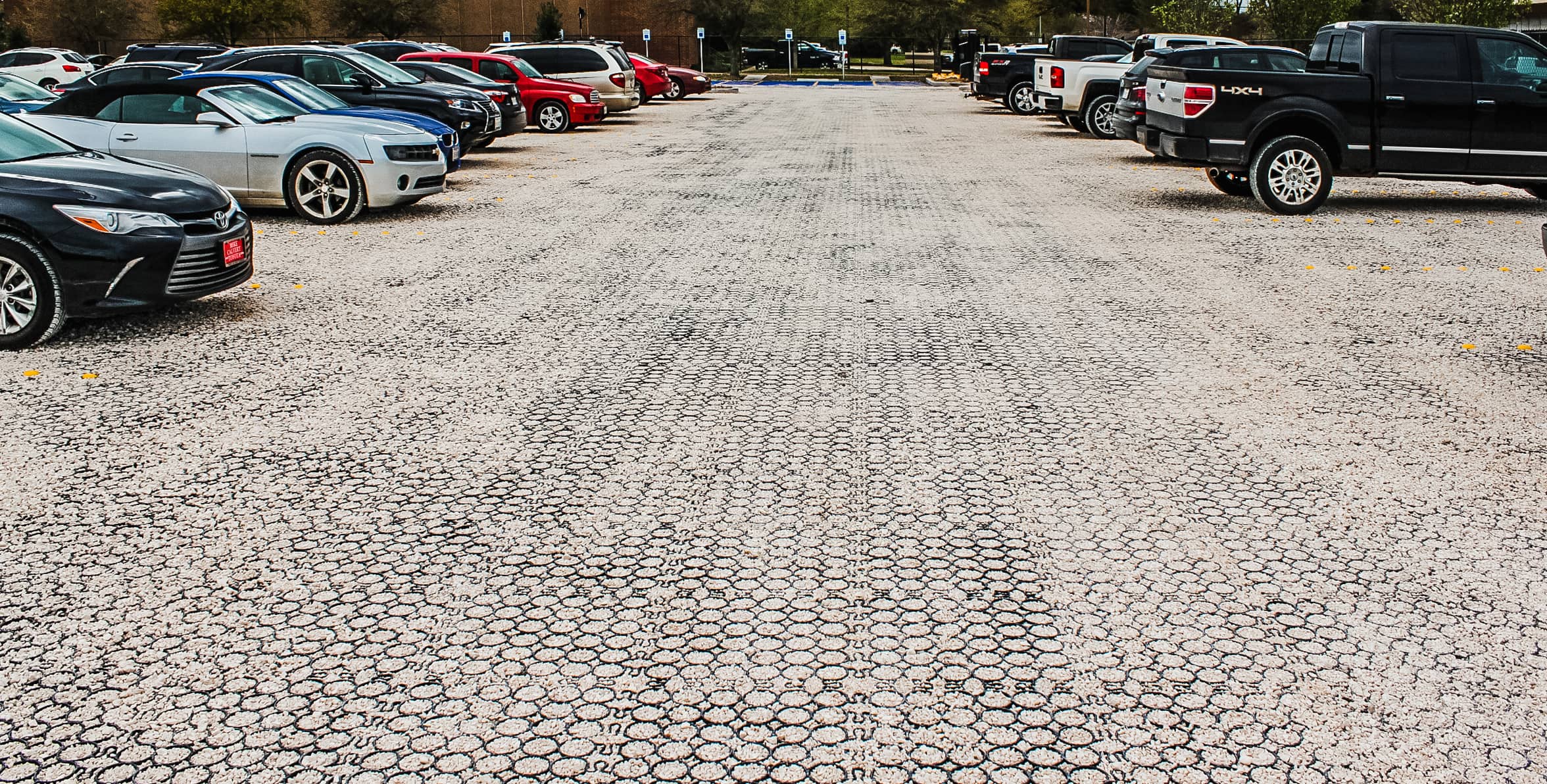
The 24×24 format increases contact area between the surface and the base. When weight is applied from parked cars or repeated foot traffic, pressure spreads across a wider footprint through the filled grid and into the compacted base below. That distribution limits concentrated stress at edges and corners, where surface problems usually start.
For driveways, repeated loading along the same wheel paths is the real test. Rigid materials tend to crack or rut as force builds in one place over time. With 24×24 plastic pavers, vehicle weight is carried by the filled grid structure, allowing controlled movement that keeps stress from stacking up and showing through at the surface.
Drainage Performance That Protects the Surface Below
Drainage is the other driver of long-term stability. Many surface failures begin when water gets trapped beneath paving, softening soil and speeding up movement. Large-format plastic pavers drain vertically through the surface and into the base, relieving pressure after storms and helping the surface rebound quickly.
Where 24×24 Plastic Pavers Work Best Around a Home
Different outdoor areas place different demands on a surface, even within the same property.
Driveways
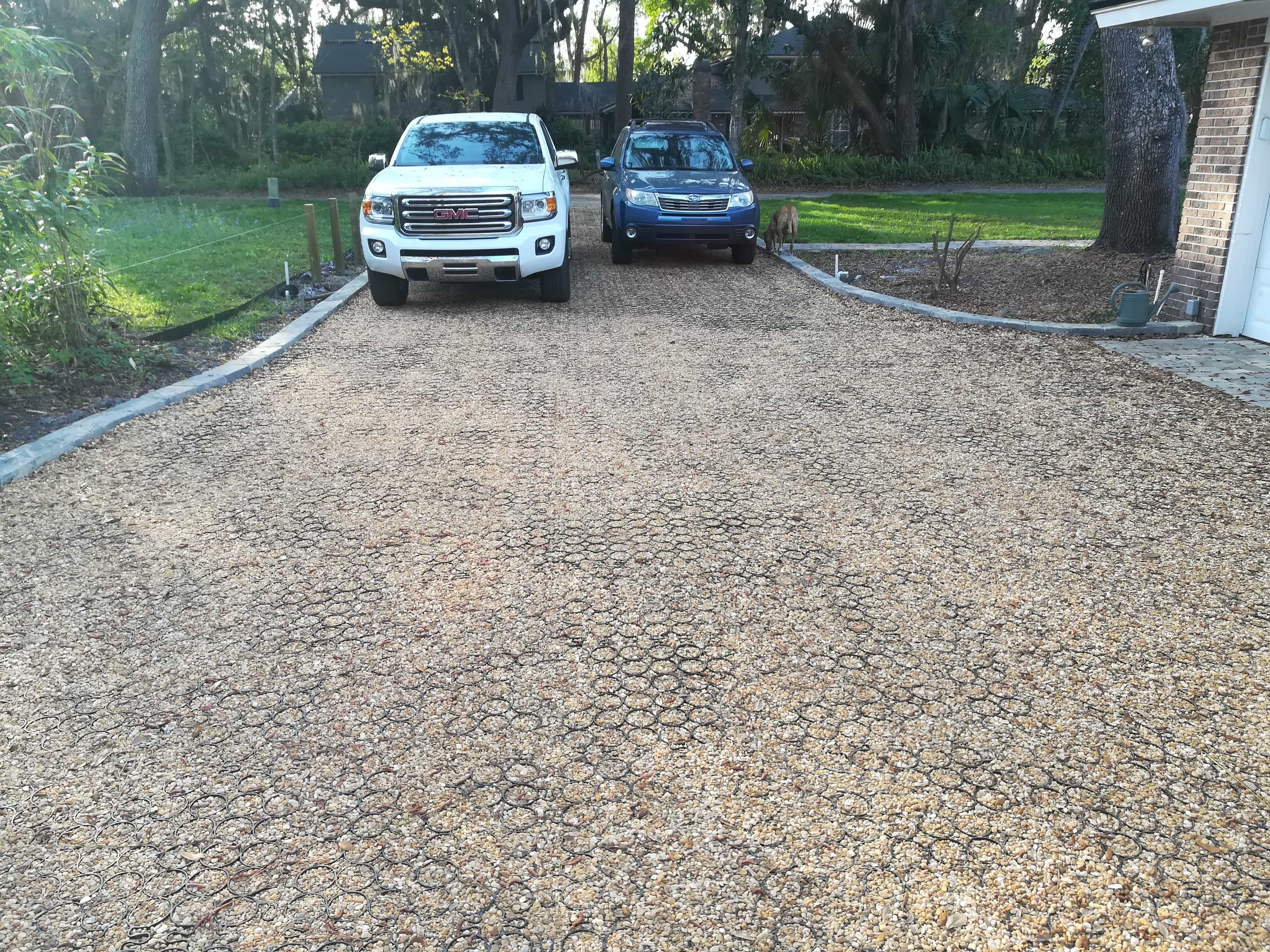
Driveways benefit most from load distribution and controlled flexibility. A surface that spreads vehicle weight evenly and allows minor movement avoids the cracking and rutting that often appear first in high-traffic wheel paths.
Patios
Patios see the benefit where slope is limited or water tends to linger near the home. When rain drains through the surface instead of pooling on top, outdoor spaces dry out sooner and stay cleaner around the edges. Over time, consistent drainage helps patios hold grade without the cycle of lifting and resetting stones.
Walkways
Walkways place lighter loads on the surface, yet safety hinges on consistency. Uneven joints become tripping hazards as materials shift with the seasons. Larger-format plastic pavers reduce seam density, which helps keep walking paths smooth. With proper edge restraint, those paths stay flat year after year with minimal attention.
Installation Expectations for Homeowners
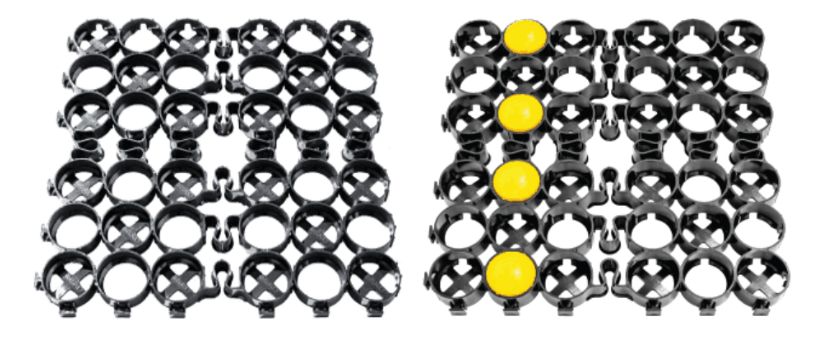
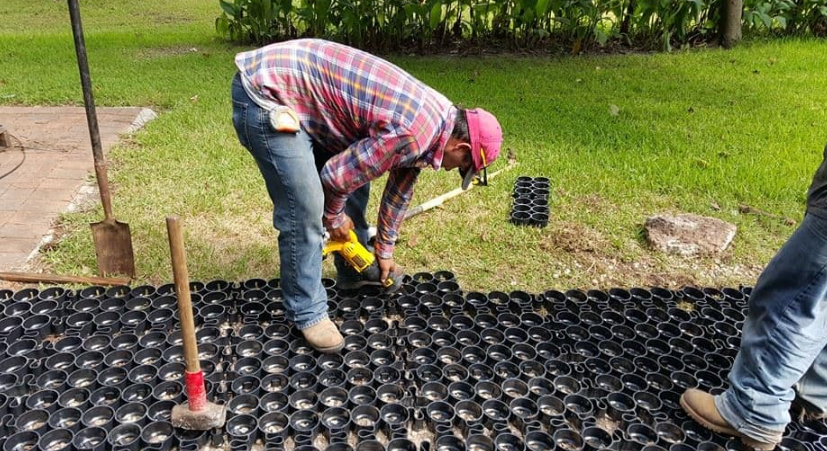
Installation expectations often give homeowners pause with larger formats. Plastic grid systems flip that assumption. Individual units remain lightweight and modular, making them easier to carry and place than solid slabs while covering ground efficiently as the layout comes together. The pavers typically do not require specialized equipment like concrete or asphalt would.
For most residential projects, installation follows a predictable sequence.
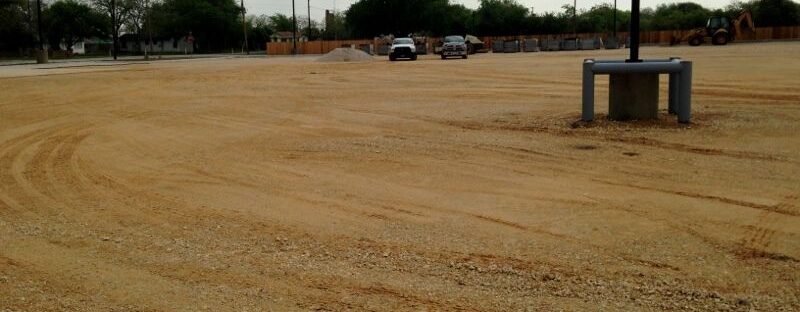
- Excavate and set depth. Remove existing material to the planned depth so the finished surface can sit on a stable base without soft spots. Compact the floor of the area. It’s recommended to line the excavation with a permeable landscape fabric as well.
- Build the base in compacted lifts. Add aggregate in layers and compact each lift so the base supports the weight evenly instead of settling later.
- Place and connect the grid panels. Set panels tight to the layout lines and lock connections so the surface behaves as one continuous field.
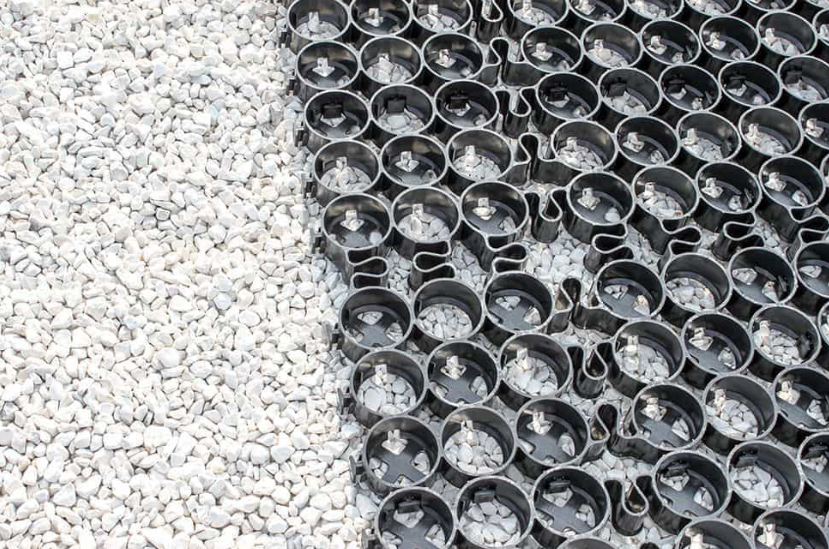
- Add infill and level. Fill the grid with gravel, grass, or another approved infill, level to the top of the grid paver.
This sequence keeps installation manageable while delivering consistent results across larger areas.
Base preparation still does the heavy lifting. A compacted aggregate base supports the grid evenly and encourages downward drainage. Once filled with gravel, grass, or another approved infill, the grid behaves as a single surface rather than a patchwork of separate pieces.
Edge restraint quietly finishes the job. While not technically needed for the paver performance without perimeter containment, even a well-prepared base can allow movement over time. Continuous restraint keeps the surface in position while allowing the interior to handle natural expansion, contraction, and minor settlement without telegraphing damage.
How Plastic Pavers Compare to Traditional Paving Materials
Comparisons to traditional paving often stop at appearance, yet the real differences show up with time and weather. Concrete cracks as the ground shifts. Stone pavers loosen as joint material washes out. Plastic grid systems manage movement directly, reducing the stress that leads to visible surface failure.
Long-Term Maintenance and Repair Realities
How a surface behaves after years of weather, traffic, and seasonal movement determines whether ownership stays manageable or becomes a recurring project.
Localized Repairs Without Full Tear-Out
Maintenance reflects that difference. Repairs to rigid surfaces are disruptive and tend to be permanent. Plastic grid systems allow localized fixes. Sections can be lifted, the base corrected, and the surface restored without tearing out the entire area, which takes pressure off long-term ownership.
Design Flexibility Through Infill Changes
Design flexibility adds another layer of appeal. The 24×24 format supports clean layouts while adapting to curves and transitions as needed. Because the grid is filled with visible material, homeowners can refresh the look by changing infill without disturbing the structure below.
How TRUEGRID Supports Long-Term Reliability
TRUEGRID’s residential 24×24 systems follow these performance principles. The grid structure spreads loads, maintains alignment, and supports full permeability across the surface. Used in driveways, patios, and walkways, the system works with site conditions instead of fighting them.
Why 24×24 Plastic Pavers Deliver More Predictable Performance Over Time
Over time, outdoor surfaces make their verdict clear. Standing water, settling, and surface damage signal that forces below are not being managed effectively. 24×24 plastic pavers address those issues by combining size, structure, and drainage into a single approach that supports residential use without frequent repair.
For homeowners planning new outdoor spaces or replacing failing surfaces, understanding how size affects performance leads to better outcomes. Larger-format plastic pavers are chosen because they help surfaces stay stable, drain properly, and remain usable year after year.
Explore TRUEGRID® Residential Paver Systems for Long-Term Surface Stability
TRUEGRID designs residential paver systems that distribute load, manage drainage, and maintain surface alignment over time. Each grid is engineered to support driveways, patios, and walkways under real residential conditions. Contact us today for more information.