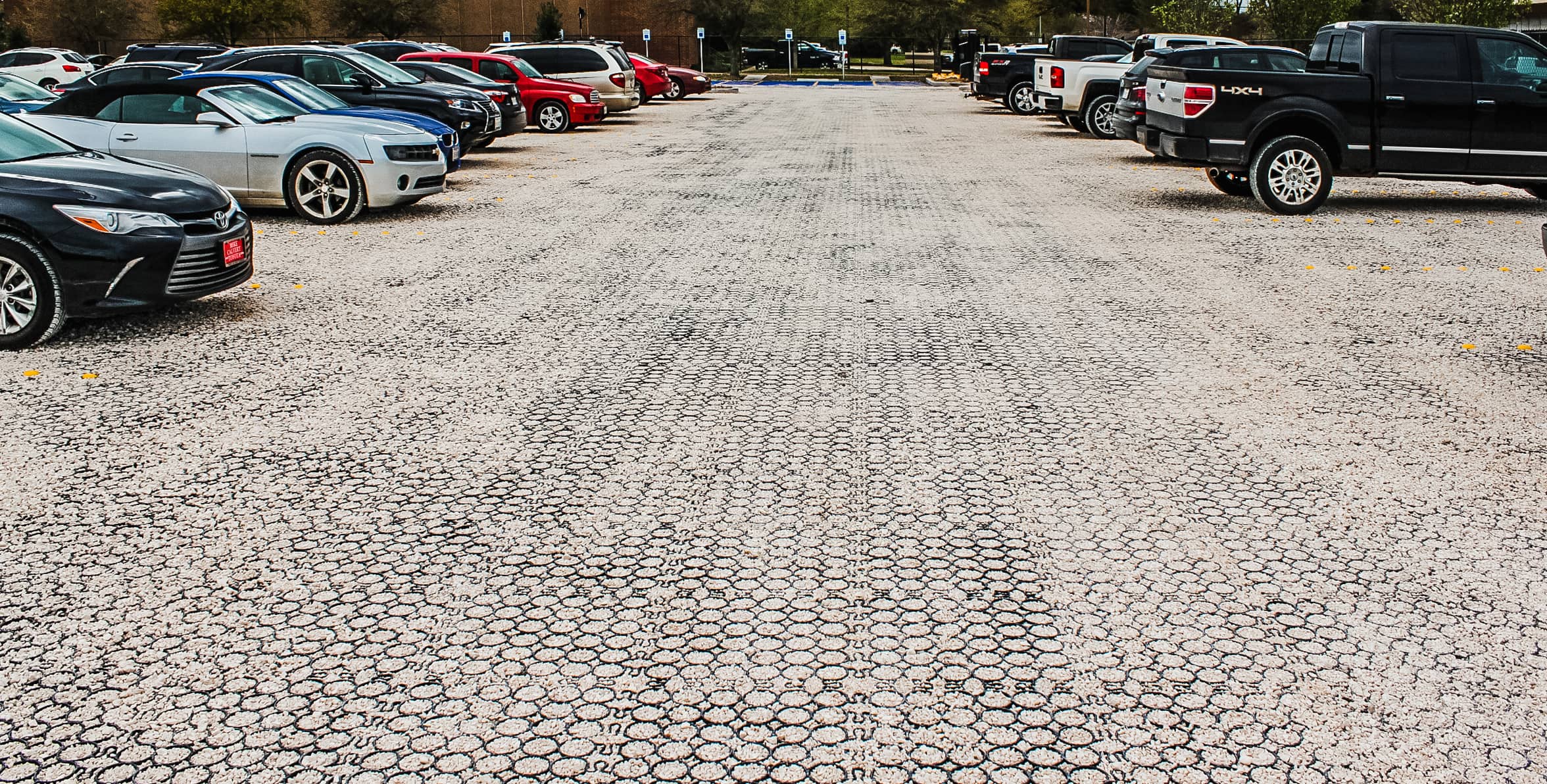
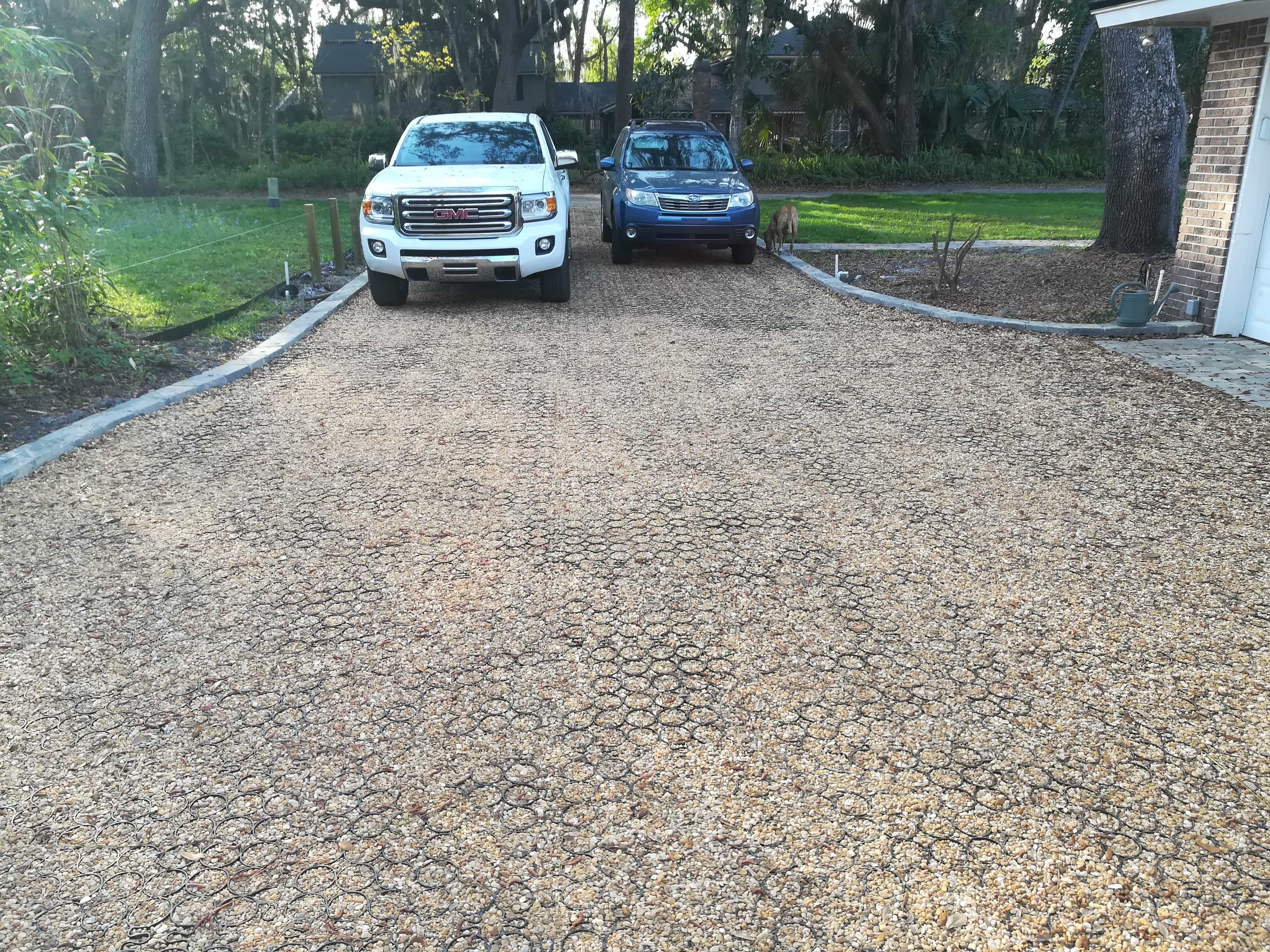
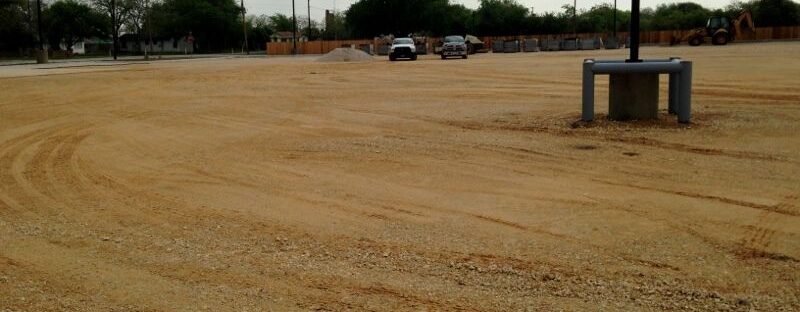
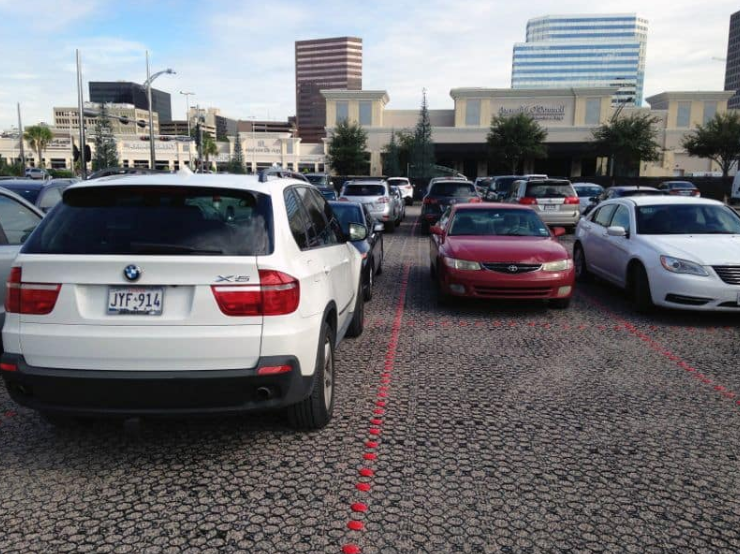
 Commercial parking areas must withstand constant vehicle traffic while addressing drainage demands, maintenance exposure, and regulatory pressure tied to stormwater management. Conventional asphalt and concrete surfaces often introduce compounding costs through runoff mitigation requirements and recurring repairs. Parking lot permeable pavers provide a different design strategy by integrating structural durability with surface-level water infiltration.
Why Conventional Parking Lots Create Long-Term Challenges
Traditional asphalt and concrete lots shed water immediately, converting rainfall into runoff that must be captured, conveyed, and managed through drains, piping networks, and detention systems. These components increase construction complexity while consuming valuable site area. Over time, surface deterioration introduces another financial burden as cracking, rutting, and patching cycles steadily raise maintenance expenditures.
Runoff behavior also affects operational reliability.
- Ponding stresses pavement surfaces and increases hydroplaning risk.
- In colder climates, trapped surface moisture can refreeze, accelerating pavement damage and creating safety concerns.
What begins as minor wear frequently develops into resurfacing or full replacement.
How Parking Lot Permeable Pavers Alter Site Drainage Behavior
A permeable parking lot allows water to pass vertically through the pavement structure instead of forcing it across the surface.
- Rainfall infiltrates through void spaces and enters an engineered aggregate base designed to temporarily store and disperse moisture.
- Peak runoff volumes decline, and the pavement begins functioning as part of the site’s drainage strategy.
This infiltration mechanism explains how permeable parking lots manage runoff directly at the surface level.
This hydrologic shift changes how commercial properties respond to storm events. Instead of overwhelming downstream systems with rapid discharge, infiltration moderates flow rates and reduces surface accumulation.
Stormwater Management and Regulatory Implications
Municipal regulations increasingly restrict impervious surface coverage and impose runoff mitigation requirements on new developments. A pervious parking lot can contribute toward compliance objectives by reducing surface discharge and supporting groundwater recharge. These characteristics may:
- simplify approvals
- decrease detention system requirements
- preserve buildable land otherwise allocated to stormwater infrastructure
Broader site-planning strategies tied to drainage efficiency are central to making parking lots more sustainable.
Permeable pavement parking lots also help stabilize drainage behavior during heavy rainfall. Water moves beneath the surface rather than collecting at low points, reducing flood risk, limiting hydrostatic pressure buildup, and protecting pavement integrity.
Water Quality Considerations
Runoff from conventional parking areas frequently carries sediment, hydrocarbons, and surface contaminants into municipal drainage systems. The issue extends beyond drainage volume alone. Infiltration-based pavement structures introduce a filtering effect as water migrates through aggregate layers and underlying soils.
For commercial developments facing water quality mandates, this characteristic links drainage control with pollutant mitigation. The pavement structure participates in both hydraulic and environmental performance objectives.
Comparing Permeable Pavement Categories

Not all permeable systems perform identically under traffic and environmental exposure.
Pervious Concrete
Designed with interconnected voids that allow infiltration. Structural rigidity can limit tolerance to subgrade movement, and cracking may occur under repeated heavy loading.
Porous Asphalt
Provides permeability through reduced fine aggregates. Long-term performance depends heavily on proper base design and maintenance practices that prevent clogging.
Grid-Supported Systems
Parking lot permeable pavers supported by structural grids stabilize aggregate infill while distributing loads across a flexible, open-graded base. This configuration supports infiltration while resisting rutting and localized deformation. Structural and hydraulic performance variables associated with a permeable parking lot depend heavily on base design and load distribution.
Grid systems are commonly selected for parking environments where durability, drainage reliability, and maintenance stability are primary priorities.
Durability Under Commercial Traffic
Commercial parking surfaces endure repeated loading from passenger vehicles, delivery trucks, service vehicles, and emergency apparatus. Traditional pavements rely on slab rigidity or layered flexibility, both of which remain vulnerable to fatigue cracking and stress concentration.
Parking lot permeable pavers distribute loads differently because structural grids disperse vehicle weight through a combination of the grid and infill and into the engineered aggregate base. This load distribution reduces rut formation, surface depressions, and shear-related failures.
For property owners, improved durability directly influences lifecycle costs by reducing repair frequency and extending service life.
Design Factors That Influence Long-Term Performance
Successful permeable parking design begins beneath the surface.
Subgrade Evaluation
Soil infiltration capacity determines how water behaves once it enters the base. Lower-permeability soils may require thicker aggregate layers or underdrain strategies.
Aggregate Base Construction
Open-graded, angular stone creates interconnected void spaces that provide both structural support and temporary water storage capacity. Base thickness must reflect anticipated traffic loads.
Surface Stabilization
Grid or paver selection governs infill confinement, resistance to lateral movement, and preservation of infiltration pathways. Layout geometry, circulation flow, and stall configuration influence system behavior, factors addressed when planning how to design a parking lot.
Each component influences structural performance and drainage behavior simultaneously.
Installation Practices That Protect Pavement Integrity
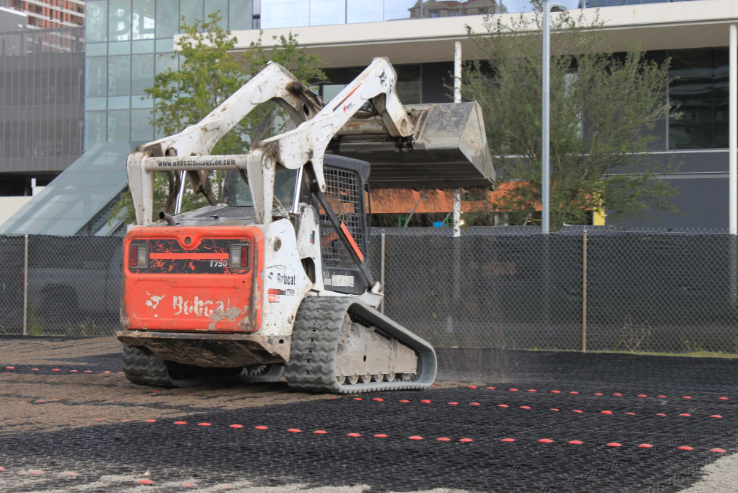
Installation sequencing plays a defining role in system longevity. Each phase influences structural stability and long-term permeability.
- Subgrade Preparation
Uniform grading, typically through excavation, and compaction establish consistent support conditions and reduce the risk of localized settlement. Geotextile fabrics lining the area are used to add loading capacity and separation of materials.
- Aggregate Base Placement
Open-graded stone is installed in controlled lifts to achieve load-bearing stability while preserving void spaces required for infiltration. Base depths are determined by loading requirements and detention volume requirements.
- Edge Restraints – If needed
Defined pavement boundaries prevent lateral movement and maintain surface geometry under traffic loads. This is needed if the grids are installed above grade or for special requirements.
- Grid or Paver Placement
Modular components are positioned according to layout plans, completing the load-distribution and stabilization structure. Grid pavers will then be filled with gravel or soil (for grass) or sometimes with specialty fills.
When executed correctly, this sequence preserves both permeability and pavement integrity.
Maintenance Expectations for Permeable Parking
Maintenance planning remains essential for preserving infiltration performance, particularly in environments exposed to sediment, debris, and seasonal contaminants. Routine sweeping or vacuuming helps prevent fine sediment accumulation that could restrict drainage pathways. Organic materials such as leaves should be removed periodically prior to decomposition. Non-organic materials, such as plastic bottles, while typically not harmful to the performance, need to be removed to prevent downstream contamination. Aggregate replenishment is very rare, but gravel infill should be maintained level to the top of the grids and isolated area can be re-filled easily.
Compared with sealed pavements, permeable systems will not need crack sealing, patching, and resurfacing cycles are typically not needed. The absence of rigid slab deterioration mechanisms reduces many recurring repair demands, simplifying long-term maintenance planning.
Climate and Safety Performance
Surface drainage characteristics influence safety during wet and cold conditions. Parking lot permeable pavers reduce standing water by allowing rainfall to infiltrate rather than accumulate, which lowers slip hazards and limits surface refreezing risks.
In freeze–thaw environments, rapid drainage also limits moisture entrapment within the pavement structure. Reduced saturation decreases expansion pressures associated with cracking and spalling.
Why TRUEGRID® Systems Are Specified for Parking Applications
Permeable parking designs rely on consistent load support and long-term stability to maintain drainage performance. Grid-based systems address these requirements by stabilizing aggregate infill within a defined structural framework. This confinement reduces lateral displacement under braking and turning forces, particularly in entrances, drive aisles, and high-traffic zones. The grids protect the gravel infill from pulverization reducing gravel loss from erosion and dust entrainment.
System selection often depends on constructability and maintenance expectations. Modular grid components allow predictable installation workflows while supporting heavy vehicle loads. The resulting pavement structure maintains permeability without introducing the cracking mechanisms associated with rigid slabs or the deformation patterns common to flexible asphalt surfaces.
Request TRUEGRID® Project Support
TRUEGRID® permeable paving systems are designed for commercial projects requiring structural durability and dependable drainage performance. Project teams receive guidance on layout planning, base design considerations, and installation practices aligned with long-term pavement stability. Contact TRUEGRID® today to evaluate permeable solutions for your next development.