Low budgets reshape paving decisions. Homeowners prioritize affordability while contractors evaluate installation efficiency, durability risks, and maintenance exposure. When projects are constrained by cost, low cost permeable pavers become an essential part of the conversation because material selection, base design, labor requirements, and long-term surface performance all influence total project value.
What Low Cost Permeable Pavers Really Mean for a Project Budget
Cost-focused projects often begin with a narrow definition of value. Many buyers equate affordability with choosing the cheapest visible surface. In permeable paving, total project cost responds to excavation depth, aggregate volume, crew hours, equipment demand, and future maintenance exposure. An apparently inexpensive surface can become expensive surprisingly fast if installation complexity or correction cycles increase.
Why Initial Material Cost Alone Can Be Misleading
Material price represents only one portion of the total spend. Excavation, base preparation, trucking, compaction, edge restraint, and long-term corrections frequently exceed the cost of the visible surface itself. Budget performance improves when material selection reduces these downstream expenses.
Material Choices That Influence Affordability
Material selection governs much of a project’s financial outcome.
- Concrete and stone pavers carry higher placement and handling costs.
- Porous concrete and permeable asphalt shift expense toward specialized mixes.
- Plastic grid systems alter the equation by reducing material volume and stabilizing aggregate infill.
For budget-sensitive installations, low cost permeable pavers built around modular grid structures frequently reduce handling time while maintaining structural stability.
Comparing Traditional vs Grid-Based Systems
Traditional individual pavers require careful alignment, spacing, and leveling across the entire surface. Small inconsistencies in base elevation often lead to additional adjustments during installation. Grid-based systems rely on interlocking panels that distribute loads through compacted aggregate, reducing placement corrections and improving installation speed.
Installation Factors That Drive Cost Up or Down
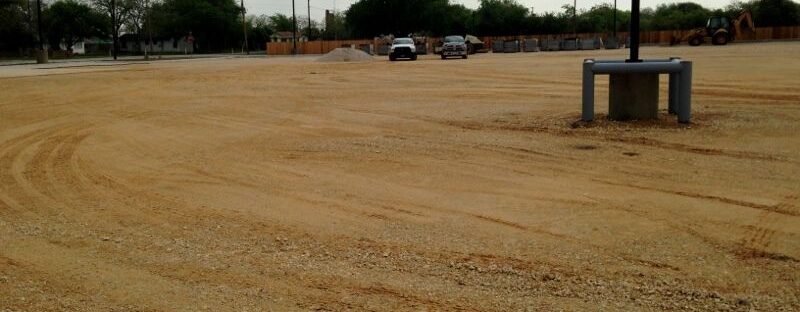
Excavation and base construction represent major budget drivers because depth requirements and aggregate quantities determine shipping/delivery demand, compaction cycles, and machine hours. Permeable surfaces rely on an open-graded stone base engineered for both load transfer and infiltration. Systems that streamline base preparation or tolerate reduced excavation often generate measurable savings across materials, labor, and equipment time.
How Base Design Affects Labor Efficiency
Those base-level efficiencies influence crew productivity directly. Segmental pavers demand alignment, spacing, and leveling across the entire surface. Segmental pavers often times require multiple courses of base materials, with different aggregate sizes and compositions making extending installation time and adding to material costs. Elevation inconsistencies increase adjustment time. Grid-based permeable systems reduce many of these corrections through interlocking panels that distribute loads across a wider footprint. Faster placement shortens crew hours, lowering installation expense where low cost permeable pavers are selected specifically to control labor intensity. Grid-based permeable systems rely on a single base material in most cases – no bedding layer or separation fabrics are needed.
Balancing Price with Long-Term Performance
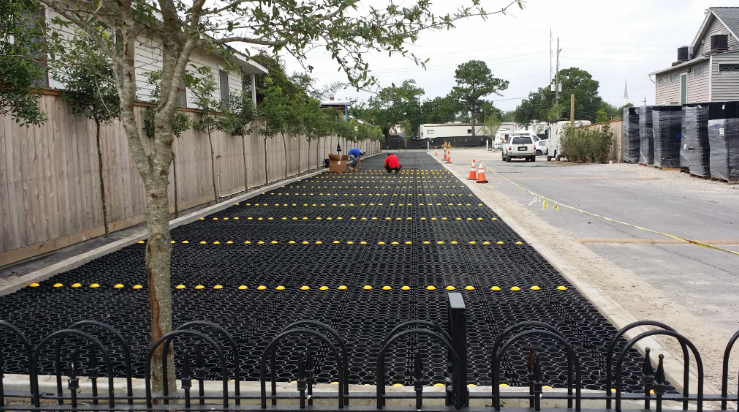
Drainage performance shapes project economics in important ways.
- Poor water management accelerates rutting, settlement, and surface degradation.
- Repairs introduce costs rarely captured in initial estimates.
- Impervious cover limits, implemented by municipalities, can increase taxes, fees, or service charges.
Low-cost permeable pavers designed for consistent vertical infiltration reduce these risks by allowing water to move through the surface rather than across it. Consistent infiltration also reduces runoff volume, which can limit erosion, pooling, and drainage stress on surrounding landscape areas.
Durability as a Budget Protection Strategy
Durability remains central to budget efficiency. Materials that deform under repeated vehicle loading introduce rutting, displacement, and structural instability. Premature cracking reverses early savings and accelerates maintenance cycles.
Lifecycle Cost and Maintenance Realities
Load expectations must align with structural capacity. Passenger vehicles, delivery trucks, and occasional service equipment impose different stresses. Grid-based permeable paving filled with properly compacted stone distributes loads while maintaining drainage pathways. Consistent structural support limits deformation, which directly reduces maintenance frequency and long-term repair expense.
Lifecycle cost offers a clearer measure of value. Initial material savings lose significance when recurring repairs or premature replacement enter the picture. Durable permeable paving systems reduce long-term expenditures by stabilizing aggregate, supporting load transfer, and minimizing corrective upkeep. This is why many homeowners prioritize low-maintenance paving strategies when evaluating permeable surface options.
Budget-Friendly Design Applications
Project scale amplifies every cost variable. Smaller patios may tolerate higher material costs because labor remains manageable. Larger driveways magnify installation complexity, trucking/delivery, and crew hours.
In these scenarios, low-cost permeable pavers capable of rapid installation deliver stronger financial advantages as square footage increases. These installations maintain a clean, finished appearance while preserving the natural texture and drainage advantages of gravel surfaces.
Common Cost-Effective Installations
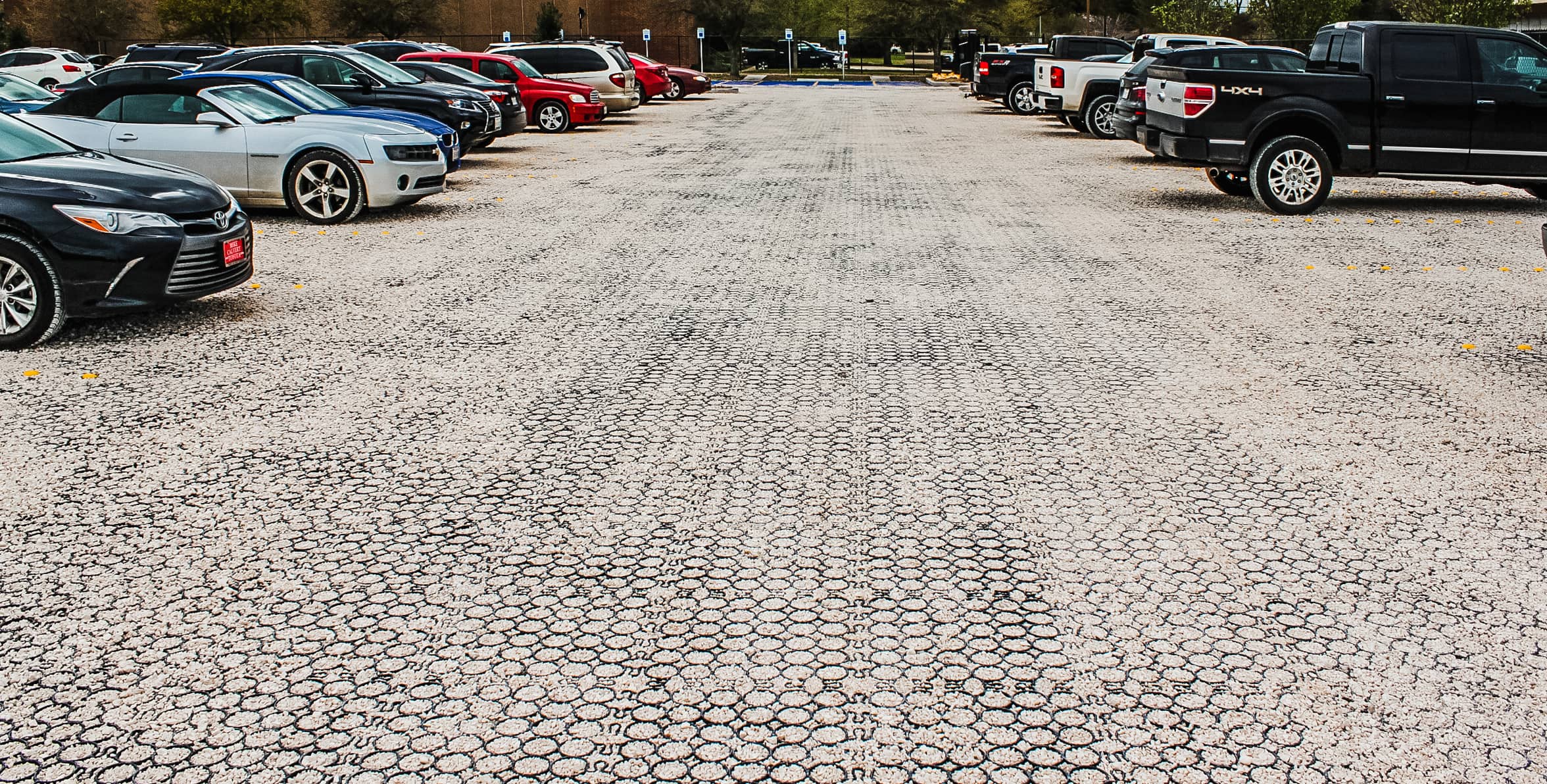
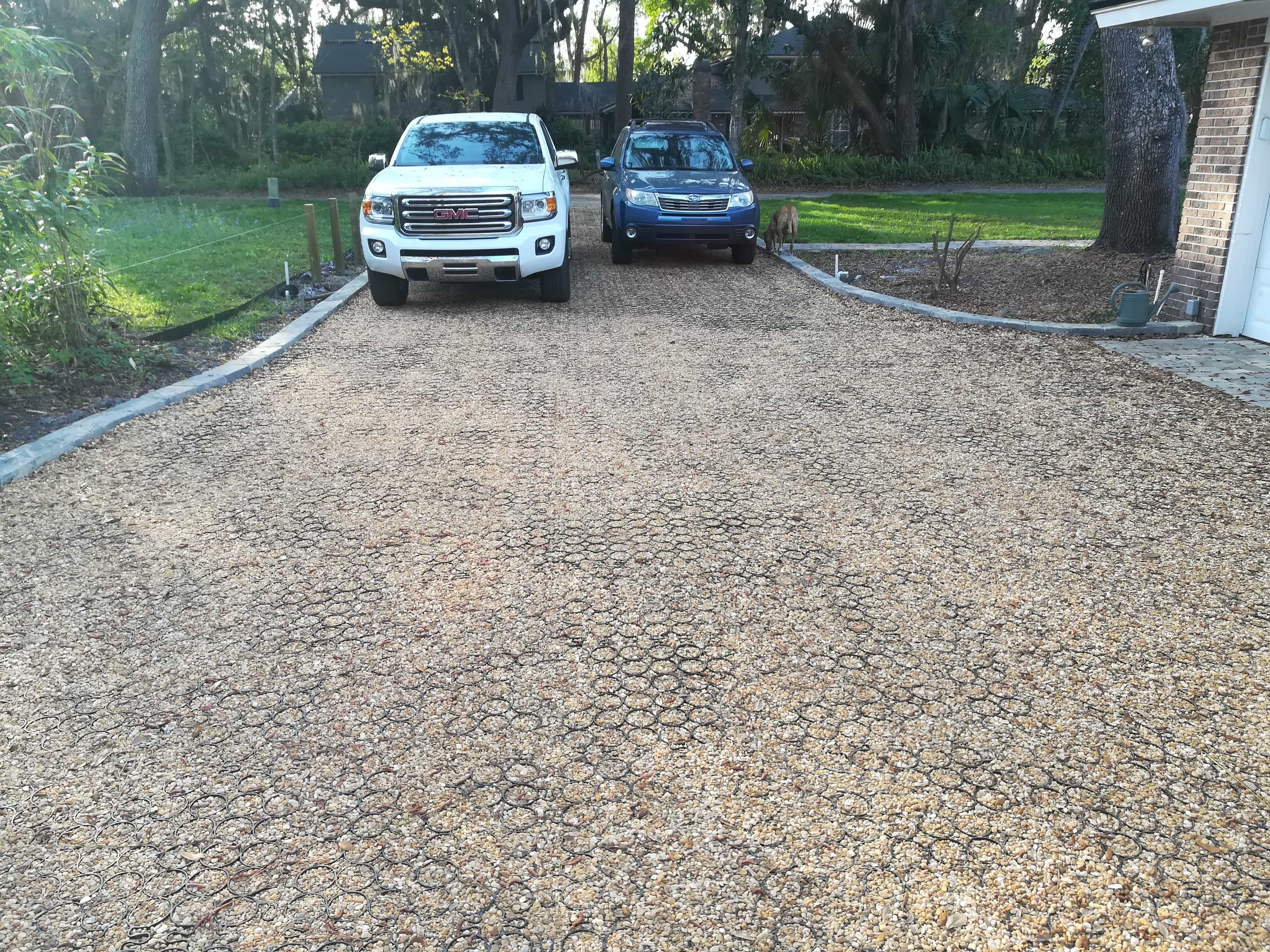
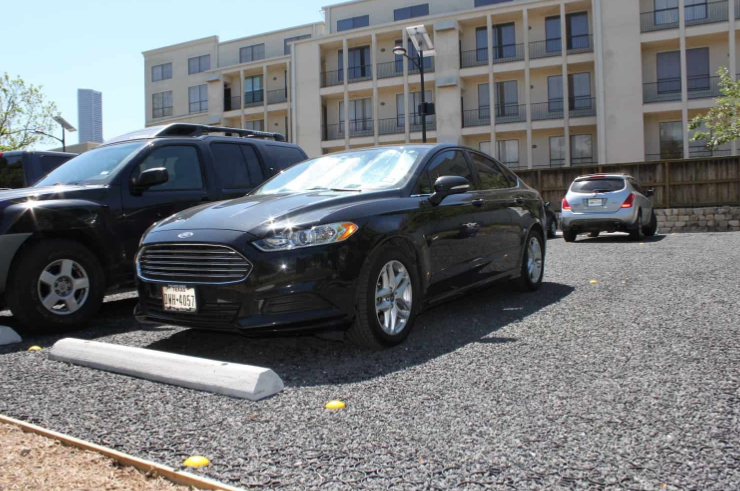
Gravel driveways, garden walkways, RV parking pads, utility paths, and overflow parking areas benefit from permeable grid systems that minimize concrete volume and reduce excavation intensity. These installations deliver a finished appearance while preserving drainage performance.
How Layout and Coverage Decisions Control Total Project Cost
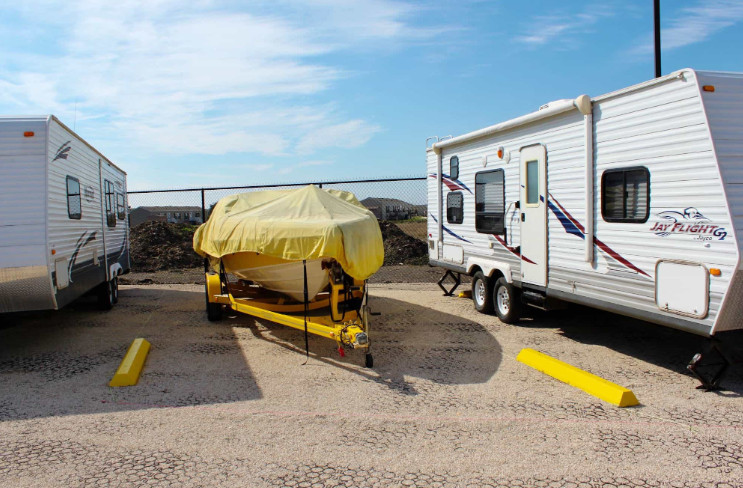
Budget performance is not dictated by material choice alone. Layout efficiency plays a decisive role. Many successful projects limit permeable paving coverage to areas that actually experience vehicle loading, such as tire paths, parking pads, or access lanes. Surrounding zones can remain gravel or landscaped without compromising function.
Hybrid layouts reduce excavation volume, aggregate demand, and installation time. Contractors often phase installation to match immediate use needs, allowing homeowners to spread costs while maintaining drainage performance. For long driveways and access lanes, narrowing paved widths while preserving structural support delivers measurable savings. Strategic layout decisions frequently lower total project cost more effectively than switching materials.
Maximizing Value Without Cutting Corners
DIY installation frequently appears as a direct path to savings. Eliminating labor can reduce upfront expense, yet performance depends on proper excavation, grading, and compaction. Homeowners evaluating DIY permeable pavers benefit from systems designed for simplified placement, predictable alignment, and forgiving tolerances.
Value maximization strategies further improve project economics. Optimizing excavation depth, selecting locally available aggregates, staging deliveries efficiently, and reducing waste generate cumulative savings without sacrificing durability. Contractors call this value engineering. Homeowners simply call it staying on budget.
Why TRUEGRID® Systems Support Budget Goals
Climate exposure introduces additional performance variables. Freeze-thaw cycles, heavy rainfall, and heat stress affect paving materials differently. Permeable systems engineered for efficient subsurface drainage protect structural layers while reducing weather-related maintenance demands.
Cost comparisons between permeable systems reveal meaningful differences. Buyers reviewing pervious pavers cost often find that grid-based systems deliver competitive upfront pricing alongside reduced long-term ownership expenses.
How TRUEGRID® Aligns With Budget-Conscious Priorities
TRUEGRID® systems are designed to support long-term value through:
- Gravel infill stabilization
• Load distribution across the surface
• Consistent water infiltration
• Reduced crew hours during installation
• Resistance to cracking and displacement
Get Long-Term Value with TRUEGRID® Permeable Paver Systems
TRUEGRID® permeable paver systems are engineered to stabilize gravel surfaces, manage drainage, and support vehicle loads while avoiding the cost and complexity of traditional hardscaping. Their modular design simplifies installation and reduces long-term maintenance exposure. Contact us today for more information.