
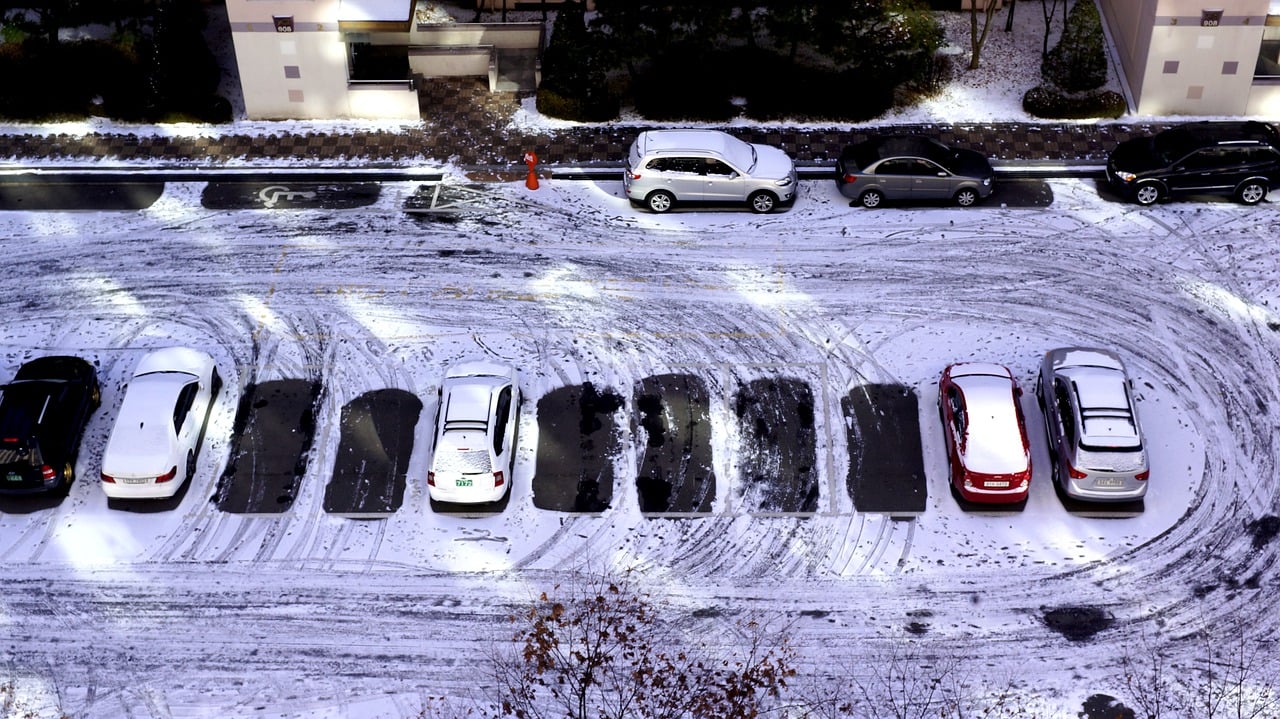
Winter exposes weak pavement fast. Choosing pavers in cold climates means thinking about drainage, snowmelt, and year-round surface stability. TRUEGRID offers permeable grid systems for residential driveways, walkways, and larger paved areas, giving homeowners and contractors a surface well-suited to winter conditions that manages meltwater instead of trapping it on top.
Why Winter Is Hard on Exterior Paving
Cold-weather paving has to deal with more than snow. It also has to handle melting ice, slick spots, plowing, shifting ground, and repeated freeze/thaw cycles over the course of the season.
Drainage Drives Winter Performance
In winter, drainage often determines whether a surface stays usable or turns slick. When water sits on or near the surface, it can freeze again, create slippery areas, and put more stress on the paving system. A porous TRUEGRID surface lets melted water move down into the base below instead of collecting on top.
For a homeowner, that difference shows up after every storm. A winter surface needs to stay stable under traffic, stay easier to clear, and keep water moving away from the top layer instead of turning every freeze into another maintenance problem.
Why TRUEGRID Performs So Well as Pavers in Cold Climates
Cold-climate performance depends on how the surface handles water at the top and movement below.
Permeability Changes Winter Surface Behavior
TRUEGRID is built around a permeable surface design. Water drains through the grid and into the stone base below instead of pooling on top, which helps the surface handle rain, snowmelt, and refreezing conditions more effectively. PRO PLUS is listed as 100% permeable, and TRUEGRID’s cold-weather driveway guidance ties permeable plastic pavers to less snow and ice buildup in winter.
Because meltwater can move through the grid, the surface is less likely to hold puddles that freeze back into ice. By moving meltwater through the grid, the surface can reduce standing water and stay easier to use through changing winter conditions. Gravel-filled cells also help the surface hold traction. The grid keeps the stone in place, which helps the paved area stay stable through winter use.
Flexible HDPE Construction Supports Seasonal Movement
TRUEGRID does not rely on a rigid slab. PRO LITE and PRO PLUS are both made from recycled HDPE plastic, and both are designed to handle changing soil and weather conditions. PRO PLUS is also published with a service temperature range down to -58°F.
Freeze/thaw stress does not stop at the surface. As moisture levels change and the ground responds to temperature swings, the paving system needs to stay strong without becoming brittle. A surface that combines strength with built-in flexibility is better suited to those conditions than one that depends on staying perfectly rigid.
Which TRUEGRID Products Work Best in Cold Climates
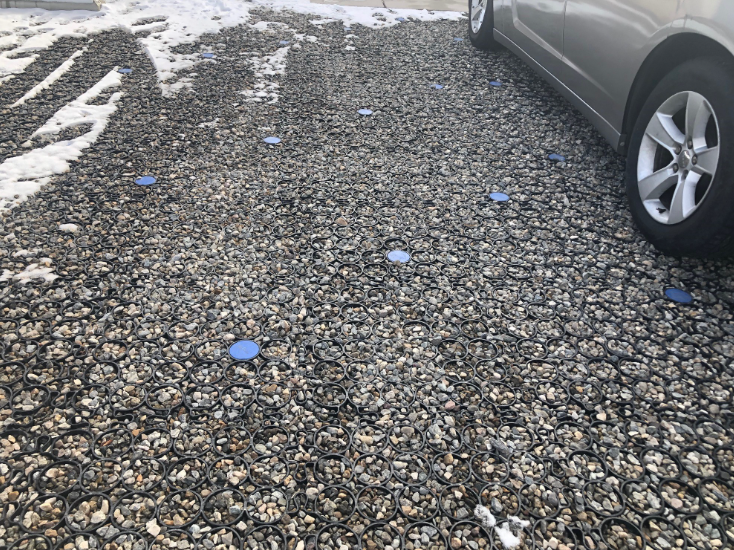
A residential driveway and a larger parking area do not need the same grid. TRUEGRID offers one system for lighter residential use and another for heavier-duty paving, which makes it easier to match the product to the job instead of forcing one option into every cold-weather application.
PRO LITE for Residential Driveways, Walkways, and Light Traffic
PRO LITE is the residential and light-commercial option in the line. It is designed for lighter vehicle use along with foot traffic and bike traffic, and its listed uses include driveways, walkways, parking areas, patios, and pool surrounds.
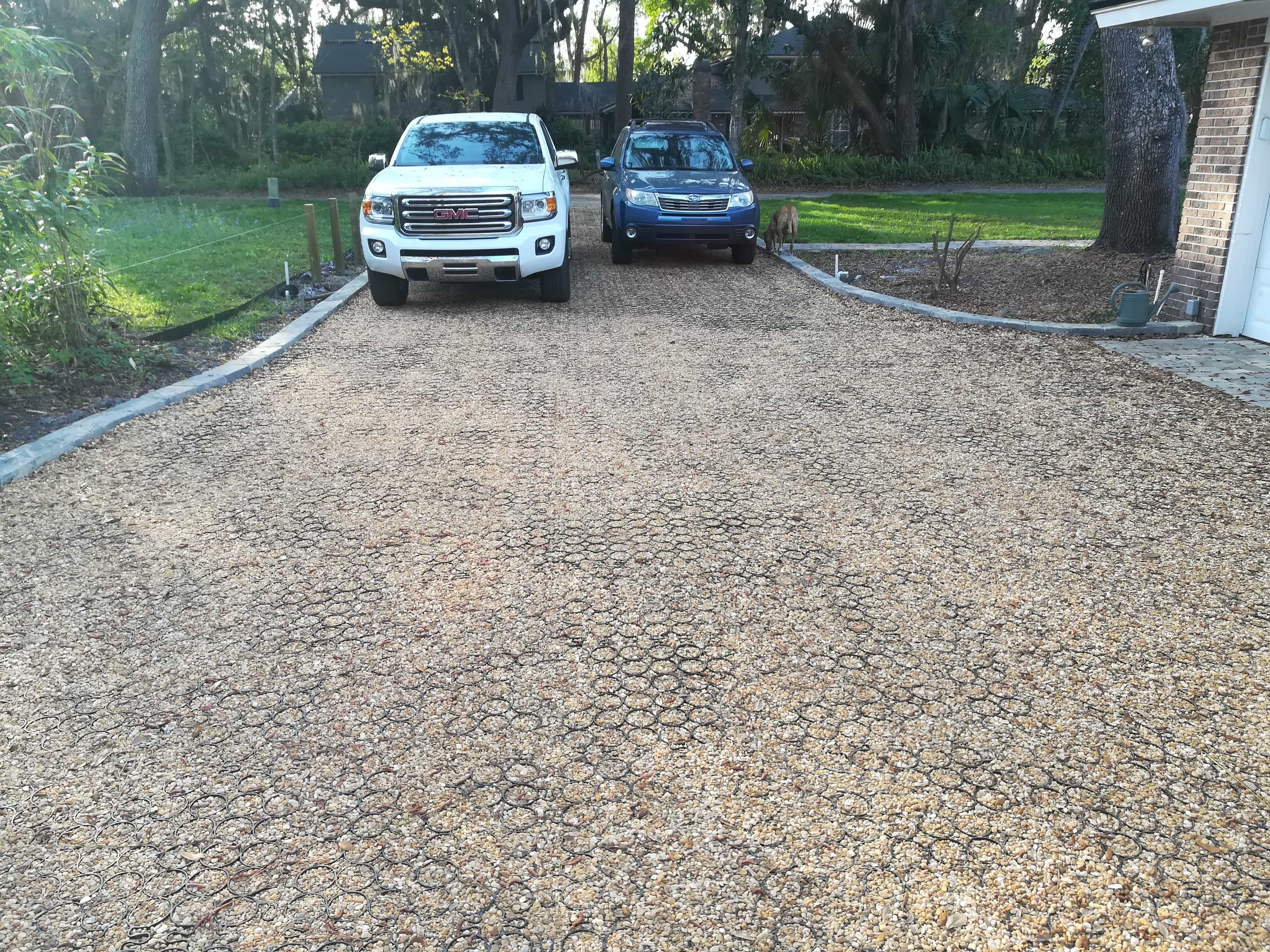
For homeowners comparing permeable pavers in cold climates, PRO LITE is the place to start. It is lighter to handle during installation, works across a wide range of climate conditions, and uses gravel or grass fill to create a stable permeable surface for everyday residential use. It fits the needs of driveways, front walks, side-yard access lanes, and parking pads without pushing homeowners into a heavier commercial system. A surface built around permeability and gravel stabilization also aligns well with common homeowner concerns about cold-weather driveway material.
PRO PLUS for Heavier Loads, Parking Areas, and Larger Projects
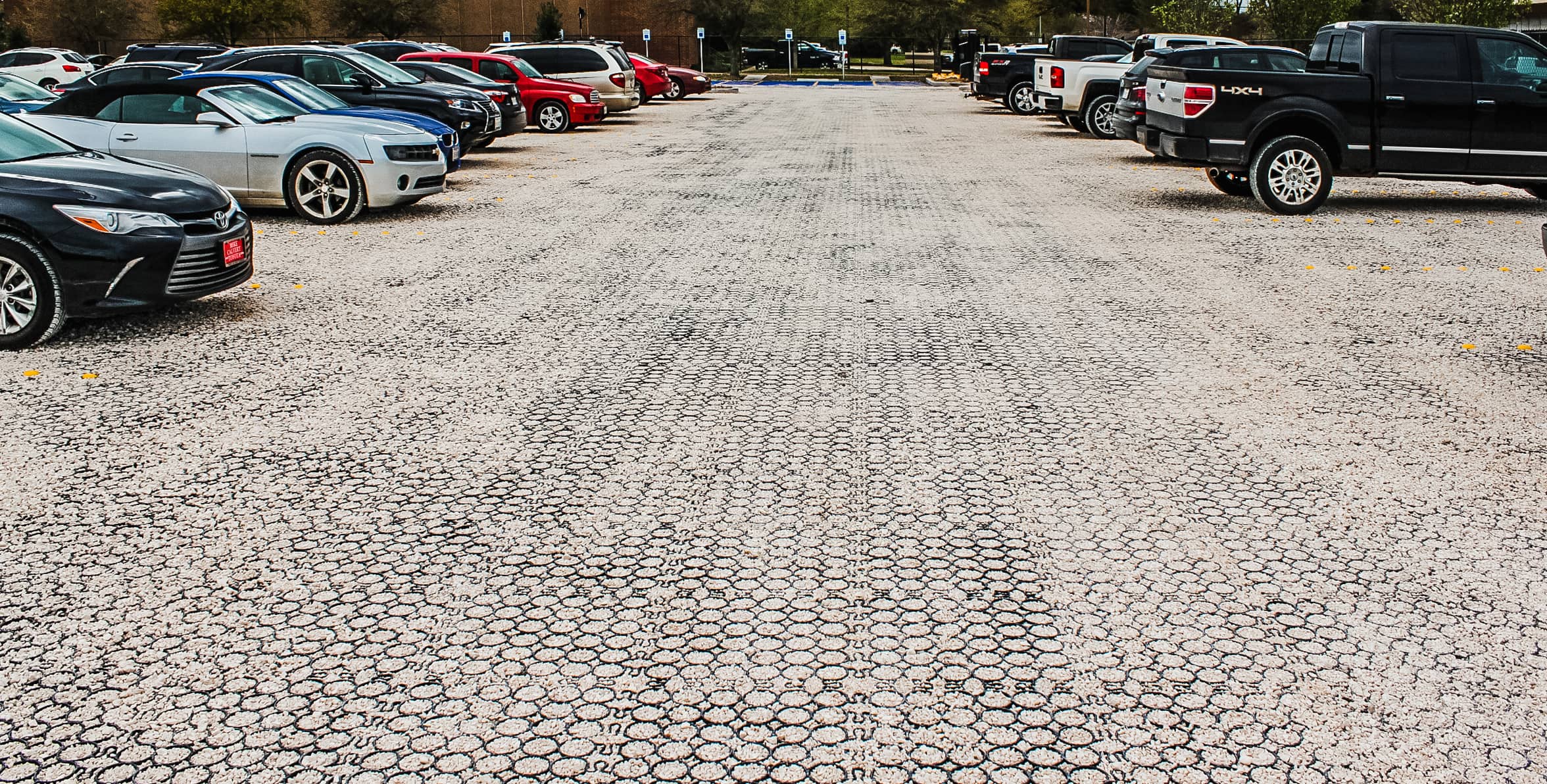
PRO PLUS is the heavier-duty option. It is built for larger paved areas and more demanding traffic, which makes it a better fit for parking lots, drive lanes, equipment areas, and other surfaces that need stronger support.
PRO PLUS is the better choice when pavers in cold climates need to do more than handle a standard home driveway. If the project involves more traffic, more weight, or a larger paved footprint, PRO PLUS adds the load support those sites need without giving up the drainage that helps in winter. For parking layouts and larger paved areas, PRO PLUS also works with SnowSpots markers.
Those markers stay visible in all seasons and are designed to remain plow-friendly, which adds another practical advantage when winter visibility matters. That combination of permeability, seasonal flexibility, and project-specific product options is what makes TRUEGRID a stronger cold-climate choice than one-size-fits-all paving systems.
Cold Weather Paver Installation Starts Below the Surface
Choosing the right grid is only part of the job. Cold weather paver installation also depends on excavation depth, separating the soil from the stone base, compacting the layers correctly, and building a base that supports both drainage and the expected load.
Base Preparation and Drainage Control
A permeable surface only works as intended when the layers below it are built correctly. That usually means excavating to the right depth, placing a fabric layer to separate soil from stone, building a compacted stone base, and then installing and filling the grid.
When installing pavers in cold climates, those base layers matter even more. A winter-ready system needs a base that supports traffic while still letting water move through it, because the cold-weather benefit depends on keeping meltwater from sitting near the surface.
Product Selection Is Part of Installation
Before the base goes in, the grid still has to match the kind of traffic the surface will carry. That decision affects base depth, load support, and how the finished surface performs through winter.
Snow Removal on a TRUEGRID Surface
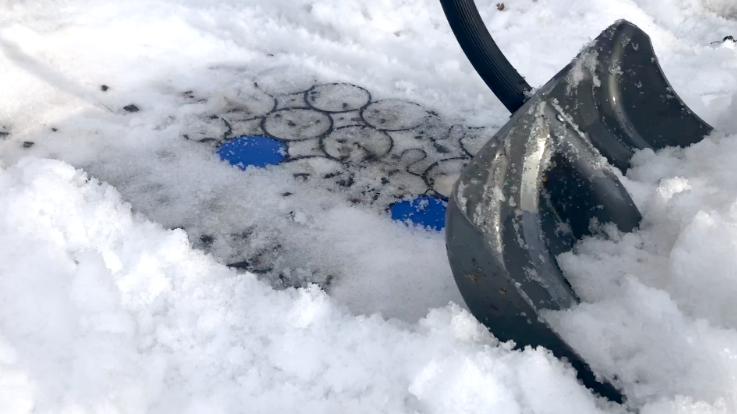
Once the surface is built correctly, the next test is how it performs during storms. TRUEGRID surfaces can be cleared with the same basic tool categories used on conventional pavement, including shovels, snowblowers, and snowplows.
Blade height makes the difference. During snow plowing a TRUEGRID surface, the plow or shovel edge should be kept about ½ to 1 inch above grade so it does not catch the grid and pull up a section. That matters most during snow removal on paver surfaces, where routine plowing, shoveling, and thaw cycles can put more pressure on rigid pavement surfaces. Use the same care with shovel or plow edges that you would on any paved surface, and avoid scraping directly against the grid.
Modular Repair Keeps Winter Damage Manageable
While rare, if a section is damaged during plowing, the repair does not require rebuilding the whole paved area. Individual grid sections can be replaced without tearing out the entire installation.
After a rough winter, that makes spring repairs faster and more contained. The surface is made of interlocking sections instead of one continuous slab that may need patching, resurfacing, or broader repair work.
Heated Walkways Add Another Cold-Climate Advantage
For projects that need more winter control than drainage alone can provide, TRUEGRID can be paired with electric cables or hydronic tubing to create heated walkway systems that melt snow and ice while allowing water to drain through the surface.
That combination works well for entry paths, residential walks, multifamily access routes, and commercial pedestrian areas where winter safety matters every day. The system helps reduce pooling and refreezing while keeping the surface more usable through repeated winter weather.
Choose TRUEGRID Pavers for Reliable Winter Performance
Cold-weather paving works better when the surface drains, stays stable, and holds up during snow removal. TRUEGRID gives homeowners and contractors a better cold-climate path with one system for lighter residential use and another for heavier-duty sites. Contact us today for more information.
FAQ: TRUEGRID Pavers in Cold Climates
Can TRUEGRID pavers handle freeze/thaw cycles?
Yes. TRUEGRID’s cold-weather and product pages position the system for cold climates, with permeable drainage, flexible HDPE construction, and product options built to handle seasonal movement and winter conditions. PRO PLUS is also published with a service temperature range down to -58°F.
Are permeable pavers a good choice for snowy driveways?
They can be, especially when the goal is to reduce standing water and limit refreezing at the surface. TRUEGRID’s cold-weather driveway guidance ties permeable plastic pavers to less snow and ice buildup, and its snow-removal guidance supports routine winter use on driveways and similar paved areas.
Can you snow plow a TRUEGRID surface?
Yes. TRUEGRID says its surfaces can be cleared with snowplows, snowblowers, and shovels, as long as the blade or shovel edge is slightly raised – ½ to 1-inch – so it does not catch the grid. Skids, skis, rollers, or protective bumpers are often used on plow blades.
Which TRUEGRID product is best for a residential driveway in a cold climate?
For most residential driveways and walkways, PRO LITE is the better starting point because it is positioned for lighter vehicle use and everyday home applications. For larger paved areas, sloped driveways, or heavier-use conditions, PRO PLUS is the stronger option
Can TRUEGRID be used with heated walkways?
Yes. TRUEGRID’s heated-walkway guidance says the system can be paired with electric cables or hydronic tubing, allowing snow and ice to melt while water drains through the pavers instead of pooling on the surface.

Leave a Reply