
Inspiring Driveway for New Home
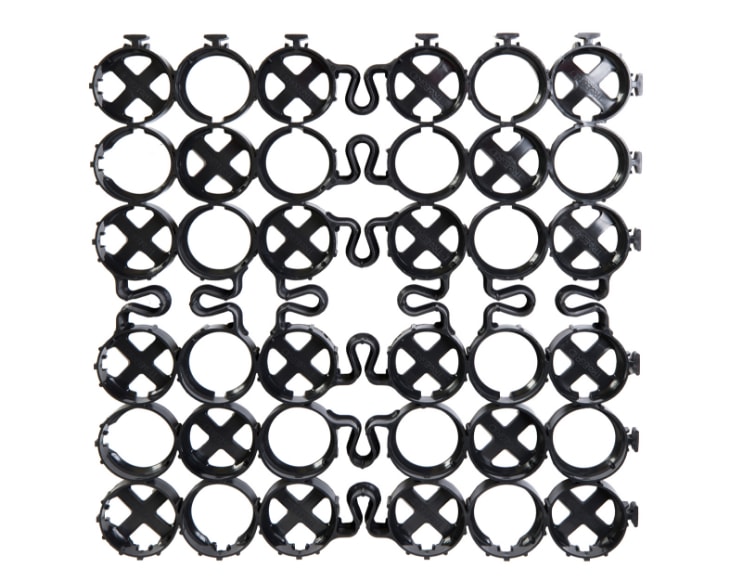
 These eco-minded homeowners wanted a beautiful, natural aesthetic for their driveway to complement their amazing new home in scenic Pennsylvania. They chose TRUEGRID ECO.
Cobblestone pavers briefly transition the driveway from the street for a warm, welcoming touch. Matching cobblestone borders line the gravel filled TRUEGRID driveway as it slopes uphill towards the house.
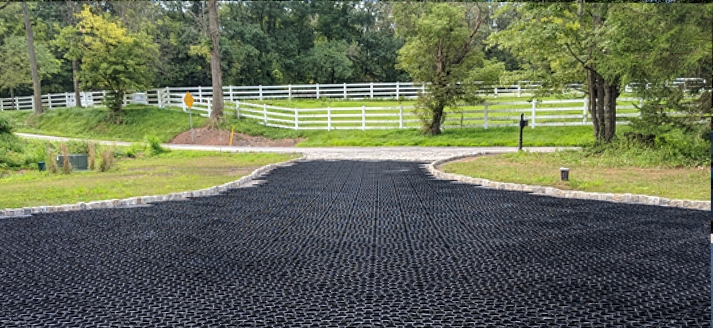
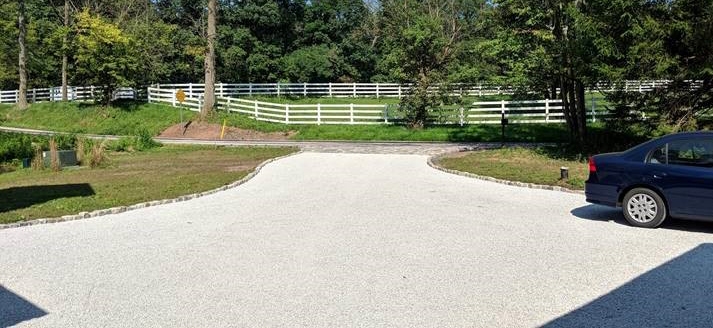
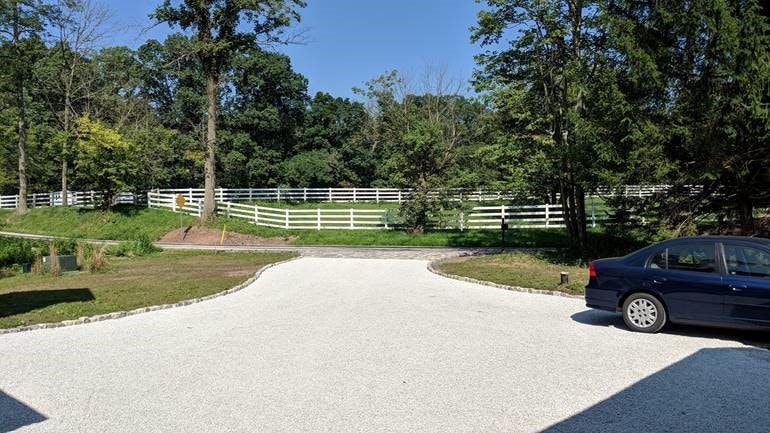
A light colored hard, angular, clean 5/8” gravel fills the ECO paving. The winding TRUEGRID driveway sits on 6” of clean, washed angular gravel for optimal drainage within the base.
Result:

Curb appeal, eco-friendliness and harmony with the natural setting.
 The biggest problem posed by new construction is a little ironic. New developments and urban sprawl continue at a record pace, but the problem isn’t that cities are changing — it’s that they are changing in the same old ways.
No matter how innovative our new buildings are, we’ll face a mounting danger from flooding unless we change the way we pave our surrounding surfaces.
In U.S. cities, 40 percent of surfaces are impervious. Concrete and asphalt typically are the materials of choice. They are slabbed and rolled over the earth, creating an impenetrable, impervious layer. When heavy rain arrives, it has to go somewhere. Impervious surfaces force water to run off in rising levels around our homes and businesses, causing costly damage.
The biggest problem posed by new construction is a little ironic. New developments and urban sprawl continue at a record pace, but the problem isn’t that cities are changing — it’s that they are changing in the same old ways.
No matter how innovative our new buildings are, we’ll face a mounting danger from flooding unless we change the way we pave our surrounding surfaces.
In U.S. cities, 40 percent of surfaces are impervious. Concrete and asphalt typically are the materials of choice. They are slabbed and rolled over the earth, creating an impenetrable, impervious layer. When heavy rain arrives, it has to go somewhere. Impervious surfaces force water to run off in rising levels around our homes and businesses, causing costly damage.
- Paving construction costs. How much will it cost to install permeable pavers across the surfaces you’re responsible for?
- Land utilization. What other adaptations will you need to make in order for the new solution to function? Will you need a separate detention pond, for example, if you chose an impervious surface material?
- Long-term costs. How much will it cost per year in maintenance and impervious cover tax?
 We all have a responsibility to maintain the places we live and work. We might not be able to control the weather, shift tides, or divert storms, but we can adapt the way we develop our precious spaces in order to care for them and protect them into the future.
Solving Each of the Problems With Traditional Paving Methods
Concrete, asphalt, and gravel are the most common paving materials today. However, their popularity doesn’t negate their shortcomings, and those shortcomings can have a much greater impact than many people might realize. In addition to the excessive costs of building concrete, maintaining asphalt, or dealing with gravel, these types of paving systems also have devastating effects on stormwater management.
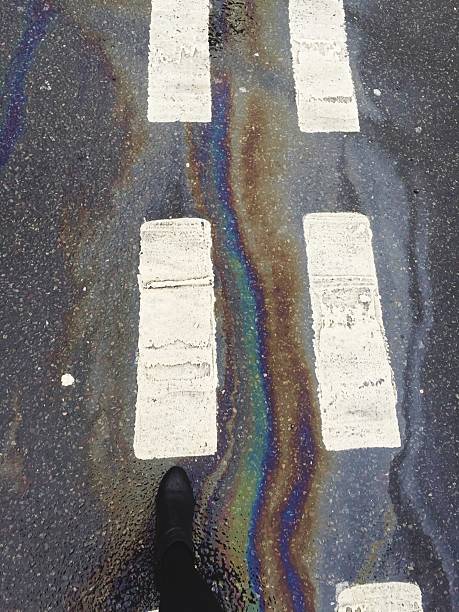 As development spreads and more land is paved over, the materials we cover the ground with dramatically impact its ability to absorb rainfall. The second rain hits these impervious materials, it creates runoff, which typically has to be collected in detention ponds before it can be released back into the waterways. The problem is that water picks up everything that the pavement has collected, including motor oils, pollution, and whatever it absorbs from the pavement material itself.
As the first truly permeable, high-performance pavement material, TRUEGRID Pavers allow for much more efficient and eco-friendly floodwater control. In addition, they are the better option even where floodwaters aren’t typically a concern because they effectively address many of the other challenges that come with traditional paving methods:
• Concrete is too expensive
Concrete is the most common type of paving because it has been around the longest. Yet over the years, it hasn’t become easier or less expensive to use. Installing it is also time- and labor-intensive, which often makes it too cumbersome for anything other than large-scale projects. 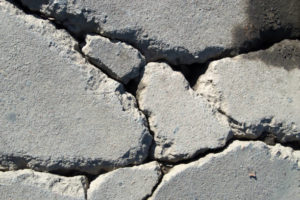
Concrete will crack as the ground underneath expands or contracts or as moisture freezes or evaporates on its surface from season to season. Because it’s completely impervious, concrete pavement also requires extensive drainage systems and large detention ponds that are even more costly to maintain.
• Asphalt is too problematic
Asphalt can sometimes be a less costly option than concrete, but it’s also softer and much less durable. Simple exposure to the sun can hasten its erosion, and because asphalt is darker than concrete, it retains heat much longer. In residential areas, asphalt roads and driveways can create heat islands wherein residents have to use more energy to keep their homes cool.
Unlike concrete, asphalt is petroleum-based and is often protected with toxic sealants, which means the runoff it creates sends auto pollutants and other harmful substances into detention ponds and waterways. The frequent potholes, cracks, and entirely destroyed sections of asphalt can make it even more expensive than concrete to maintain long-term.
• Gravel is too unreliable
Although gravel isn’t a popular solution for major roadways or highly developed residential areas, it is a common paving solution for industrial yards, thanks to the relative ease of installing it. Despite that ease and the typically minimal upfront costs, keeping it maintained ends up costing more than any other option.
Gravel is messy. On top of that, it grows less pervious the more it becomes impacted, exacerbating the runoff problem. Gravel migrates and becomes a headache for city roadways, ruts easily, and turns into mud during rain events. These mud-pit parking lots and roadways are often unusable until they dry. In dry weather, compacted gravel lots create dust clouds, which are health and safety hazards to workers or surrounding communities.
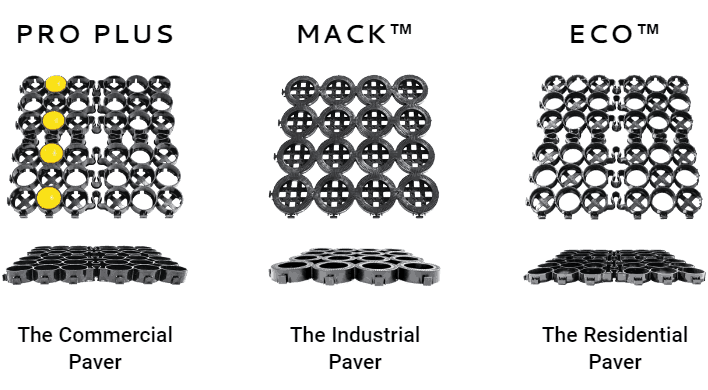
TRUEGRID Pavers not only solve many of the problems that conventional paving causes for stormwater management, but also provide added benefits. For commercial, residential, and industrial uses, TRUEGRID’s innovative, permeable pavers are also more affordable, easier to install and maintain, and durable enough for virtually any environment.
To learn how TRUEGRID Pavers can make it easier to improve your best practices for stormwater management, click here to download our whitepaper.
How to Rethink Our Outdated Stormwater Management Solutions
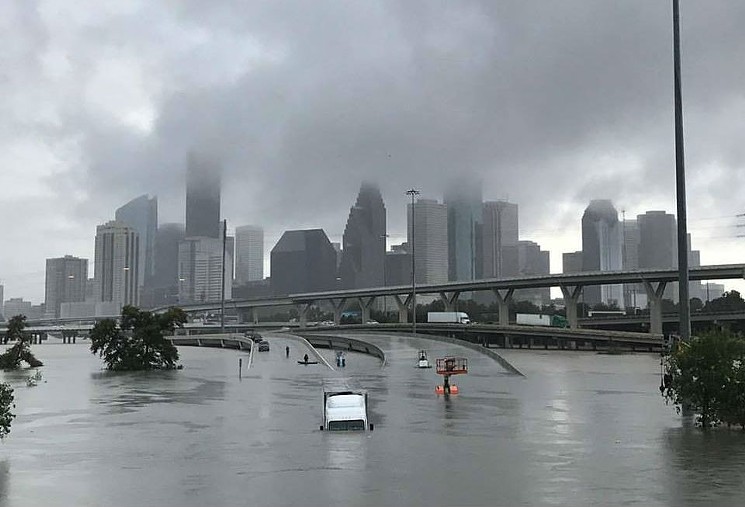
The flooding that hit Houston in August 2017 is a prime example of what used to be a once-in-a-lifetime weather event, causing catastrophic devastation to communities. Yet it had been only two years since Houston’s last major flood.
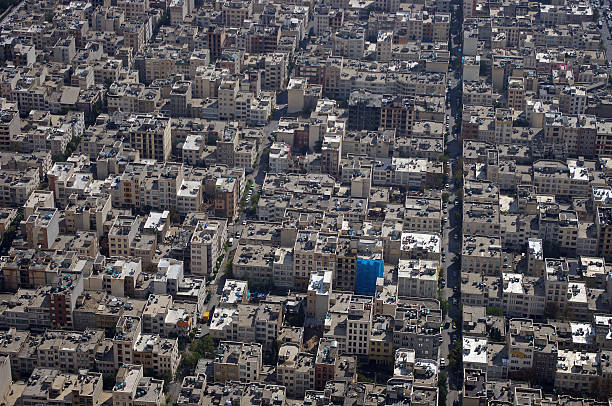 Our world has become a concrete jungle. New buildings, roads, and urban developments are being constructed with nonporous materials. Concrete is the main culprit, but others including asphalt and gravel.
This “hardscape,” as it’s known, means that when rainwater falls from the sky and hits the impervious paved surface, there’s nowhere for it to go. The result is that homes, public spaces, and businesses might be victims of stormwater that has overwhelmed the city systems designed to manage heavy rain events and keep cities free from flood damage.
The Unsustainability of Our Stormwater Management Systems
It’s clear that cities like Houston can’t go on in this untenable way.
With weather largely out of our control — and cities continuing to grow — we rely on stormwater management. The problems are that most stormwater management techniques are limited, cause other undesirable problems, and are not keeping up with expanded urban development and ever more extreme weather patterns.
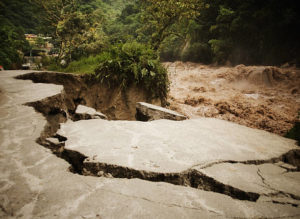 Typical stormwater systems are designed to divert runoff from buildings and into a body of water. This might sound like an ideal solution, but it’s not when you consider the environmental problems that stem from it.
This diverted water can be overwhelming if the volume becomes too large, and it can overpower the management system. Then, as the system diverts the water, it also transports pollutants and other stressors like heat. As it flows, it quickens, increasing the risk of erosion. All these problems from a system meant to help.
Other purpose-built solutions are failing to cope with the rising water. Detention ponds are 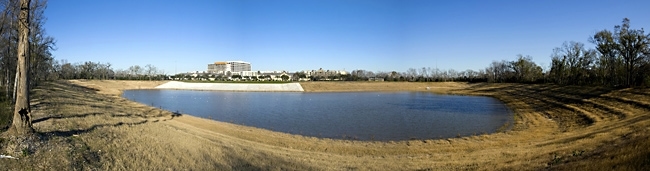 designed to capture water as it rushes urban areas, but they are expensive to build and maintain — if they are maintained at all. The ponds take up large swaths of land that could be used for the community. When not maintained, these bodies of sitting water create breeding grounds for mosquitoes and bacteria and can present drowning hazards.
Pervious Pavement Provides a Solution
Although many conventional solutions are lacking, it is possible to turn our increasingly impervious world into a series of systems and surfaces that make us better able to cope with extreme weather.
Permeable pavements can absorb and store excess water instead of creating 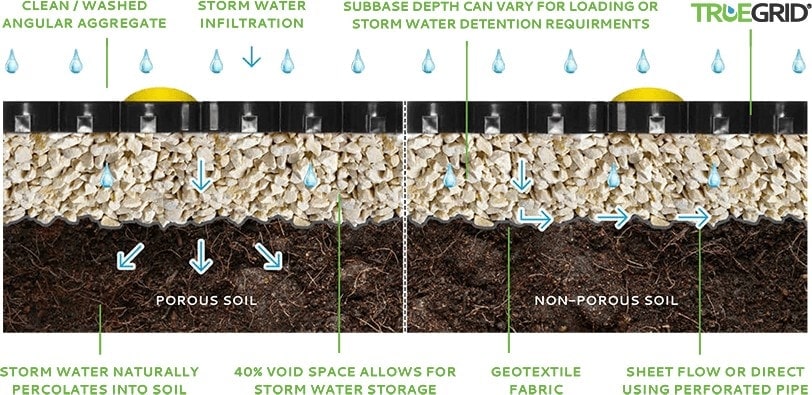 dangerous runoff (the goal is zero runoff). When stormwater surges, permeable pavements can absorb and detain it immediately, because they are porous and don’t create runoff.
They also help solve the source of the problems that overwhelm most traditional stormwater management systems. They restore hydrologic balance, quickly reducing or eliminating dangerous runoff and gradually filtering the precipitation back into the ground and atmosphere.
This balance in turn removes the risk of overheating water bodies, lowers pollutant levels, and reduces the need for detention ponds. Rather than shifting massive amounts of water into costly retention and detention ponds and overloaded city storm systems, our own driveways, parking lots, and roadways become our solution.
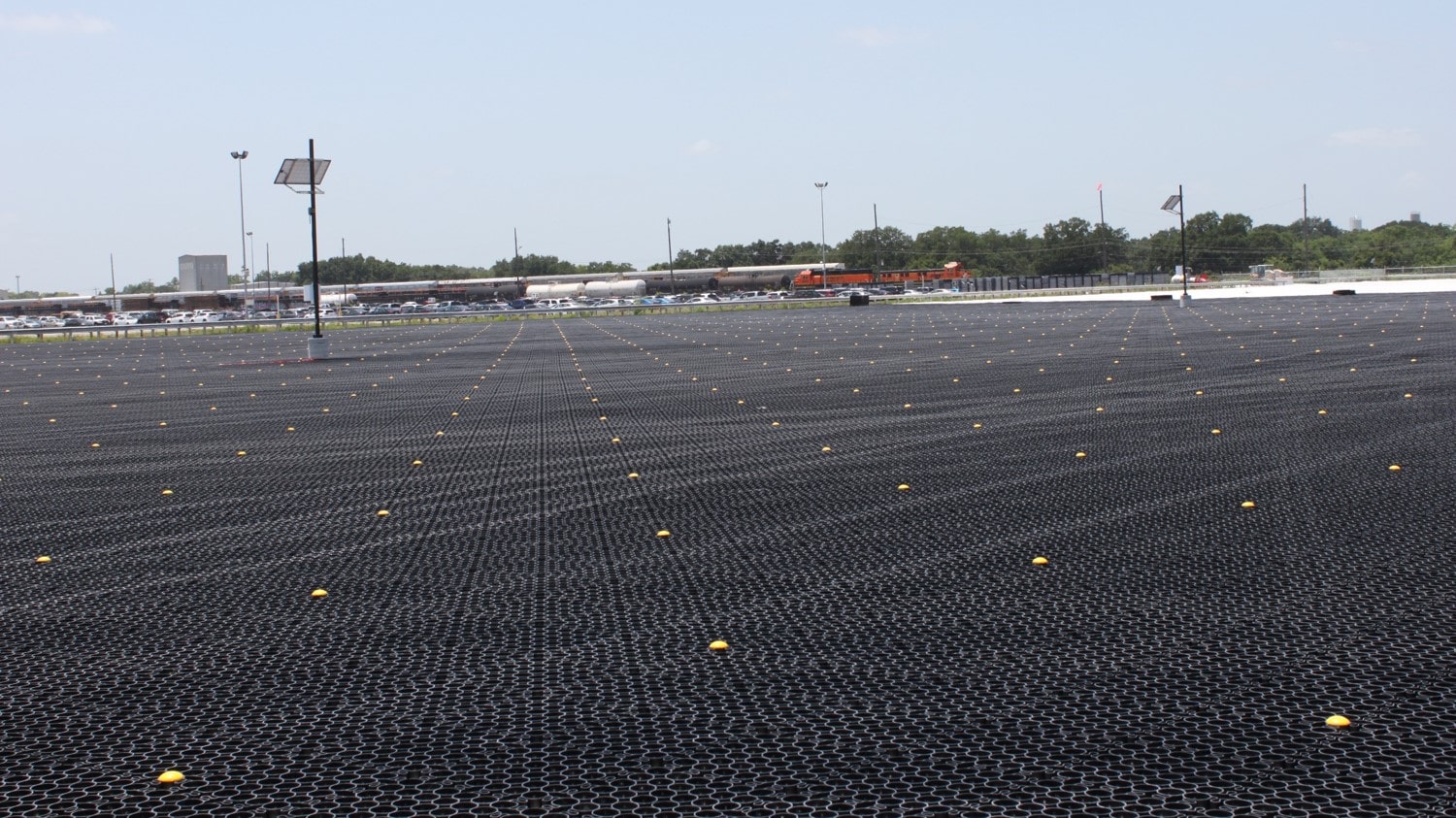
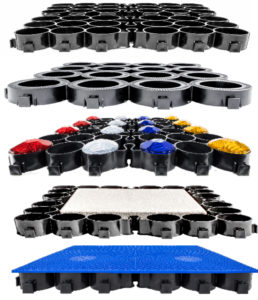 TRUEGRID’s permeable pavers help enable urban development to expand and benefit communities without the terrible cost of flooding. Proven to be 100 percent pervious, with a drainage capability of 800 inches per hour, this pavement system is the best sustainable way to instantly manage stormwater.
To learn more about improving your stormwater management through permeable pavers, download this whitepaper.
A year ago, on August 25, 2017 Hurricane Harvey hit.
Over a 50,000 square mile area, Harvey dropped upwards of 16.6 trillion gallons of water which could supply the entire US water needs for 280 days and fill Lake Conroe 116 times, according to HCFCD reports. One day rainfall amounts up to 25 inches and 4 day amounts up to 47 inches caused widespread devastation that many are still recovering from. Harvey is estimated to be the second costliest storm in American history with an estimated $125 billion in damage.
City planners, engineers, and homeowners are making changes in stormwater management. One part of the solution is the use of TRUEGRID permeable pavers that absorb heavy rains instantly and detain stormwater under the surface.
In the past year over 1 million sf of TRUEGRID has been installed in the Houston area to help mitigate flooding.
From large-scale multi-acre parking lots to school parking lots to restaurant parking to driveways, TRUEGRID is being used to help reduce runoff.
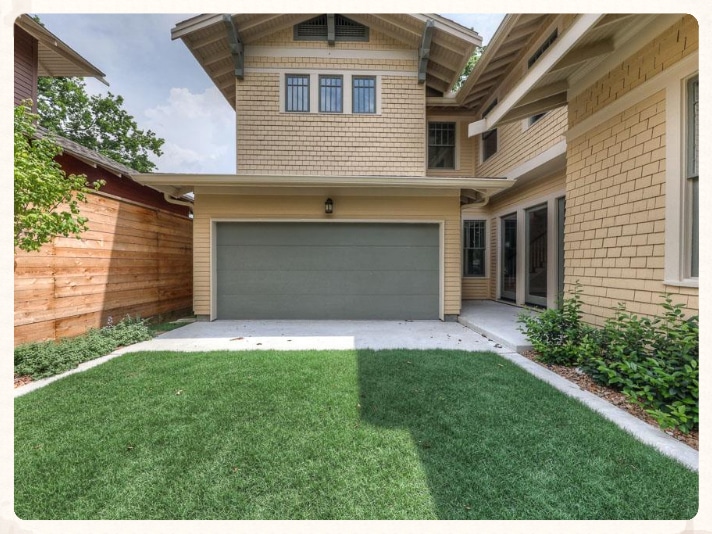
Here are a few photos and an audio testimonial from one business owner describing how permeable paving helped save his new business from flood damage
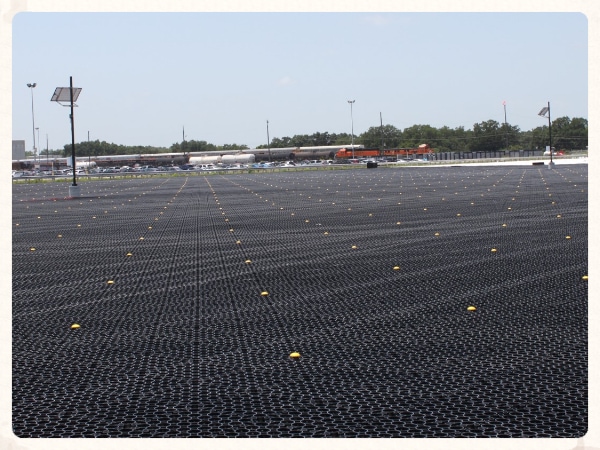

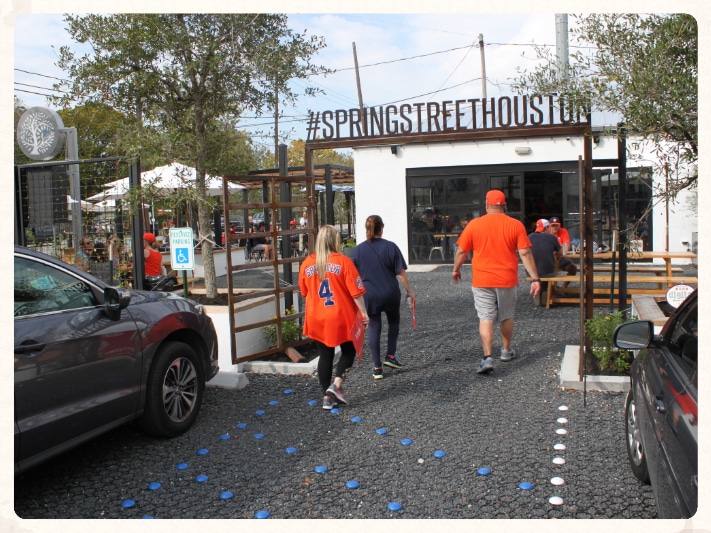
Listen to the audio testimonial from the business owner of Spring Street Beer and Wine Garden as he describes his experience with TRUEGRID Pavers during Hurricane Harvey.
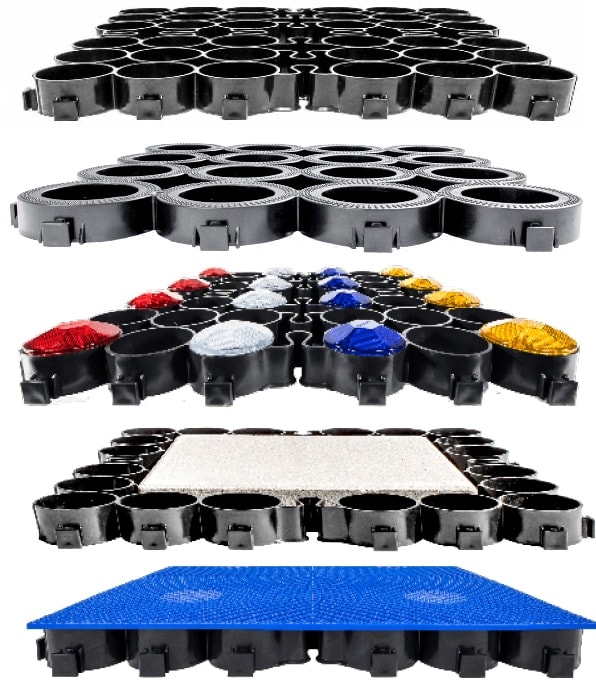
TRUEGRID permeable pavers not only combat flooding but can also be a great way to save money. Permeable paving is a key tool of Low Impact Development design and is encouraged by cities coast-to-coast.
