
Pea Gravel Patio Pros and Cons: What Homeowners Should Know
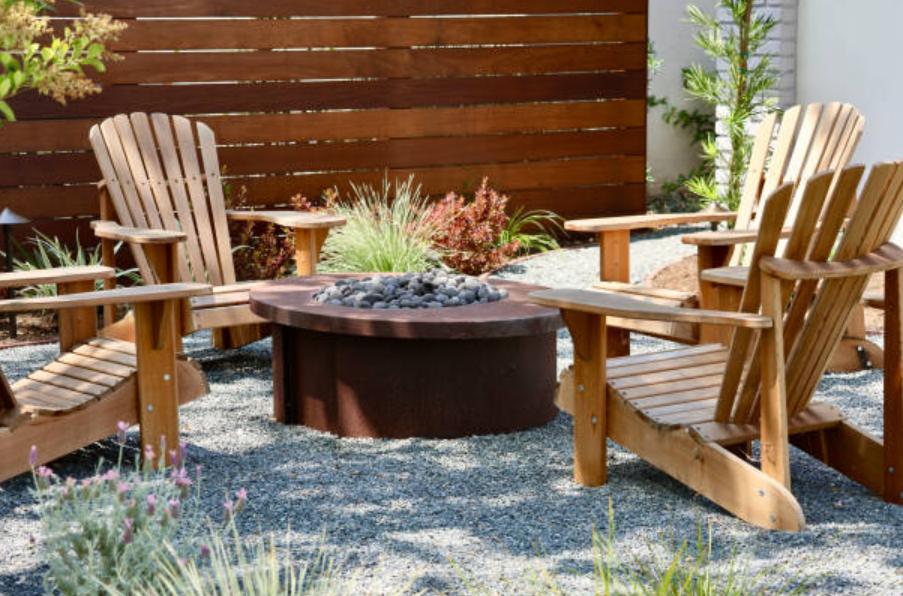
Every patio surface has to balance comfort, cost, and appearance. A pea-gravel design offers natural texture and open drainage at a fraction of the price of solid paving. Understanding pea gravel patio pros and cons helps homeowners decide whether this loose-fill surface fits their property and how much maintenance it will require over time.
Why Homeowners Choose Pea Gravel Patios
Pea-gravel patios attract homeowners for their natural look, low cost, and simple installation. The details below outline what makes the material appealing before weighing pea gravel patio pros and cons more broadly.
Natural Look and Easy Fit
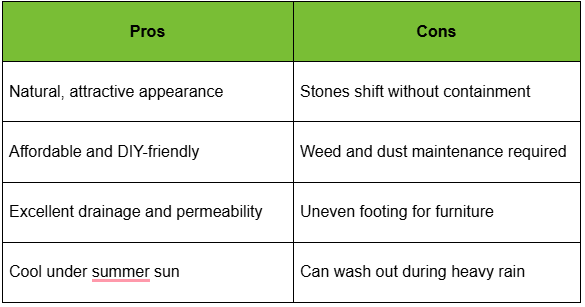
Pea gravel has remained popular for decades because it looks natural and installs quickly. Rounded stones about ⅛ to ⅜ inch in diameter create a soft, organic surface that conforms to irregular layouts and requires no curing time. The muted color range, from light tan to charcoal, complements nearly any exterior palette.
Affordable to Build
Affordability is one of the strongest advantages. Material prices typically fall far below pavers, concrete, or natural flagstone, especially for large footprints. A quick weekend build with landscape fabric, edging, and a few tons of aggregate can produce a finished surface for a fraction of the cost of hard paving.
Excellent Drainage
Drainage stays open. Unlike impermeable slabs, pea gravel allows rainwater to pass directly through the surface and into the soil. That permeability helps prevent puddles, runoff toward foundations, and erosion during heavy storms.
Ideal for regions with strict drainage codes or limited grading options; it also reduces pooling around footings or retaining walls.
Light Maintenance
Maintenance starts light. Occasional raking and light top-offs every couple of years keep the surface level. Because the material never cracks, there’s no need for patching when minor settling occurs.
Common Drawbacks of Pea Gravel Patios
Every loose-fill patio material has trade-offs, and pea gravel is no exception. Recognizing its common issues helps keep the surface stable year after year.
Stone Movement and Edge Loss
Loose aggregate shifts underfoot. That same flexibility many people enjoy also causes the edges to creep outward as foot traffic and furniture legs push stones beyond the border. Without containment, the surface can lose definition and scatter gravel into planting beds or lawns.
Tip: Install metal or stone edging early. Raking once a month keeps the boundary crisp.
Landscape Fabric Use
Landscape fabric slows weed growth and can have other benefits.Geotextile landscape fabrics can add loading strength and can separate unlike materials from cross-contamination, think preventing soils from reaching your clean gravel area. Fabrics do have their limitation and maintenance should be considered. Prevention matters more than treatment: remove debris before it breaks down, and use a leaf blower instead of constant raking.
Uneven Footing and Furniture Stability
The rolling surface feels comfortable barefoot but unstable under tables or chairs. Lightweight furniture can rock or sink slightly. On dining patios or walkways, that instability is noticeable. Instead of covering the whole patio with pavers, create a few flat pads or insets where furniture sits; the rest can stay loose for drainage and texture.
Climate and Weather Effects
Freeze–thaw cycles expand and contract the base, pushing stones out of alignment. Heavy rain washes lighter gravel to low points, and strong winds can move the top layer in dry climates. Expect light reshaping after winter or major storms, and consider a stabilizing grid if your site experiences frequent runoff.
Comparing Pea Gravel to Other Gravel Patio Options

Different gravel materials share similar uses but behave differently under weight and weather. The comparisons below outline how pea gravel stacks up against other common aggregates when assessing overall gravel patio pros and cons.
Crushed Stone
Crushed stone locks together more tightly because its angular particles interlock, giving greater stability for furniture but feeling harsher under bare feet. It provides firm footing for dining or heavy furniture.
Decomposed Granite
Decomposed granite compacts into a semi-solid layer that resists ruts and weeds, but it loses permeability over time and can track dust onto adjacent flooring. Pea gravel, by contrast, keeps pore space open so water drains freely.
It offers a more solid walking surface but requires occasional regrading to restore porosity and prevent dust.
Cost and Maintenance Comparison
When comparing surface types, revisiting pea gravel patio pros and cons helps highlight how particle size and compaction affect stability. Cost remains low across all aggregates, but maintenance drives lifetime expense.
- Pea gravel: periodic raking and light top-offs.
- Crushed stone or granite: heavier regrading after storms or erosion.
Choosing between them depends on whether comfort or firmness matters more.
Preparing the Base and Edge Containment
Proper base preparation determines how long a pea-gravel patio will last. Each layer contributes to strength, drainage, and surface stability.
Excavation and Sub-Base
A stable pea-gravel patio starts with excavation to about four inches. The sub-base should use compacted crushed stone, which supports weight and promotes drainage. A layer of geotextile fabric separates this base from the pea gravel above, preventing mixing that leads to settling.
Compact each lift of stone to build strength while keeping the base permeable. A well-graded aggregate provides both load support and consistent infiltration.
Edge Definition and Retention
Edging defines boundaries and prevents loss. Steel or aluminum edging forms clean borders, while concrete or brick bands add weight for retention. In frost-prone regions, flexible edging materials outlast rigid mortared lines. Metal edging sharpens modern designs; masonry edges blend naturally with traditional landscapes. The goal is to contain movement without disrupting drainage.
Slope and Drainage Control
Slope still matters. Even with a permeable surface, the base should hold roughly ¼ inch per foot of fall away from structures to guide subsurface water. Maintain a consistent grade from walls to lawn, and check slope again after compaction before spreading gravel.
Field note: A small laser level or string line saves time here, getting the grade right now prevents ponding later.
Stabilizing Pea Gravel with Permeable Pavers
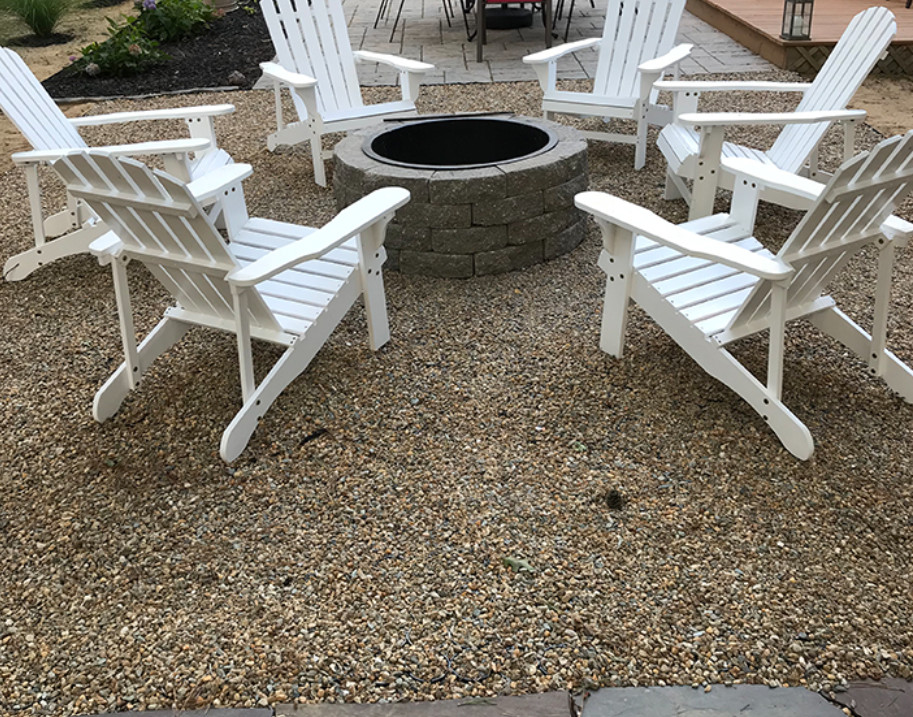
For homeowners ready to limit those seasonal fixes, stabilization provides the next level of control. The following details explain how stabilization grids address the common drawbacks outlined earlier.
Why Stabilization Matters
After accounting for drainage, maintenance, and cost, gravel patio pros and cons point clearly to the value of stabilizing grids. The main complaint with any loose aggregate is movement, and that’s exactly what a grid prevents.
On-site note: Most shifting and ruts disappear once the stones are contained within a rigid frame.
How the Grid Works
Open-cell systems such as TRUEGRID permeable pavers confine the stones inside a honeycomb structure that spreads weight evenly across the surface. Each cell grips the gravel to stop edge loss and rutting while still allowing full infiltration through to the base. The lateral load transfer keeps pressure from concentrating under chairs or footpaths.
Surface Stability and Weed Control
Because the grid spreads weight rather than letting it sink vertically, furniture legs and foot traffic no longer create depressions. The surface feels solid, similar to compacted stone, but retains the natural look of loose gravel. Less movement means fewer gaps for seeds or sunlight, which sharply reduces weed growth over time.
Installation Process
Installation follows the same general pattern as a standard patio:
- Excavate the area.
- Compact the sub-base.
- Place a landscape fabric, if desired
- Place a base layer of 2-4 inches, if the patio is on soft soils or for commercial use.
- Set the interlocking panels.
- Fill each cell with clean, washed, angular gravel. Note, the more angular or sharp the pea gravel, the better. TRUEGRID recommends a chipped rock vs heavily rounded pea gravel.
- Broom or rake the gravel level to the surface of the grid.
When installed correctly, the result is a low-maintenance surface that stays even through seasonal weather.
For the longest lasting, least maintenance, an angular, chipped rock is recommended for infill in TRUEGRID. However, TRUEGRID will improve and benefit a patio with almost any infill of your choice: decomposed granite, pea gravel, crushed stone, recycled glass cullet, or even sand. The grid works by containing the inifll and minimizing fill from migrating, eroding, and rutting,
Drainage and Environmental Performance
The continuous open area of the grid keeps infiltration rates high and prevents sediment from migrating into the base. Water filters directly through the gravel, while the cell walls trap fine material that would otherwise clog the system.
In practice, this means cleaner runoff, longer service life, and far less regrading after storms.
Is a Pea Gravel Patio Right for You?
Every site brings unique conditions, but weighing pea gravel patio pros and cons clarifies where it excels.
When installed with proper base preparation and modern stabilization, pea gravel patio pros and cons balance toward performance. Without stabilization, it remains beautiful but labor-intensive. The choice depends on how much time and maintenance homeowners want to invest after the initial build.
Enhance Patio Drainage and Durability with TRUEGRID Permeable Pavers
TRUEGRID systems combine the look of natural gravel with engineered stability. Each panel locks aggregate into place, supporting foot traffic, furniture, and even light vehicles while keeping water moving through every cell. The grid design maintains permeability and keeps upkeep minimal. Contact us today for more information.

Every home’s first impression begins at the curb. The driveway leads the eye toward the façade and sets expectations for what lies beyond the front door. Choosing materials and patterns that balance design, durability, and drainage defines the foundation of lasting driveway curb appeal.
The Driveway’s Impact on Home Design
The driveway acts as a visual threshold, shaping first impressions through its color, texture, and proportion. Its color, texture, and geometry determine how seamlessly it connects to the landscape and architectural style. A wide, uniform surface can make a home feel grand and ordered, while narrow or uneven approaches break visual rhythm.
Long-term aesthetics depend on more than looks. When water pools, stains form, or cracks spread, the surface loses appeal and value. Materials that manage moisture and resist wear maintain their clean lines year after year. That blend of form and function defines true curb appeal for any home style.
Driveways built with modern designs that perform beneath the surface maintain their visual balance because drainage and structure work together from the base up.
Popular Materials and Design Approaches
Homeowners have more options than ever when planning curb appeal driveway ideas. Each surface type changes both appearance and maintenance needs.
Concrete
Concrete does the job, but it’s prone to cracking and fading as sealers age. That’s the trade-off. It can be broom-finished for traction or stamped for texture. Light colors keep the approach bright but highlight tire marks and patch repairs.
Brick
Brick offers traditional symmetry and natural color depth. Patterns like herringbone or basket-weave create visual energy and frame the entryway. Keep it swept and rinsed, and brick keeps its crisp, timeless look that always stands out at the entry. Mortar joints between bricks can host weeds or show efflorescence if drainage is poor.
Gravel
Gravel is affordable and naturally drains, making it a staple material for rustic or coastal homes. Proper edging, metal, stone, or timber, keeps stones in place and defines the border line. Periodic raking and top-offs, however, are required to maintain a level surface, especially where tires pivot or water flows downhill.
Pavers
Interlocking pavers combine modular precision with easy repair. If one unit chips, it can be replaced without disturbing the rest of the field. Concrete or clay pavers come in numerous tones and sizes to suit modern or classic façades. The joints between pavers allow minimal flexing under load, preventing cracks while still requiring joint-sand upkeep.
Modern and Sustainable Driveway Curb Appeal Ideas
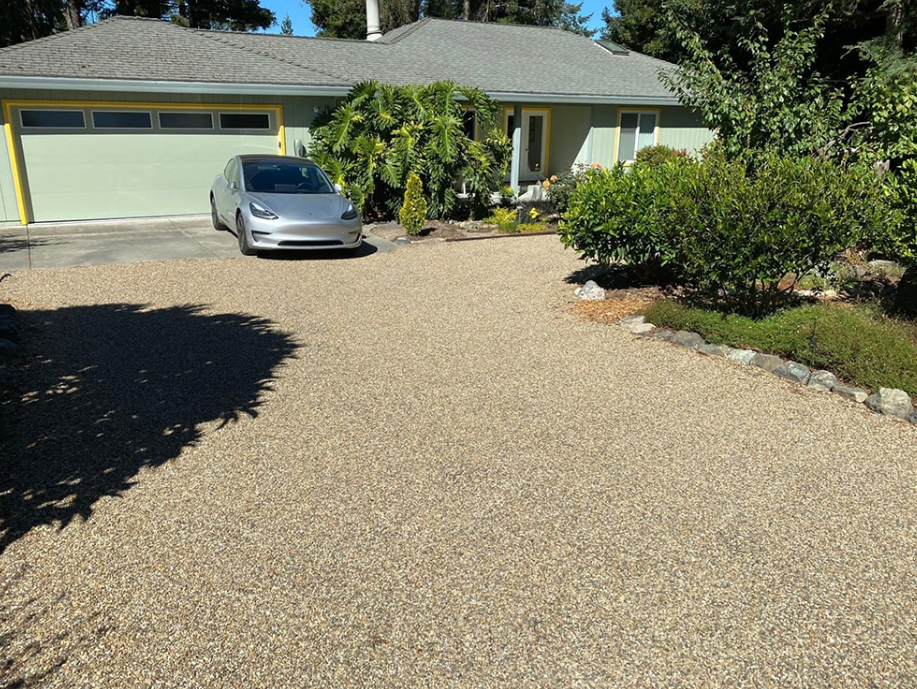
A growing number of homeowners want materials that look refined while reducing runoff. Permeable systems achieve both. Their open cells let rainwater pass through rather than sheet across the surface, reducing runoff and preventing puddles.
The clean grid geometry complements contemporary architecture as well as updated mid-century homes, aligning perfectly with mid century modern driveway curb appeal trends. By filtering water into a prepared stone base, these systems restore natural infiltration and reduce heat buildup under summer sun.
Spotlight on TRUEGRID Permeable Pavers
The TRUEGRID permeable paving system delivers strength, drainage, and design flexibility that conventional slabs can’t match.
Structural Performance and Strength
TRUEGRID’s recycled-plastic pavers redefine curb appeal driveway entrances with durability that outlasts poured slabs. Each interlocking panel locks aggregate in place. The result is a rigid, permeable surface strong enough for heavy vehicles. The grid structure spreads load evenly while preserving the natural look of gravel or turf infill.
Drainage and Environmental Stability
Because the system is open-cell, rainwater travels vertically into the base layer where it’s stored and released slowly into the soil. This prevents erosion along edges and keeps landscaping intact through every storm. The panels resist ultraviolet degradation and freeze-thaw damage, maintaining shape and alignment for decades.
Design Flexibility and Aesthetic Integration
Design flexibility extends the system’s value, combining structural strength with a clean, intentional look. TRUEGRID pavers, such as PRO LITE, can frame clean straight runs, sweeping curves, or circular drives. Homeowners seeking drive-through entry curb appeal can pair wider radii with contrasting infill colors for a polished transition between the street and the residence.
Their clean grid layout transitions naturally into edging, lighting, and landscaping details that complete the overall visual composition.
Design Details That Elevate Driveway Curb Appeal
Beyond the core paving system, visual detail comes from how the surface meets its surroundings, the borders, patterns, and lighting that shape every approach.
Edging and Border Definition
Much of the surface’s visual impact comes from finishing touches. Edging materials define the line where paving meets landscape. Steel edging creates minimalist borders for modern façades, while stone or brick bands provide texture contrast. Vegetated strips planted with hardy groundcovers soften edges without hiding the geometry.
Patterns and Surface Rhythm
Patterns matter as much as borders. Alternating light and dark aggregate creates subtle stripes that guide the eye toward the entry. For homeowners exploring curb appeal driveway upgrades on sloped lots, alternating patterns can also visually reduce slope by breaking up long runs of surface.
Lighting and Nighttime Composition
Lighting completes the composition. Because the panels stay flat, your lights stay level, no wobble, no tilt. Recessed path lights or low bollards highlight the entry alignment at night and accentuate surface texture.
Integrating Landscaping and Architecture

A successful design ties surface material to the home’s lines and plant palette. For ranch or mid-century architecture, linear patterns emphasize horizontal rhythm. Colonial or cottage façades benefit from curved drives framed by hedges or ornamental trees. Native grasses and perennials along edges absorb overflow water and blend the surface into its setting.
Matching tones between façade materials, roofing, trim, or masonry, and paving infill colors creates cohesion. A gray-tone grid paired with charcoal siding reads sleek and modern; tan stone within TRUEGRID panels harmonizes with warm brick or stucco. These subtle choices determine how natural the transition from street to structure feels.
Bring Driveway Curb Appeal and Sustainability Together with TRUEGRID
TRUEGRID permeable pavers let you design a driveway that looks sharp, drains efficiently, and lasts for decades. Each paver is molded from 100% recycled plastic to create a clean, stable surface that handles daily traffic without runoff or rutting. Contact us today for more information.
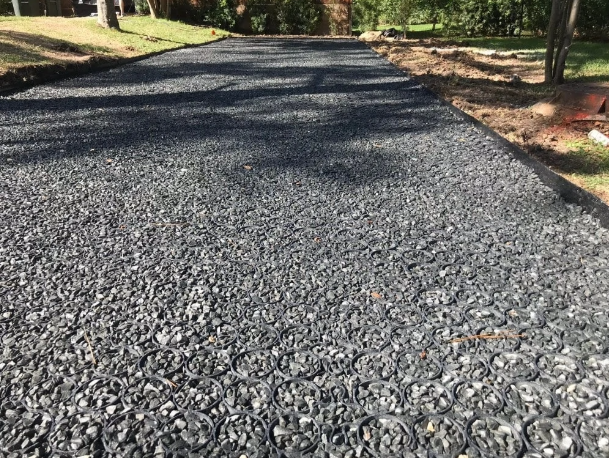
Every paved surface begins with the same challenge, controlling where rainwater goes. When it can’t pass through, runoff floods, erodes, and undermines the base beneath. The benefits of permeable pavement come from its ability to manage that flow, turning water from a liability into a working part of the surface system.
How Permeable Pavement Solves Common Drainage and Maintenance Problems
When rainfall overwhelms sealed pavement, cracks, rutting, and washouts follow. Permeable systems stop that cycle by draining water through the surface instead of around it. They protect the base, extend service life, and simplify code compliance. The benefits of permeable pavement below show how grid-based pavers outperform rigid materials through installation, performance, and long-term use.
1. Manages Runoff and Flooding
Permeable pavers tested under ASTM C1781 deliver high infiltration rates. Rain moves vertically through open cells into a compacted stone base and back into the soil.
Hydraulic Control: Vertical flow eliminates ponding, lowers flood risk, and protects landscaping. Residential driveways built with TRUEGRID PRO LITE often clear within minutes after a storm, visible proof of performance. The stored base layer disperses sustained rainfall evenly instead of channeling toward low spots.
Continuous infiltration also reduces hydrostatic pressure at foundations, limiting seepage and structural stress. This advantage prevents both surface flooding and hidden water damage, a defining benefit of permeable pavement in every environment.
2. Stops Base Erosion
Water under pressure always finds a path. When that path runs sideways beneath an impervious surface, the base begins to wash out. Because these grids drain vertically, the subgrade stays compact and supported, equalizing pressure and preventing migration of fines.
Contractors in coastal and high-rainfall regions rely on this performance to maintain stability. The system resists settlement where rigid pavement fails because it works with the soil instead of against it. Loads remain distributed through the infill stone rather than concentrated along joints, reducing voids and subsidence.
That ability to stabilize the ground without costly underdrains shows another key benefit of permeable pavement, built-in protection for the foundation of every surface.
3. Cools the Surface
Hot pavement shortens its own life.
Dense, dark materials trap heat and radiate it into their surroundings. The open-grid design of permeable pavement vents warmth through evaporation, while light-colored aggregate reflects sunlight and lowers surface temperature.
Across commercial lots and residential patios, that cooling effect improves comfort and limits thermal-expansion cracking. In urban heat-island zones, permeable grids moderate surface temperatures and protect nearby vegetation, a practical environmental benefit of permeable pavement often overlooked until asphalt becomes too hot to use.
4. Filters and Cleans Runoff
Drainage only matters if the discharged water is clean. As stormwater passes through gravel and soil, sediment drops out and microbes digest hydrocarbons, turning polluted runoff into cleaner recharge water.
Proven Filtration:
• Removes suspended solids before they reach storm drains
• Reduces strain on municipal systems
• Replicates the natural infiltration of healthy soil
Permeable installations combine structural strength with hydrologic function, helping projects meet storm-water regulations and lowering treatment loads. Cleaner discharge isn’t theory, it’s documented performance across multiple field sites. Cleaner water adds to the environmental benefits of permeable pavement that protect local waterways and surrounding soil.
5. Spreads Heavy Loads
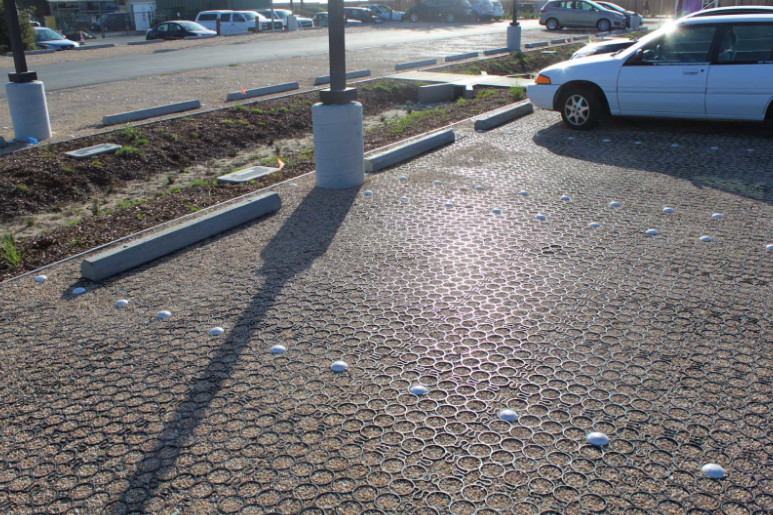
PRO PLUS panels achieve compressive strength above 17,000 psi, verified by ASTM D695.
Key Performance Points:
• Carries trucks and emergency vehicles without rutting
• Maintains infiltration under full load
• Resists lateral movement during turns
Each grid cell confines gravel, transferring weight straight into the base instead of across the surface. The flexible matrix prevents cracking under shock loads, keeping access routes stable, a structural benefit of permeable pavement proven in heavy commercial and municipal applications.
6. Reduces Long-Term Maintenance
Permeable surfaces require no sealing or overlay. Routine care is simple, keep the surface clear so water can move.
Locked aggregate resists displacement, eliminating the regrading common to loose gravel. Decades of use mean no crack repair, joint sealing, or costly resurfacing. Facility managers and homeowners save time and money year after year, confirming that one of the most practical benefits of permeable pavement is long-term financial durability.
7. Handles Freeze–Thaw Cycles
Frozen water destroys sealed surfaces from within. Because these grids drain continuously, little moisture remains to freeze, preventing internal expansion that cracks pavement each winter.
Cold-Climate Advantage: The polymer structure flexes with subgrade movement, keeping surfaces level and intact, no heave, no spalling, no call-backs. Surface ice is reduced since no water is trapped below. For cold-region facilities, this reliability is a proven benefit of permeable pavement backed by field results.
8. Reuses and Restores Resources
Sustainability begins with reuse.
Each panel is molded from post-consumer recycled HDPE, about 3,000 lb of plastic diverted per 1,000 sq ft installed for PRO PLUS with slightly less for PRO LITE. The base replenishes groundwater and reduces reliance on storm-sewer systems.
Using recycled or locally sourced stone adds further environmental value. Builders pursuing LEED certification count this design toward storm-water and recycled-content credits. By keeping rainfall on-site, the system limits erosion and runoff pollution, a measurable benefit of permeable pavement combining structural and ecological performance.
9. Adapts to Any Design

Permeable grids accept a range of aggregates such as limestone or granite — and some specialty infills – so designers can match architectural colors and textures. Turfgrasses, native grasses, and ground cover vegetation can also be used. Panels cut cleanly for curves or edges, and crews appreciate their light weight and fast installation.
Because the interlocking grid maintains full capacity across joints, aesthetic changes never weaken the surface. The result is functional strength with refined appearance, proving the practical benefits of permeable pavement extend to design flexibility.
10. Eases Code Compliance
Modern standards require on-site storm-water control. Permeable pavement meets those demands at the surface, often eliminating underground detention systems.
Compliance Highlights:
• Aligns with EPA MS4 objectives
• Supports LEED v4 SS Credit 6.1
• Simplifies municipal plan review
Verified infiltration and load data speed approvals and reduce design complexity. With fewer buried structures to maintain, public and private projects gain faster permitting and lower lifecycle cost, the final benefit of permeable pavement linking performance to compliance.
TRUEGRID: Delivering Strength, Drainage, and Long-Term Value
TRUEGRID permeable pavers combine load-bearing strength, open-cell drainage, and sustainable materials in one modular system. Each installation supports traffic while allowing rainfall to recharge the ground below. Contact our team today for specification support or detailed performance data.
