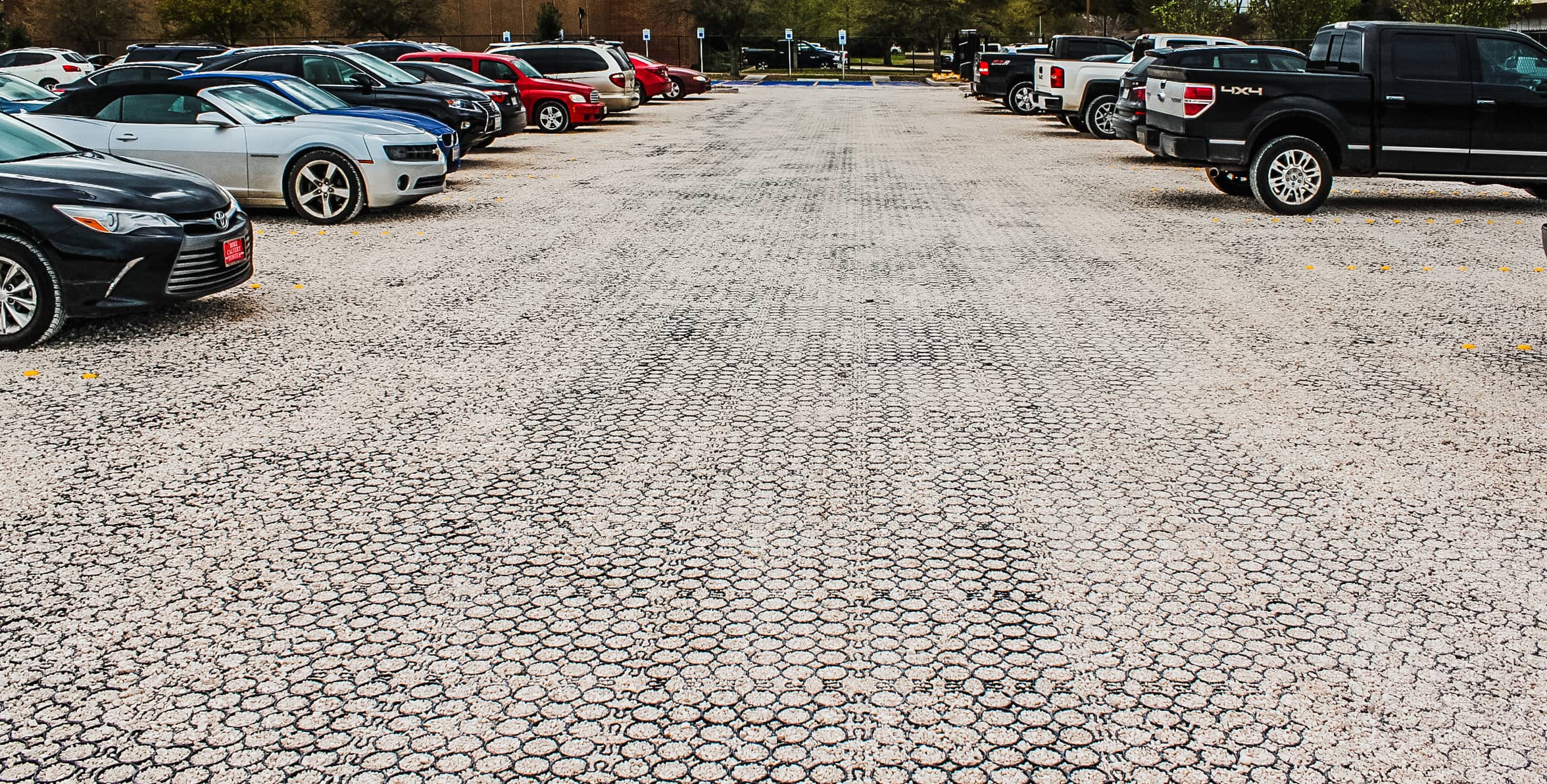
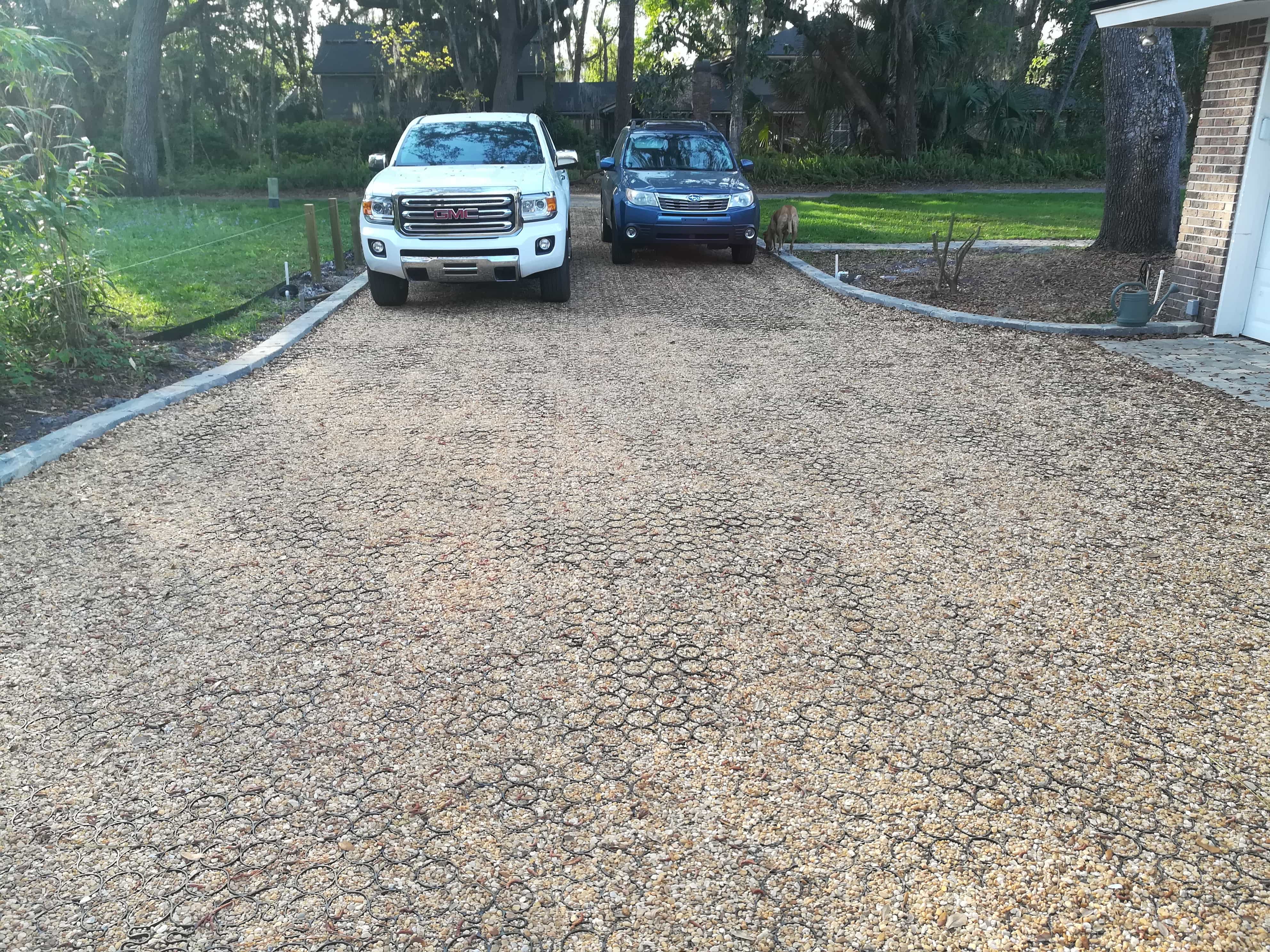
Gravel looks simple until the fire marshal asks how the road was designed. Load capacity, compaction, drainage, base depth, and engineering documentation can turn a low-cost surface choice into a plan-review issue. A compliant gravel fire lane therefore starts with the applicable fire-access requirements, not with the assumption that compacted aggregate will automatically be accepted.
Can a Gravel Fire Lane Meet Fire Access Requirements?
Gravel can be approved for fire apparatus access when the road section meets the required load, all-weather performance, construction, and approval standards. The base IFC establishes core fire lane surface requirements by requiring fire apparatus access roads to support imposed apparatus loads and provide all-weather driving capability, while adopted local standards may add specific requirements for load capacity, compaction, pavement depth, or documentation. Broader fire lane requirements still govern issues such as access geometry, dimensions, markings, and other site-specific conditions that fall outside this gravel-focused discussion.
The exact numbers depend on the approved design and the Authority Having Jurisdiction (AHJ). The AHJ is the official or agency responsible for approving fire access on a project, often the local fire marshal, fire department, or building department. IFC Appendix D uses a 75,000-pound apparatus benchmark where adopted, and local requirements of 80,000 pounds or more also exist. Gravel compaction standards likewise vary, with current jurisdictional examples ranging from 85% to 95%, and minimum aggregate or base depth must be tied to the approved pavement section rather than treated as one universal code number.
| Requirement | What the Project Team Must Verify |
|---|---|
| Load capacity | The pavement assembly can support the apparatus load required by the adopted code and the AHJ. |
| All-weather performance | The road remains stable and usable through rain, saturation, erosion, and other conditions that can affect emergency access. |
| Compaction | The subgrade and aggregate meet the density required by the approved design or local standard. |
| Base depth | The section is deep enough for the soils, aggregate, loading, drainage, and pavement system. |
| Documentation | The AHJ receives any required engineering, geotechnical, testing, or manufacturer information. |
Gravel Fire Lane Requirements Start With Load and All-Weather Performance
A fire access road has to perform under the apparatus that may actually use it.
The Required Load Is Not Always the Same
The base IFC does not assign one universal vehicle weight in its surface requirement. Section 503.2.3 requires the road to support the imposed fire-apparatus loads, while IFC Appendix D uses a 75,000-pound benchmark for fire apparatus access roads where that appendix has been adopted. Local standards can require 80,000 pounds or more, so 75,000 and 80,000 pounds are useful benchmarks when reviewing a project before its specific requirement is confirmed.
The load applies to the entire road assembly, not simply the gravel visible at the surface. Subgrade strength, aggregate type, base thickness, drainage, compaction, and any stabilization system all contribute to how the road carries heavy emergency vehicles. A surface that feels firm under passenger vehicles can still require additional design work before it is approved for fire-truck access.
Gravel Must Remain an All-Weather Surface
All-weather performance means the road has to remain reliably traversable when weather changes the conditions below or within the aggregate. Repeated wheel loads can create rutting or displacement, and poor drainage can allow saturation or erosion to weaken the section. Those problems matter because emergency access cannot depend on the road being dry or recently regraded.
Conventional aggregate can perform well when the section is properly designed and maintained. Projects should still account for the gravel migration and rutting that can occur when aggregate is exposed to traffic, runoff, or weak support. The AHJ may also require evidence that the proposed construction will maintain dependable access throughout the expected site conditions.
Compaction and Base Depth Depend on the Approved Pavement Section
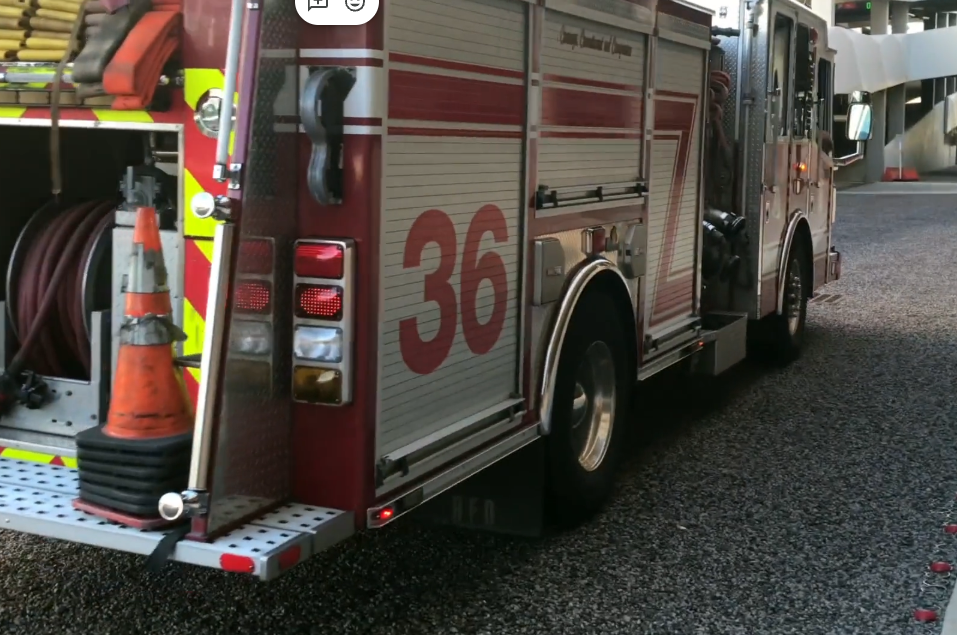
A compacted gravel fire lane needs a defined construction standard rather than an informal instruction to “compact the gravel.”
Compacted Bases and Alternatives
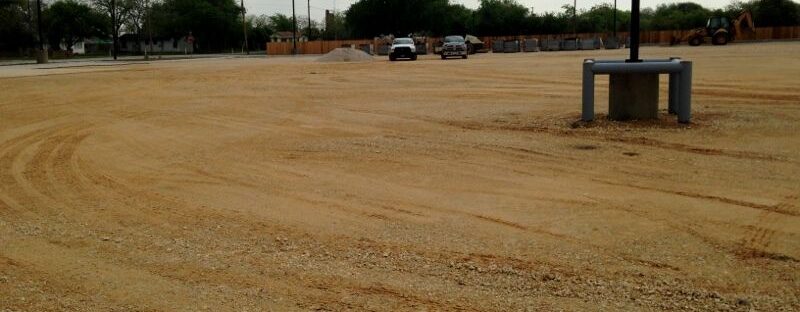
There is no single national fire-code compaction percentage for gravel access roads. Local requirements demonstrate the variation. Victorville, California, uses an 85% minimum for specified fire-access aggregate construction, while Loma Linda permits qualifying rural gravel access at 95% compaction.
A Proctor percentage compares the density achieved in the field with a laboratory-established maximum dry density, giving the project team a measurable target rather than relying on an instruction such as “well compacted.” Compaction is only one part of specifying the aggregate section because aggregate size and gradation also affect how the base and surface are constructed. TRUEGRID publishes different base-aggregate recommendations for different applications, so the project-specific PRO PLUS detail and approved site plan should determine the final specification. Current TRUEGRID installation guidance typically specifies gravel infill from 1/2 to 3/4 inch for PRO PLUS. For base layers, TRUEGRID has documented installs with 1-inch to 1.5-inch open-graded stone.
There Is No Universal Gravel Depth
The IFC does not establish one universal gravel depth for every fire-access application. Some local standards provide project-specific minimums, such as Victorville, California’s 6-inch Class 2 aggregate-base requirement for certain temporary fire-access construction. Weak soils, heavier apparatus, poor drainage, or different pavement systems can require a deeper section. Climate zones and water tables can also affect the depth requirements.
TRUEGRID’s heavy-duty pavement guidance, for example, calls for at least 8 inches of subbase in a heavy-duty PRO PLUS installation and directs designers to increase the depth for higher loads or additional water retention. That is common or typically used depth, not a universal fire-code minimum. Together, these examples show why gravel depth has to be tied to the complete pavement assembly and the requirements governing the site.
Engineering Certification Can Change the Project Cost and Schedule
Once the pavement section is defined, the AHJ may require documentation showing that it can carry the specified apparatus load. Some AHJs require a soils report, pavement design, stamped engineering documents, field testing, manufacturer data, or a combination of these items before approving an alternative driving surface. Discovering those requirements during plan review can add professional fees and redesign time after the surface has already been selected.
Guadalupe County, Texas, for example, requires stamped documents from a registered design professional and a geotechnical design report for approved alternative drivable fire-access surfaces. Project teams should therefore confirm the approval path early, especially when the original concept is based on the assumption that gravel will be a simple, low-cost substitute for paved access.
Grass Fire Lanes
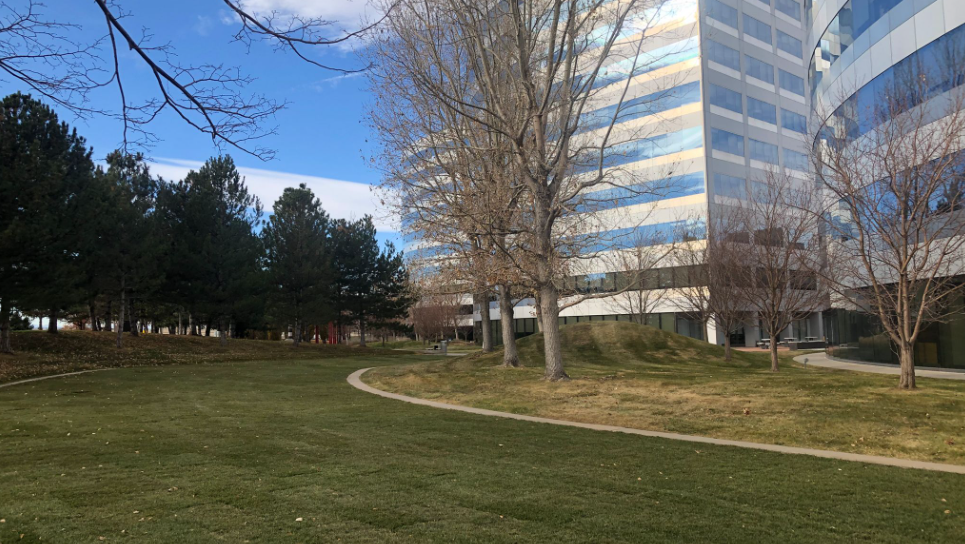
Grass, with reinforcement, can be approved for emergency and fire access when the cross-section meets the required load and all-weather performance is achieved. According to TRUEGRID, grass-reinforced fire lane use is more common than gravel. However, gravel is becoming increasingly common due to drought occurrences and certain areas have restrictions on water and irrigation use
Typical turfgrass species and topsoil are common in these systems. Both seeding/hydroseeding and sodding methods are used during installation. Topsoil remains level or slightly below the top of the grid system. Installation guidelines for the infill of the cellular grids by TRUEGRID show that only the grass blades should be above the top of the grid, no organic soil material should cover the grid, the tire or outrigger of the fire apparatus should make contact with the top of the grid/soil combination.
For grass infill systems by TRUEGRID, the recommended base composition is a ¾-inch minus road base (ABC), compactable. Specific sieve ranges of the base composition need to consider grass growth, drainage, and load-bearing capability. Alternatively, mixes of two-thirds #57 stone and one-third sand or two-thirds #57 stone and one-third topsoil have been used as a base material for grass fire lanes as well.
Stabilized Gravel Creates a More Defined Pavement System
A conventional gravel fire lane relies on the designed aggregate section, compaction, drainage, and ongoing surface stability to carry emergency loads. A stabilization grid confines aggregate and helps limit lateral movement under repeated wheel loads. That confinement can reduce rutting and migration and help the surface maintain a more consistent driving profile.
Grid stabilization does not remove the need to design the base for the site. It can help keep the aggregate in place while allowing the road to remain permeable under heavy-use conditions. That can be especially useful where the project needs fire access along with drainage, stormwater detention, or an aggregate appearance.
TRUEGRID PRO PLUS Provides a Load-Rated Fire Access Option
PRO PLUS pairs published heavy-load performance information with a gravel or grass stabilization system for commercial fire-access applications.
Published Load and Fire-Access Specifications
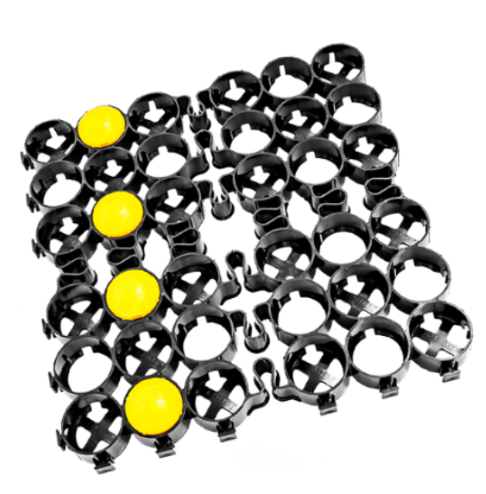
TRUEGRID PRO PLUS is engineered for heavy-use commercial applications and can be filled with gravel. TRUEGRID publishes H20/HS20+ rating language for gravel-filled PRO PLUS and provides a dedicated gravel-fill fire-lane emergency-access cross section.
Published load and system specifications give designers documented performance data for the PRO PLUS component. Base design, compaction, aggregate selection, drainage, and site conditions still govern the overall pavement assembly.
Permeability as a Secondary Site Benefit
PRO PLUS maintains a permeable surface when installed with appropriate aggregate. Projects that need emergency access and stormwater management can use the pavement section for subsurface detention and, where site soils and drainage design allow, infiltration. Fire-access performance remains the first design requirement. A grass or gravel firelane will reduce runoff and not add to impervious cover limits for developers or owners.
Plan Heavy-Duty Fire Access With TRUEGRID PRO PLUS
TRUEGRID can help project teams evaluate PRO PLUS configurations for heavy-duty access, site drainage, and aggregate paving conditions. Addressing load requirements and pavement design early can give the project team clearer information for specification and fire-authority review. Contact us today for more information.
Frequently Asked Questions
These questions address the issues most likely to affect early specification and fire-authority review.
Is Gravel or Grass Reinforcement Approved for a Fire Lane?
Gravel or grass reinforcement can be approved when the complete road section meets the required apparatus load, all-weather performance, construction, and AHJ approval requirements. Acceptance should be confirmed for the specific jurisdiction before the surface is finalized.
Does a Gravel Fire Access Road Require Engineering Certification?
Sometimes. Local permitting or approval may require geotechnical information, pavement calculations, stamped documents, testing, manufacturer information, or other proof that the proposed surface can support the required fire apparatus.
How Deep Should a Gravel Fire Access Road Be?
There is no single code-wide depth. Required thickness depends on subgrade conditions, aggregate, vehicle loading, drainage, and the pavement system specified for the site.