A circular driveway improves how a home looks and how traffic flows through the property. This article covers how layout, material, and installation methods impact long-term performance. Done right, circular driveway ideas can boost curb appeal, protect landscaping, and reduce ongoing maintenance.
Layout Choices That Shape Driveway Performance
A circular design isn’t just visual—it changes how vehicles move, where runoff goes, and how the driveway holds up over time. The layout should fit your site, traffic needs, and drainage goals.
Full Circle vs. Semi-Circular Designs
Full circle driveways need at least 70 feet of depth to function properly. They allow continuous movement without reversing. Semi-circular designs work well on narrow lots, connecting two curb points with a sweeping arc that loops around a center island.
Turning Radius and Access Considerations
Circular driveways make it easier to enter and exit safely, especially on sloped or busy roads. They reduce the need to back into traffic and help delivery trucks or service vehicles move through the site without causing damage to lawns or landscaping.
Choosing Surface Materials That Last
Your driveway surface affects more than looks. It determines how the surface drains, how well it resists wear, and what kind of upkeep you’ll need over time.
Concrete, Asphalt, and Their Limits
Concrete can crack under freeze-thaw cycles and doesn’t allow water to drain. Asphalt softens in high heat and often needs resealing. Both contribute to runoff and require downtime for curing.
Gravel and Edge Restraint Challenges
Gravel may look affordable upfront, but without edge restraints and a solid base, it shifts under turning loads. Vehicle movement disrupts the surface, and displaced gravel leads to ruts and regrading.
Grid-Based Systems for Surface Stability
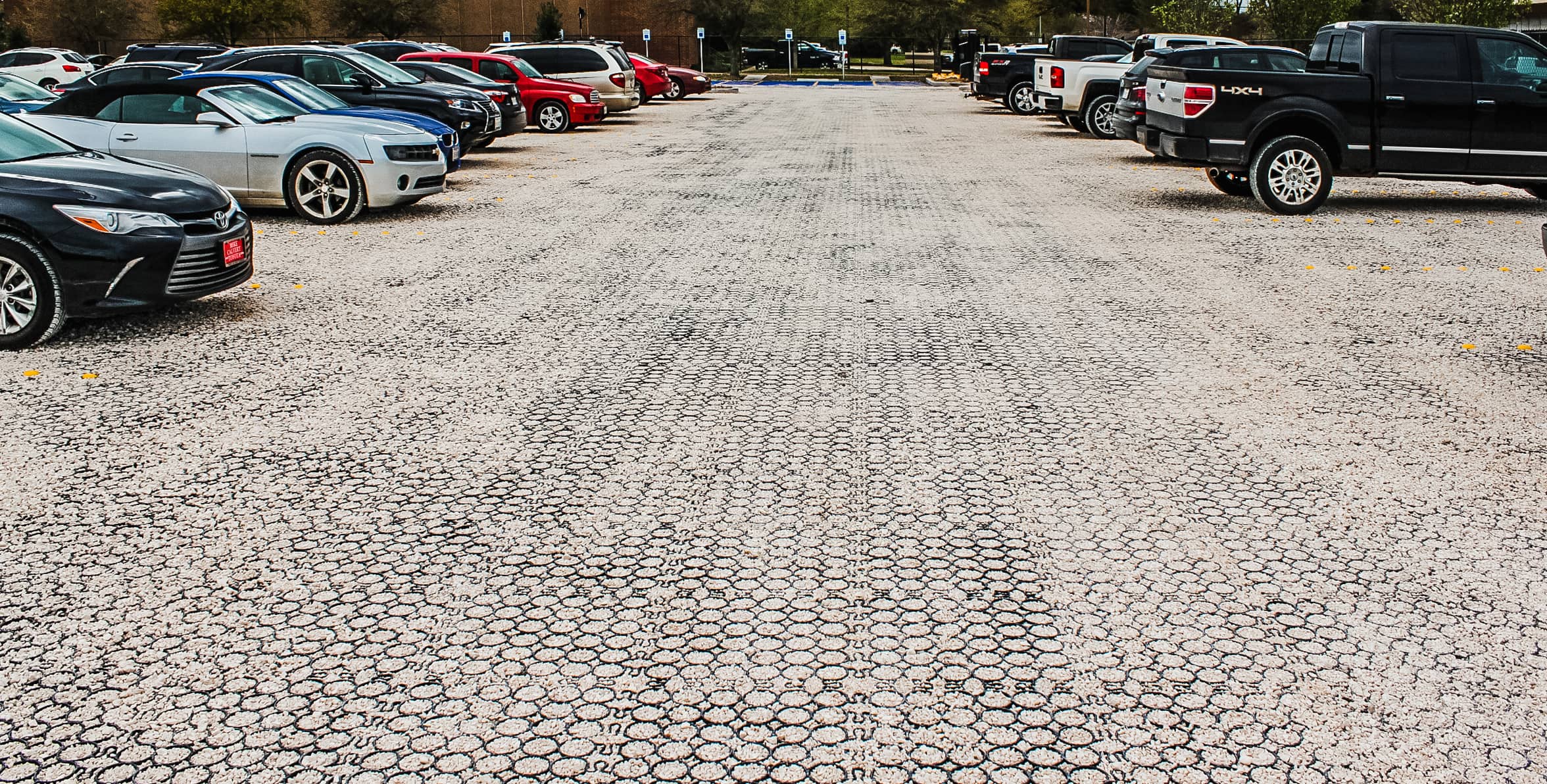
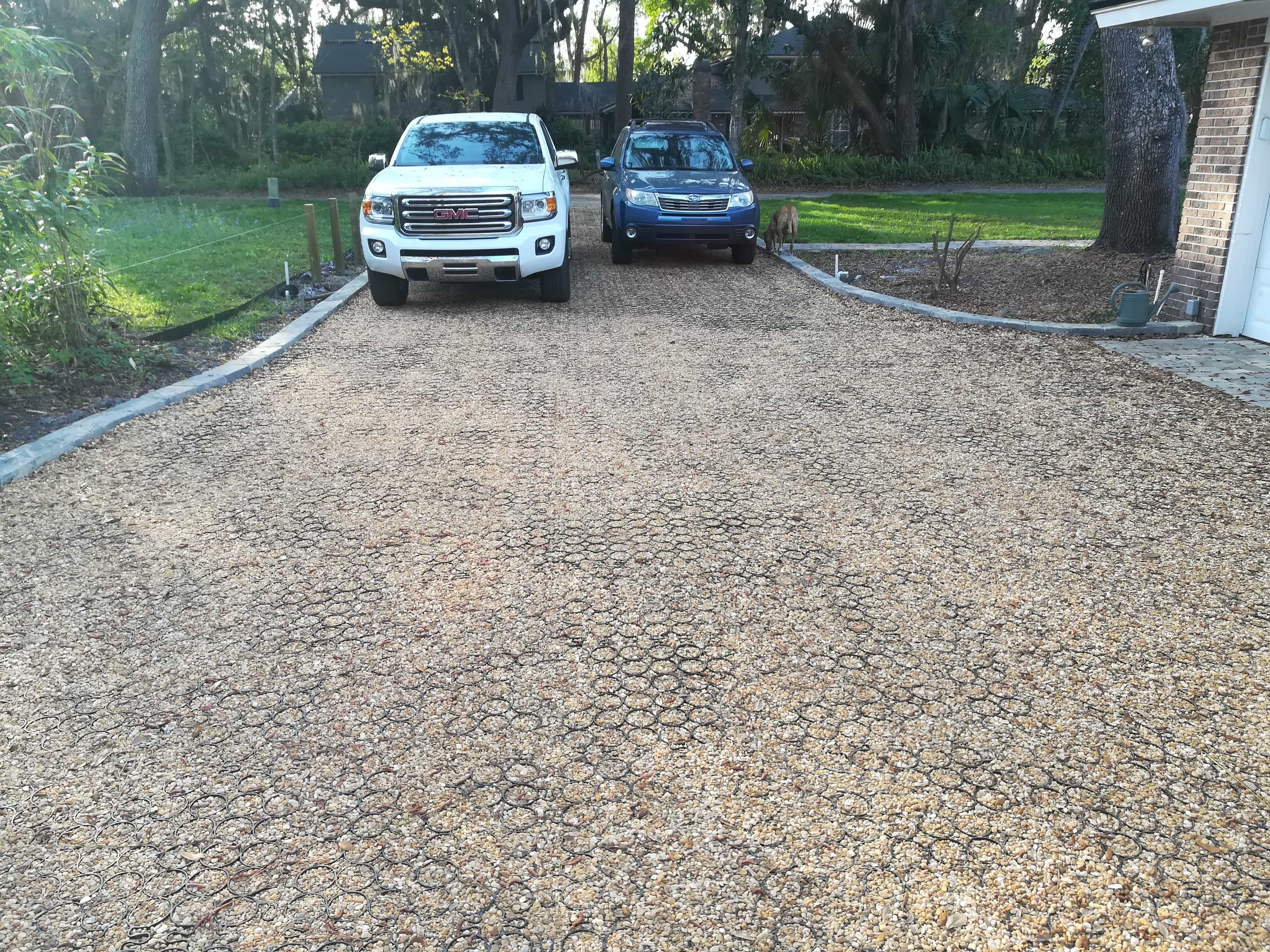
Some circular driveway ideas use modular grid layouts that hold grave (or grass)l in place and reduce the need for regrading. These systems preserve layout shape and prevent gravel displacement—even in tight turning zones.

Preparing a Stable, Drainable Base
Every driveway starts from the ground up. Without a well-compacted base and planned drainage, even the best surface material will fail.
Excavation and Subgrade Planning
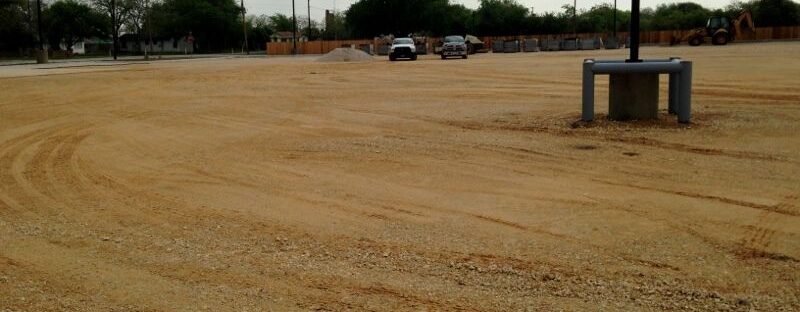
Most systems need 6–12 inches of excavation. Clay-heavy soils may require geotextile stabilization. Pitch and water flow must be mapped so water doesn’t collect inside the arc.
Drainage Without Extra Infrastructure
Permeable systems move water through the surface and into the base. That means fewer stormwater problems and no need for separate trench drains or runoff channels. This matters most where codes limit impervious surfaces. Many circular driveway ideas now rely on permeable bases to eliminate stormwater runoff without added infrastructure.
Time and Cost Considerations
According to the U.S. EPA, permeable paving systems typically cost between $4 and $10 per square foot installed, depending on the base conditions and material type. Traditional concrete averages $5 to $15 per square foot, while gravel systems fall in the $1 to $5 range. Local permit needs, subgrade stabilization, and slope can affect final pricing and timelines. Grid systems install without downtime for curing or sealing, keeping projects on schedule even with tight timelines.
Landscaping That Works With the Driveway
The right landscaping adds function and structure to the layout. It should stay low-maintenance and keep visibility clear at every turn.
Center Islands That Stay Visible
Use drought-tolerant plants like sedum, creeping thyme, or blue fescue in the center island to limit upkeep and avoid deep root systems that could disturb the surface. As one installer noted on Reddit:
“Lots of types of sedums. Low maintenance, colorful, drought tolerant, shallow roots…”
These groundcovers stay low to the ground and hold their shape throughout the season without the need for trimming. For homes with architectural focal points, low-profile signage or a single ornamental boulder can reinforce visual symmetry without blocking sightlines.
Edging and Lighting for Access
Landscape beds around the driveway edge need enough clearance for door swings. To define the outer curve, install downward-facing LED bollards spaced 10 to 15 feet apart. This improves visibility at night and reduces headlight glare. Steel or concrete edge restraints will also help contain gravel and prevent landscaping creep over time.
Design Inspirations That Fit Your Site

Contractors and homeowners have applied circular driveway ideas in a wide range of configurations.
- A half-circle island with TRUEGRID PRO LITE creates a center focal point while locking gravel in place under tight vehicle turns.
- A dual-gate arc improves flow and allows separate entry and exit paths—grid systems resist rutting even with repeated directional changes.
- An angled-entry loop can meet the street diagonally on corner lots, with grids preventing slope-induced washout.
- On narrow properties, a center-bed S-curve helps optimize turn radius without sacrificing planting zones.
- For shared lots or private road access, a turnaround-style loop built with PRO PLUS supports heavier traffic without disturbing turf or adjacent features.
Build Process for Durable, DIY-Friendly Installation
Some materials require downtime and repeated upkeep. Others install fast and stay intact for decades with little maintenance.
Planning the Curve
Mark the loop with stakes and walk it. Account for turn radius, overhang, and where the slope might shift water toward the home. Include curb returns and transitions from road to driveway.
Step-by-Step Build Sequence
Start with excavation and base compaction. Install edge restraints. Place modular grids or surface material. Add infill. Compact again. Each step affects drainage, longevity, and surface strength.
Choosing Permeable Systems That Hold Up
A system made from 100% recycled plastic stabilizes the aggregate and eliminates cleanup from scattered stone. It installs without sealing or cure time. Crews can finish in one trip and avoid seasonal sealing.

Performance Over Time
Driveways shouldn’t just look good on day one. They need to hold shape, resist rutting, and drain well through years of use.
Surface Wear and Maintenance Cycles
Look for materials that don’t shift under vehicle weight. Avoid surfaces that require resealing every year or need extra grading after rain. Choosing the right surface helps ensure that circular driveway ideas stay level, clean, and usable for years without costly repairs.
How Circular Layouts Improve Safety
These driveways direct cars forward, away from foot traffic and planting zones. That keeps kids safer, lawns intact, and movement smooth on busy streets.
Boosting Curb Appeal Without Losing Function
When designed well, circular layouts add more than looks—they control flow, reduce runoff, and make a lasting impact on the property.
Visual Structure for Different Home Styles
Formal homes often use symmetrical curves and stone edging. Modern homes may favor a broken arc or segmented path. Both still improve entry flow and reduce reversing. Most circular driveway ideas can be adapted to match architectural features while improving access.
Small Footprint Options for Tight Lots
Not all circular driveway ideas need a massive footprint. Even a half-circle layout can simplify access. These options help in neighborhoods with narrow roads or one-way streets.
TRUEGRID Products Built for Circular Driveways

TRUEGRID systems are purpose-built for curved layouts that demand surface stability, stormwater control, and fast install times.
- On residential sites, TRUEGRID PRO LITE installs over compacted gravel to form a clean, durable surface that locks infill in place. The permeable grid channels water beneath the drive path, avoiding surface buildup and protecting surrounding soil.
- For heavier traffic zones, service vehicle access, or shared-use driveways, TRUEGRID PRO PLUS offers increased load capacity with the same zero-maintenance structure.
Both systems use 100% recycled plastic to stabilize gravel without shifting, even under tight turning stress. The grid structure prevents rutting and keeps the drive surface flat over time.
Gravel infill systems don’t require sealing or curing, so they’re ready for use immediately after compaction. Grass infill systems should be used after 3 to 4 mowing cycles or until roots have taken. Crews can complete the install in one mobilization without return trips. On sloped lots or soft soils, the grid locks the surface in place while allowing water to move naturally through the base. That’s critical for circular layouts where drainage paths curve inward and traditional surfaces fail.
Maintaining a Grid-Based Circular Driveway
TRUEGRID surfaces require minimal upkeep, but consistent light maintenance keeps the system draining properly and looking clean.
- Once per season, sweep off loose debris or organic matter.
- Remove leaves, pine needles, and other items before they decompose.
- Avoid sanding in winter months, and raise plow blades slightly to prevent surface damage.
If infill settles after repeated freeze-thaw cycles, top it off with clean gravel and compact again—no rework needed.
Get the Right Grid System for Any Circular Driveway Layout with TRUEGRID
Design a zero-maintenance circular driveway with TRUEGRID permeable pavers. Eliminate runoff, lock in surface strength, and skip the hassle of sealing or regrading. Contact us today for more information.