Water that collects on a patio doesn’t drain off—it soaks in, breaks down the base, and leaves a surface that won’t last. Without proper drainage, patios shift, settle, and fail well before their expected lifespan. That’s why planning effective drainage for patio surfaces is important from the start.
Why Drainage Fails Without Ground-Up Planning
When water sits after a storm, it doesn’t just evaporate. It seeps into the sub-base, loosens aggregate, and pushes apart the structural layers. Over time, this leads to cracks, uneven surfaces, and costly repair cycles.
Most patios are built flat or near structures—areas that trap water without the right slope or soil preparation. Poor drainage shows up slowly, but its impact accelerates as moisture undermines stability.
Grading and Site Walks Identify Water Trouble Zones
Grading diagnostics should come first. Runoff naturally follows the lowest point. Walk the site during or after rain to locate pooling. Water that collects near foundations, stairs, or paver seams needs to be rerouted.
A simple slope laser or string line can verify grade. The surface should fall at least 1/4 inch per foot away from the house. Anything less risks saturation in heavy storms.
Build Drainage Into the Base—Not Over It
Slope isn’t an afterthought. It must be embedded in the patio’s structure before pavers or concrete are ever installed.
Slope as a First Line of Defense
Every patio needs a grade of at least one-quarter inch per foot to move water away from the surface. This slope should direct runoff toward grass, gravel, or a managed outlet—not back toward the foundation.
Without slope, water backs up against structures or collects in seams. If the patio is confined by walls or steps, plan a subsurface drain or permeable system early—before excavation starts.
Foundation Layers That Move Water
A stable patio starts with base materials that support traffic and manage how water flows through the system.
Compactable Base Depth and Aggregate Sizing
Below the surface, crushed angular stone moves water laterally and resists compaction.
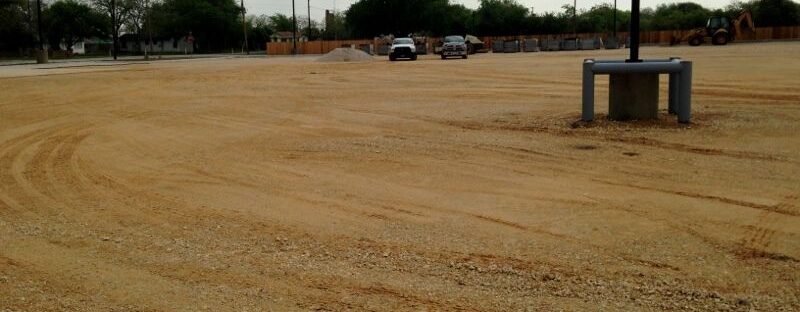
- Use 6 inches of compacted 3/4-inch clean gravel beneath a 1-inch bedding layer. Note: Plastic grid systems typically require less base depths and no bedding layers.
- Set each layer in lifts and run a plate compactor across the surface after each pass.
In high-traffic areas, compact each layer to refusal to prevent future rutting. Keep stone angular and uniformly graded to maintain void space for drainage.
Geotextile Barriers and Joint Fill Behavior
In some projects, a geotextile fabric layer prevents soil fines from migrating upward into the stone base. This keeps flow paths open during freeze-thaw cycles or heavy rain.
Polymeric joint sand or permeable infill aggregate should be chosen based on whether the system is designed to shed water or absorb it. Dense polymeric joints block flow, while open-graded gravel lets it pass into the base. This choice directly affects how well the entire drainage for patio system performs over time—especially in areas with freeze cycles or poor soil infiltration.
Drainage Systems for Sites That Can’t Absorb Water Naturally
Some properties can’t rely on slope alone. Flat yards, clay-heavy soils, or patio locations near buildings need mechanical drainage systems.
Linear Drains and Channel Grates
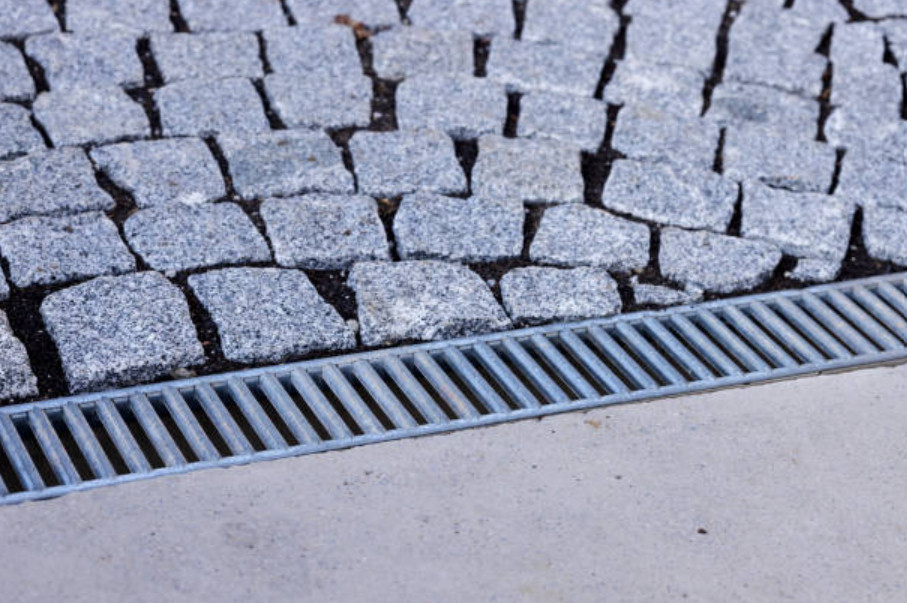
These are surface-level systems that collect water through a grate and move it into underground pipe. They’re ideal for large hardscapes, especially those bordering a home.
- Installation begins with a trench wide enough to accommodate the drain body plus 4 inches on each side for backfill.
- Set the channel drain into a 2-inch bed of compacted gravel, level it with a screed, then pour concrete along the sides to lock it in place.
- Always connect the outlet to a downhill discharge point.
After installation, run a water test with a garden hose to ensure proper flow and verify no backflow against the patio edge.
French Drains for Subsurface Flow
A French drain sits below ground level, using perforated pipe wrapped in gravel to collect water from below the patio. It redirects flow away from the structure and prevents sub-base saturation.
Excavate a trench about 18 inches deep and 8–12 inches wide. Lay landscape fabric along the trench sides and bottom. Insert a perforated 4-inch pipe with the holes facing downward. Surround it with 3/4-inch gravel, fold over the fabric, and backfill with soil or stone. These systems perform well in low points where surface pooling recurs.
Dry Wells and Overflow Control
Dry wells hold excess water temporarily and allow it to seep into the soil over time. They’re often used in conjunction with French drains and channel systems where surface runoff must be reduced.
Prefabricated dry wells or gravel-filled pits both work, provided the local soil drains adequately. Avoid using them in compacted clay or high water tables without a filtration zone.
Drainage for Patio Builds with Permeable Surfaces
Permeable paver systems provide surface-level drainage by allowing water to pass directly through.
Vertical Drainage Through Pavers
Instead of running off the surface, rainwater moves into open joint lines and is stored in the stone base below. This eliminates surface pooling and prevents water from moving toward the house or neighboring properties.
Because water flows through rather than around, drainage for patio surfaces becomes self-contained. There’s no need for pipe connections, discharge points, or curb cuts—just proper base prep and vertical space.
Reduced Maintenance and Repair Needs
Because water drains down instead of sitting on the surface, permeable patios resist cracking, rutting, and freeze-related damage. There’s no sealing required, and damaged units can be lifted and reset without redoing the whole area.
Seasonal maintenance is simple. Periodically sweep off debris and blow loose leaves from the surface. Keep sediment away from the surface. Larger base stone also helps prevent freeze expansion during winter.
Real Performance on Tight Job Sites
Permeable systems shine where drainage infrastructure isn’t feasible. On tight urban lots or narrow side yards, they eliminate the need for excavation, piping, or slope regrading.
Where stormwater rules prevent runoff into alleys or sidewalks, a permeable system keeps flow onsite. It handles volume at the surface and controls storage below, especially when tied to a reservoir base layer.
TRUEGRID Permeable Systems: Built to Handle Water and Load
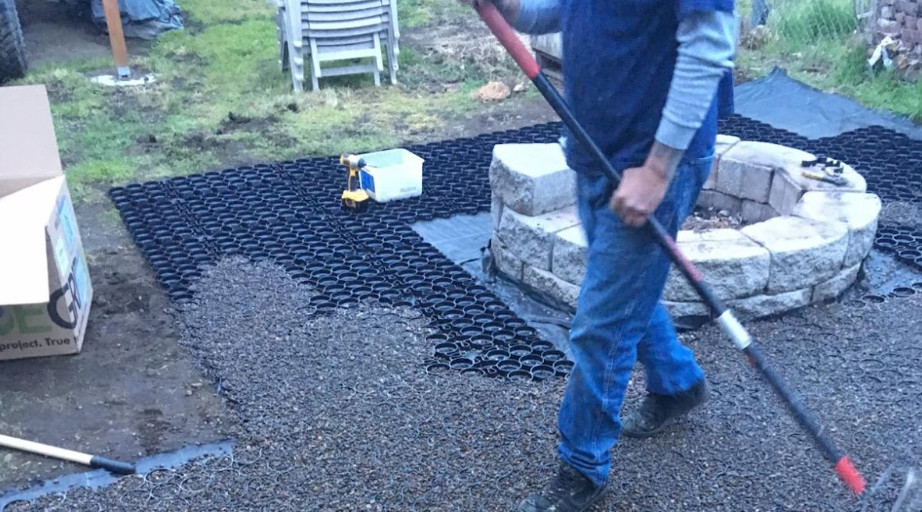
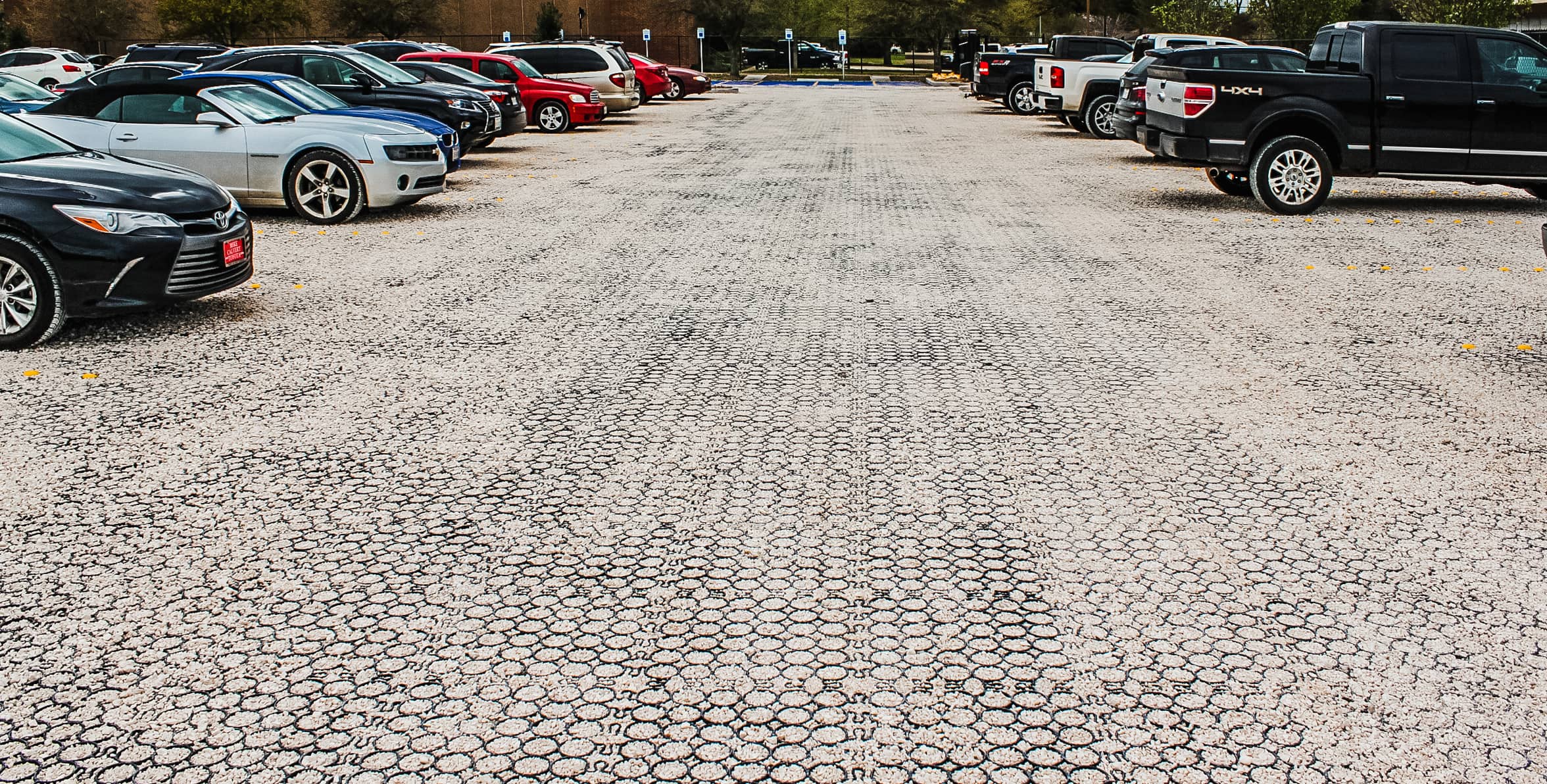
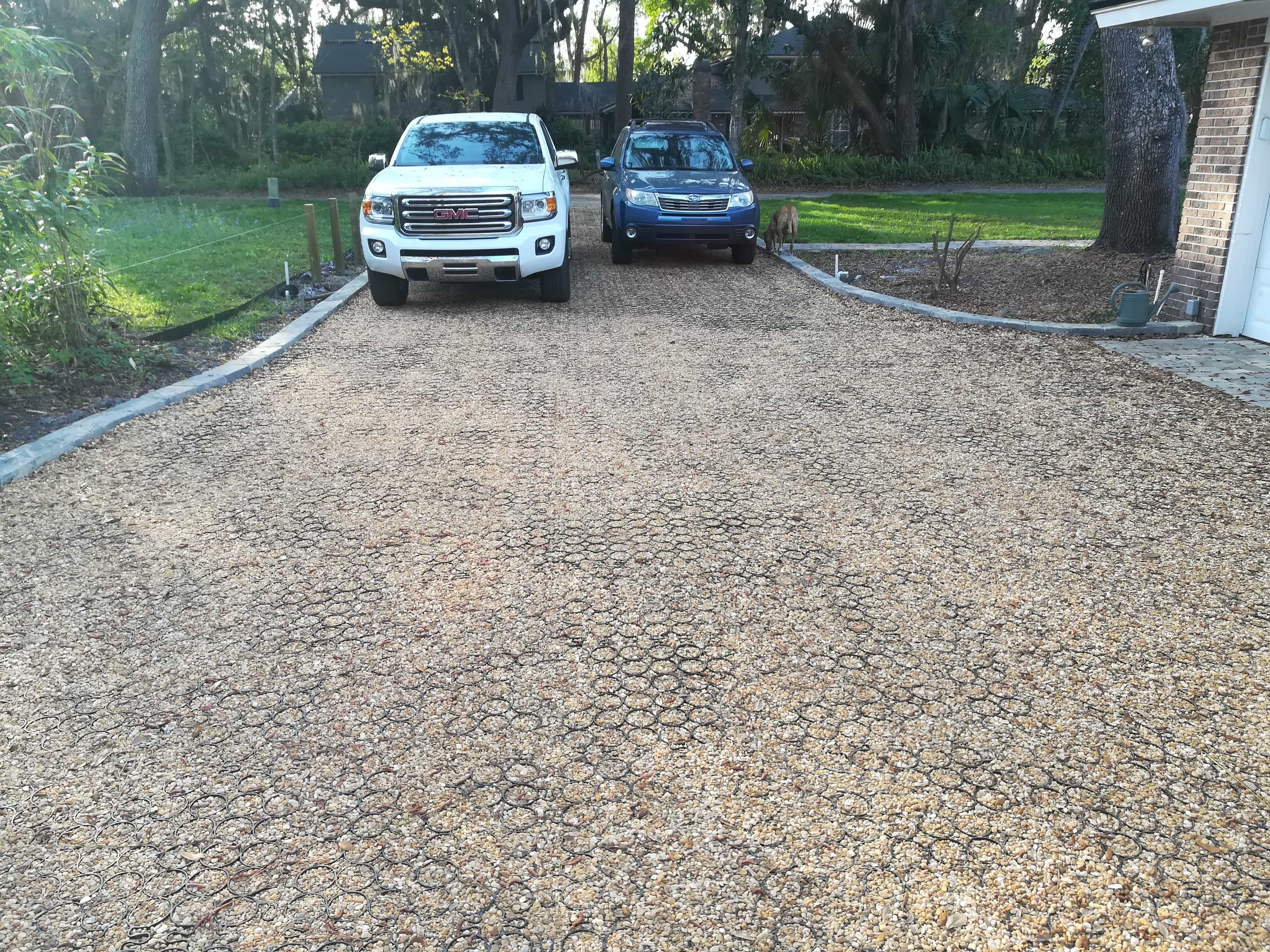
A well-drained patio needs performance at the surface and below. TRUEGRID PRO LITE is designed specifically for residential use—handling patios, walkways, and light traffic areas without surface cracking or rutting. It installs over a clean stone base that holds stormwater, supports daily use, and eliminates runoff at the source.
Recycled Materials That Work in the Field
Each grid is made from 100% recycled plastic and locks together for fast install. TRUEGRID systems require no curing time and resist damage from UV and freeze-thaw cycles. The open-cell structure allows vertical drainage while supporting structural load without shifting or heaving.
They also eliminate the need for detention ponds or trench drains on many residential lots. The entire system stays below the surface—out of sight and out of maintenance cycles.
Built for Light Commercial and Residential Use
TRUEGRID PRO LITE provides effective drainage for patio installations by moving water through the surface and into the stone base, which means no trenching or pipework is required. These permeable pavers keep water below grade, hold up under foot traffic and occasional vehicles, and stay stable through all seasons.
Every grid spreads load, drains vertically, and locks in water control at the jobsite level—without concrete, sealing, or added drainage infrastructure.
Design a Dry, Low-Maintenance Patio with TRUEGRID PRO LITE
Design a surface that drains through the base—not over it. TRUEGRID PRO LITE installs fast, eliminates runoff, and resists rutting in all seasons. Contact us today for more information.