Every driveway starts with a plan. The materials, labor, and upkeep add up fast, so homeowners look for budget driveway ideas that save money without constant fixes. The surface you choose sets long-term durability, drainage behavior, and how often you’ll be out there raking after storms.
Affordable Materials for Budget Driveway Ideas
Budget driveway ideas usually center on loose or recycled materials that balance price and performance. Gravel is the go-to, but recycled asphalt, crushed concrete, and reinforced turf each offer practical, low-cost approaches when they’re detailed correctly.
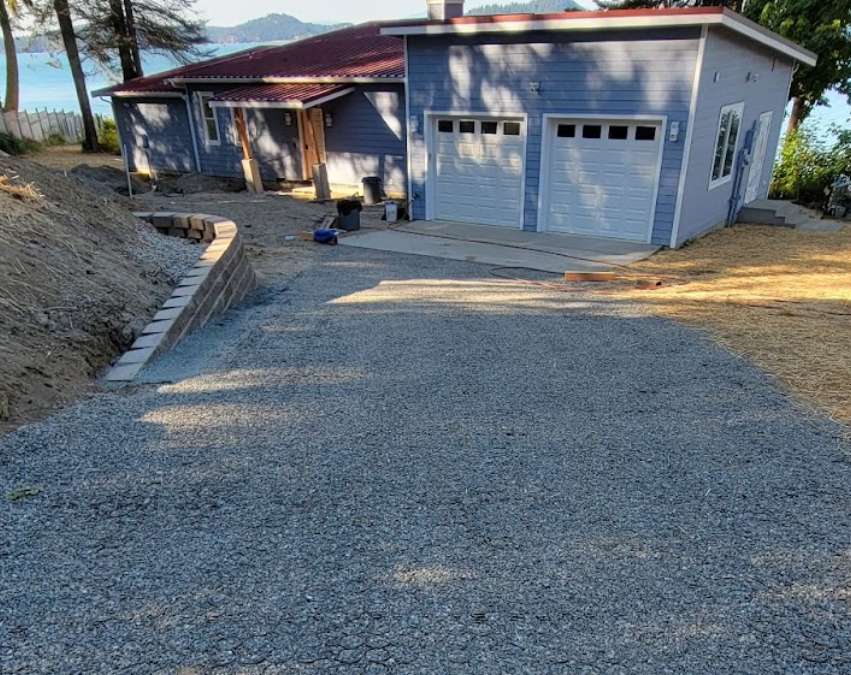
Gravel Driveways
For most DIY projects, gravel costs about $2 to $5 per square foot for materials and base rock combined. Crushed limestone and decomposed granite drain well and look natural, but if the base is thin or poorly compacted, stone migrates under turning tires. Common maintenance includes raking displaced gravel, filling low spots, and ordering the occasional top-off delivery.
Recycled Asphalt (Millings) and Crushed Concrete
Recycled asphalt costs a bit more up front (~$3–$6 per sq ft DIY), but it compacts tightly and resists washout. Crushed concrete is similar in price and strength with a lighter, rougher texture. Both need a firm, graded base and edge restraint to keep surfaces tidy after rain.
Grass and Reinforced Turf
Turf or grass driveways blend into landscaping and can work where homeowners want a green look. In shaded or high-traffic areas, simple soil bases rut quickly, use load-spreading grids to keep wheels from sinking and to preserve permeability.
Site & Climate Factors That Affect Cost
Before comparing budget driveway ideas, match the material to your conditions:
- Freeze–thaw: Repeated cycles create soft spots under vehicles. Gravel and recycled aggregates tolerate movement better than thin concrete patches; any option improves dramatically with a compacted base and good drainage.
- Slope: Steeper grades push loose stone downhill. Plan for edging, cross-slope breaks, and containment grids where grades exceed ≈ 5 %.
- Soils: Clay holds water and pumps fines upward; sandy soils drain but can shift. Increase base thickness on clay, and use a geotextile separator to keep fines out of the base.
- Runoff & codes: Many towns encourage permeable surfaces; stabilized permeable systems help meet stormwater requirements and reduce erosion along drive edges.
Upfront Price vs. Lifetime Cost
Gravel and recycled aggregates are the lowest first-cost ways to build a driveway. The tradeoff is maintenance: periodic light regrading and stone top-offs to keep edges clean. Poured concrete and new asphalt reduce that maintenance but raise initial spending far beyond most budget driveway ideas.
A middle route, stabilizing the surface with permeable grids, keeps costs low while controlling erosion and stone migration. That’s where structural stabilization comes in.
How TRUEGRID Permeable Pavers Lower Driveway Costs
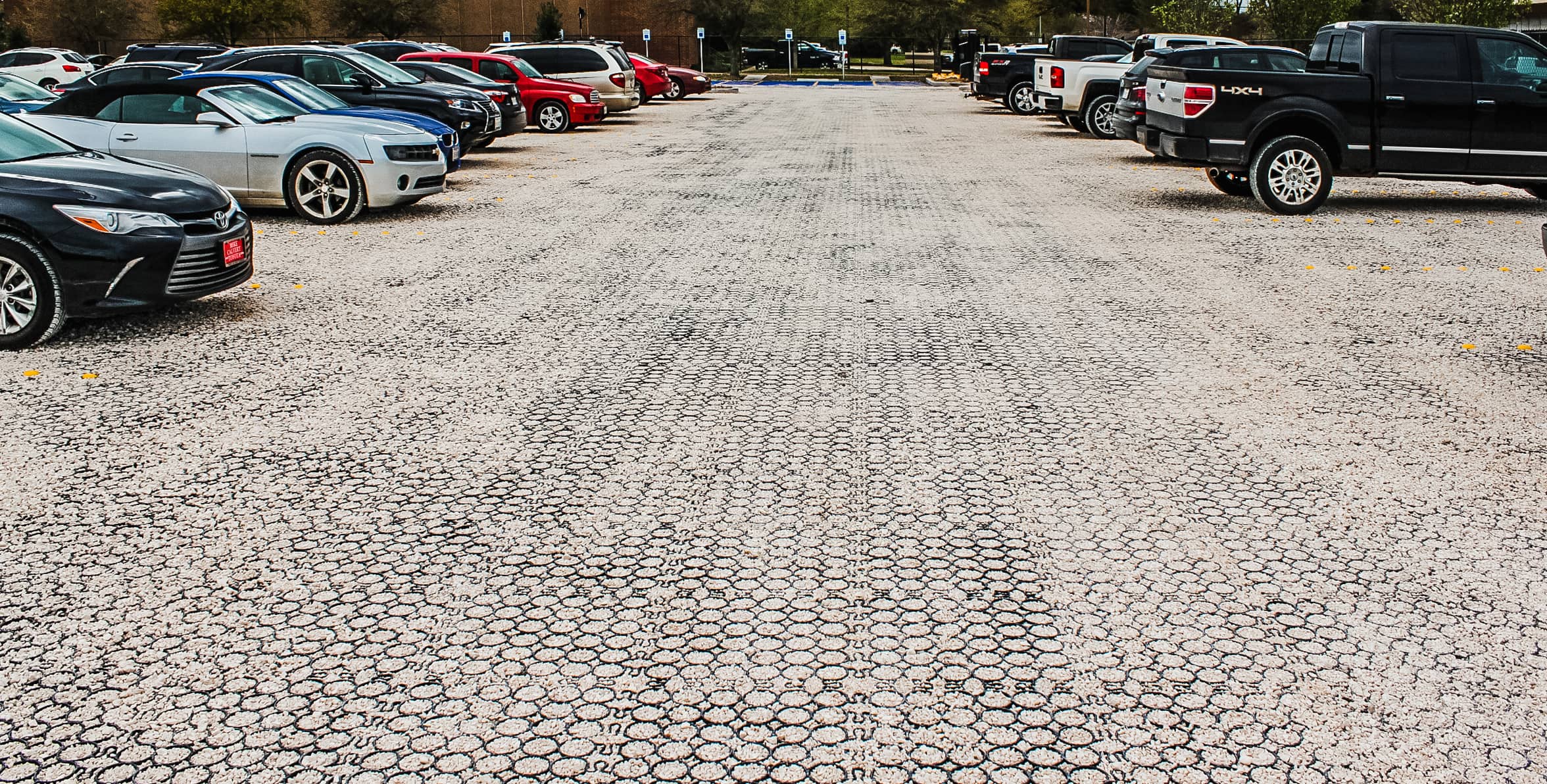
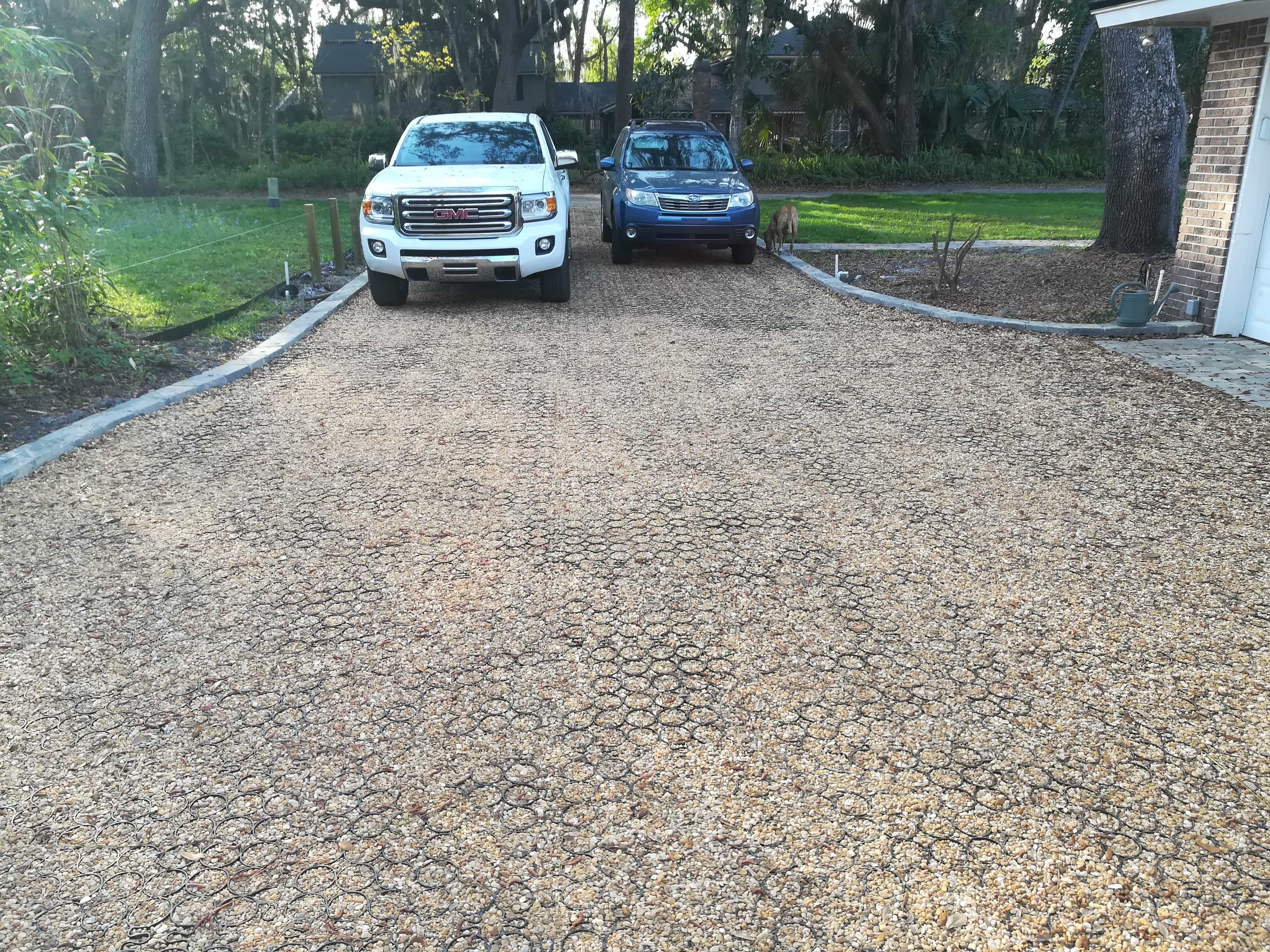
TRUEGRID pavers interlock to hold gravel or turf in place. The recycled-plastic cells distribute vehicle loads evenly, prevent ruts, and let rainwater drain through the surface instead of running off into landscaping.
Installation (DIY-friendly
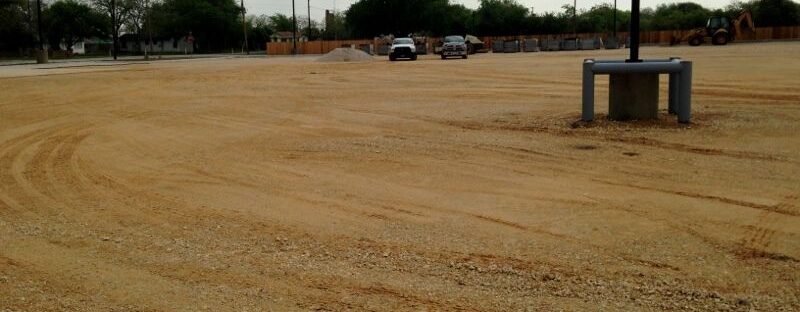
- Excavation depth is typically 7 in. for passenger cars (deeper for heavier loads).
- Place geotextile (as needed) and compact base rock in thin lifts.
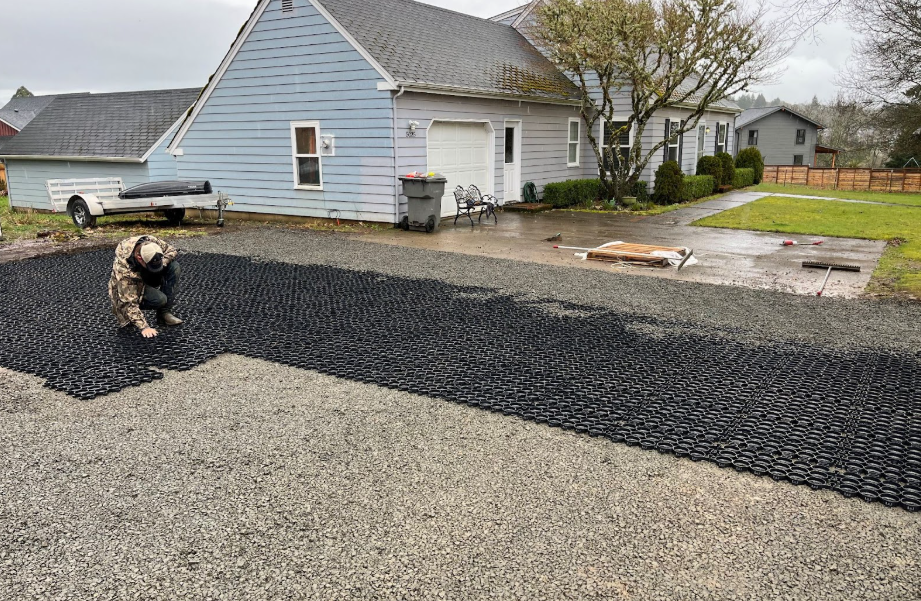
- Snap TRUEGRID panels together by hand and cut to fit edges.
- Fill with gravel (or soil for turf) and compact.
- Once filled, the driveway takes traffic immediately, no curing delays or special equipment.
Maintenance & durability
Because the grid contains the aggregate, you’re not raking gravel back after every storm. The recycled plastic resists UV and freeze–thaw; turning tires won’t kick stone aside or form potholes. Years later, you might add a light top-off for appearance, but the base stays intact.
Lifecycle value
Upfront, the grid adds about $2–$4 per sq ft to a basic gravel build, but it eliminates recurring regrade costs, limits edge washout, and preserves drainage. Over a few seasons, especially on slopes or clay soils, that stability offsets the small premium and keeps the surface looking clean.
Typical base sections, fill-stone choices, and edging methods for DIY gravel driveway ideas keep the surface stable and permeable.
Design Tips for Small or DIY Driveways on a Budget
- Check for re-use of existing gravel drives: In some cases, existing gravel driveways can be repurposed as a base layer for the new TRUEGRID layer. Please consult with experts (engineers or other professionals) for repurposing viability.
- Excavate first, then compact: Dig out the existing soils and compact the area
- Edge restraint: Use steel edging, flush concrete bands, or anchored timber to delineate the permeable pavers from the adjacent areas. Edging is needed for raised (above grade) installations but can be used for at-grade installs for aesthetics.
- Separator fabric: Place a non-woven geotextile between the subgrade and up the sides of the excavated area to prevent fines from pumping into the rock.
- Base Layer: Place and compact – in lifts – the desired base layer. High void drainage rock (¾” to 1.5”, depending on the product) can be used for optimal water storage and infiltration. Compactable bases can be used for other applications – consultation with an expert is recommended.
- Infill stone choice: For the wear layer, select angular stone (½”, ⅝”,or ¾” – depending on product) that interlocks; rounded pea gravel tends to wander. Choose from stone colors that will enhance the landscaping and home.
- Tools most homeowners already have: Rake, tamper or plate compactor (rental), hand saw for trimming grid panels, string line, shovel, and level.
- Phased installs: TRUEGRID’s modular panels make it easy to build weekend sections—a lane first, then the full pad—without heavy equipment.
These details may sound minor, but they determine how well the driveway holds up over time.
Drainage, Erosion Control, and Sustainability
Permeable driveways reduce puddles, keep water on site, and protect the base from softening. Stabilized gravel within TRUEGRID limits edge erosion and supports groundwater recharge. The recycled-plastic grid keeps waste out of landfills while extending the life of the driveway, lowering both maintenance and landscaping costs over time.
Reduce Cost and Maintenance with TRUEGRID Permeable Driveways
TRUEGRID pavers create strong, permeable surfaces that stay level through rain and daily traffic. Each grid stabilizes gravel or grass fill to prevent ruts, erosion, and drainage problems. The result is a low-cost driveway that looks clean and performs long-term. Contact us today for more information.