Driveways connect homes to the street while shaping curb appeal, drainage, and long-term maintenance costs. More homeowners and builders are turning to an eco-friendly driveway; a choice that cuts stormwte runoff and meets sustainability goals. The challenge is choosing the right material.
Why Choose an Eco-Friendly Driveway
Driveways built from traditional asphalt or concrete often shed water rather than absorb it. This increases runoff, which overwhelms storm drains, contributes to erosion, and adds pollutants to local waterways. Choosing an eco friendly driveway manages water on-site and supports local groundwater recharge.
- Beyond water management, sustainable driveways lessen strain on municipal infrastructure by reducing the volume of water routed into storm sewers.
- They also help mitigate heat islands by keeping pavement cooler in summer months.
- For homeowners, this translates into a more comfortable property and lower maintenance costs.
- For contractors, it means recommending materials that satisfy both client expectations and modern environmental regulations.
Options like green driveways demonstrate how environmental performance can align with design goals.
Common Eco-Friendly Driveway Options
Different eco-friendly driveway materials provide varying levels of sustainability, longevity, and upkeep. Some are low-cost but maintenance heavy, while others offer stronger long-term value.
Gravel and Loose Stone Driveways
Gravel is one of the oldest eco-friendly driveway options. It is affordable, quick to install, and permeable enough to allow some water infiltration. However, gravel often shifts under vehicle loads, creating ruts and requiring constant regrading. Heavy rains can wash away stone, leaving uneven surfaces that demand attention year after year. Contractors often caution homeowners that while initial installation is inexpensive, lifecycle costs add up quickly.
Recycled Asphalt or Crushed Concrete
Recycling asphalt or concrete into driveway base material stabilizes surfaces while diverting waste from landfills and lowering costs. These options improve stability compared to loose gravel but provide only limited and inconsistent infiltration—especially once compacted or filled with fines—so they rarely address runoff the way purpose-built permeable systems do. Over time, they often harden into dense layers, functioning more like conventional pavement than porous surfaces.
Permeable Concrete or Asphalt
Permeable concrete and asphalt are engineered to allow water infiltration. They provide a familiar look for those who prefer traditional pavement. Yet they are prone to cracking in freeze-thaw cycles and often require specialized maintenance to prevent pore clogging. This makes them less practical as long-term eco-friendly driveway paving solutions, especially in colder regions where seasonal expansion and contraction are constant.
Grass and Turf Driveways
Grass driveways create a natural, green appearance but struggle under repeated vehicle loads. They reduce runoff and lower surface temperatures. For light use or decorative applications, turf can work, but it is rarely the most eco-friendly driveway for heavy residential or commercial use. Even when reinforced, they tend to require irrigation and reseeding, which increases upkeep for property owners.
Grid-Based Paver Systems
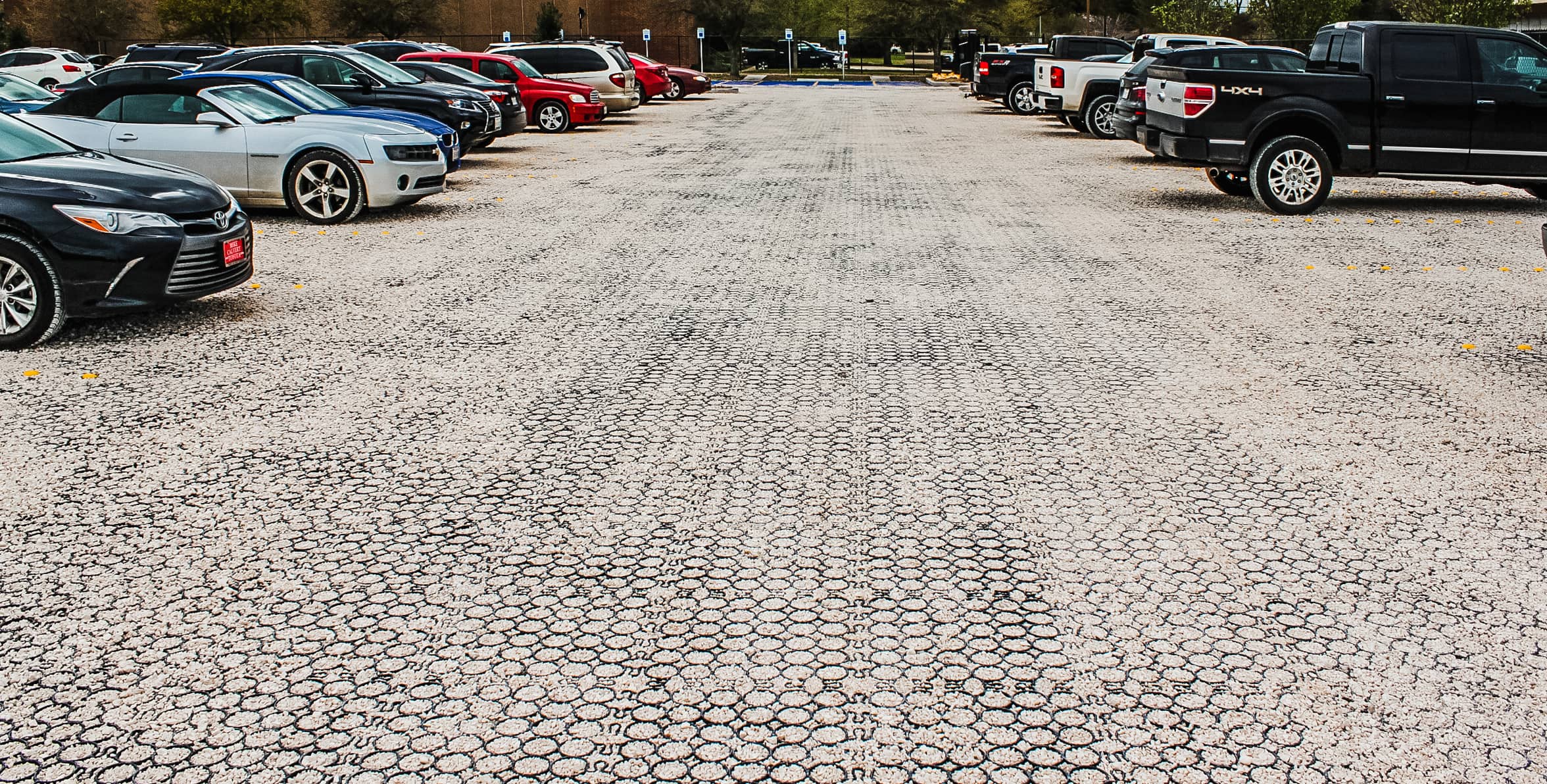
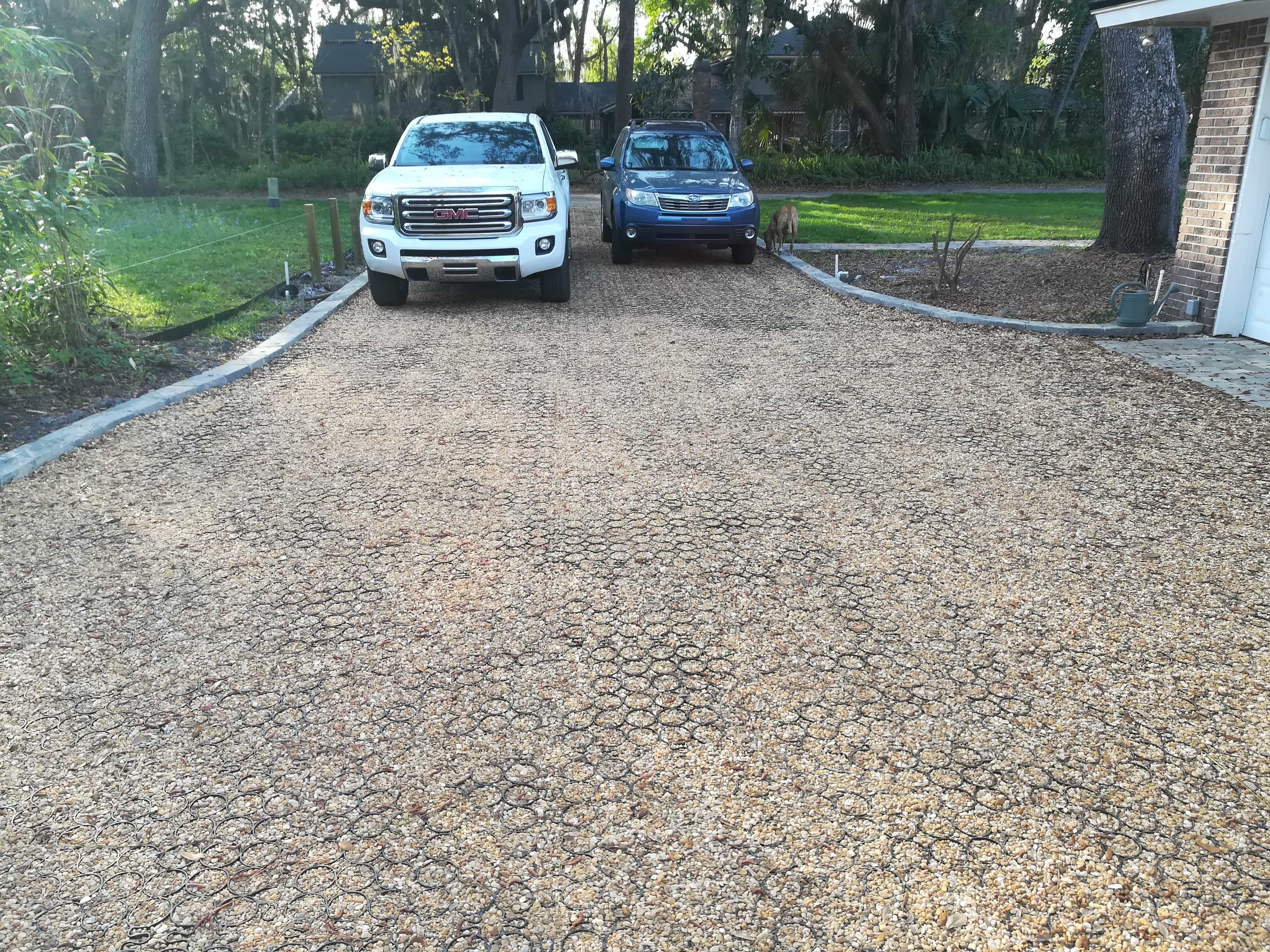
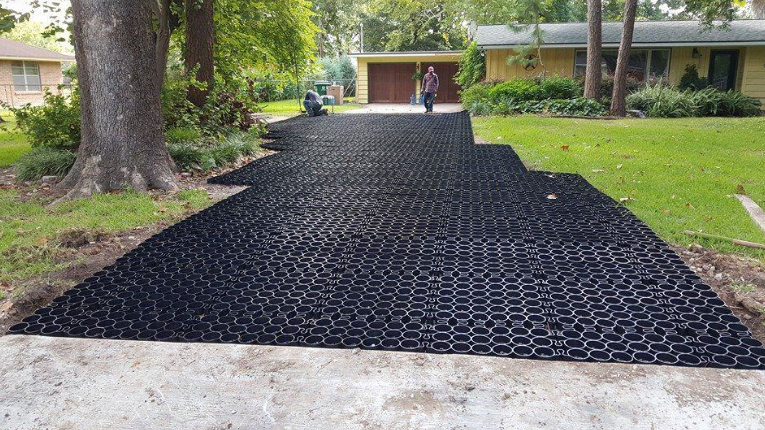
Grid systems combine structure with permeability. These open-cell (plastic grid) pavers stabilize gravel or grass fill, preventing rutting while allowing rainwater to drain directly into the ground. Among eco-friendly driveway ideas, this option provides both strength and sustainability, making it one of the most practical sustainable driveway solutions available today.
Grid-based systems also adapt to different fills, offering either a clean gravel finish or a natural green (grass) surface while maintaining structural integrity. They are especially valuable in climates with heavy rainfall because they maintain infiltration rates over decades.
Each eco-friendly driveway material brings a different balance of price, strength, installation speed, and upkeep. Some save money at installation but require constant attention, while others demand more upfront yet prove more reliable over time and can have little maintenance.
Cost of Eco-Friendly Driveway Materials
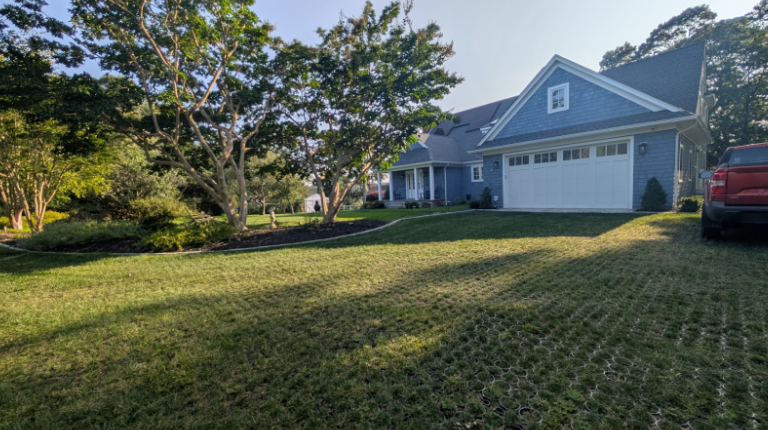
Cost is one of the first questions homeowners ask when weighing sustainable driveway options. While eco-friendly driveways often cost more to install upfront, their long-term value comes from reduced maintenance, compliance with stormwater codes, and fewer repair cycles.
- Gravel: $1–$3 per square foot. Least expensive to install, but frequent regrading and washout raise lifecycle costs significantly.
- Recycled Asphalt/Concrete: $2–$5 per square foot. Durable and budget-friendly, but limited permeability means ongoing drainage issues.
- Permeable Concrete: $7–$13 per square foot. Provides a polished look but requires costly maintenance to prevent pore clogging and can crack in freeze-thaw cycles.
- Grass/Turf Systems: $4–$8 per square foot. Attractive for light use, but irrigation, reseeding, and weak load performance increase upkeep over time.
- TRUEGRID Pavers: Competitive with mid-range materials, but lifecycle costs are the lowest. Once installed, the grid stabilizes fill, eliminates rutting, and maintains full permeability without resurfacing or regrading. TRUEGRID is also more versatile with the option of gravel/stone or grass infill.
When comparing initial price to lifetime performance, grid-based permeable pavers offer the strongest return on investment.
Durability Under Load
Strength varies widely between driveway materials. Unsupported gravel and turf shift easily under vehicles, leading to ruts and surface failure. Recycled asphalt and crushed concrete improve stability but eventually compact into impermeable slabs and can erode over time causing pockets of unstable areas. Permeable concrete or asphalt resist heavier loads but often crack with seasonal freeze-thaw cycles.
TRUEGRID pavers lock fill in place, distributing vehicle weight evenly across the base. This prevents rutting and keeps the driveway stable even under heavy trucks, giving them a durability edge over other eco-friendly materials. TRUEGRID has been tested to outperform concrete in compressive loads.
Installation Speed
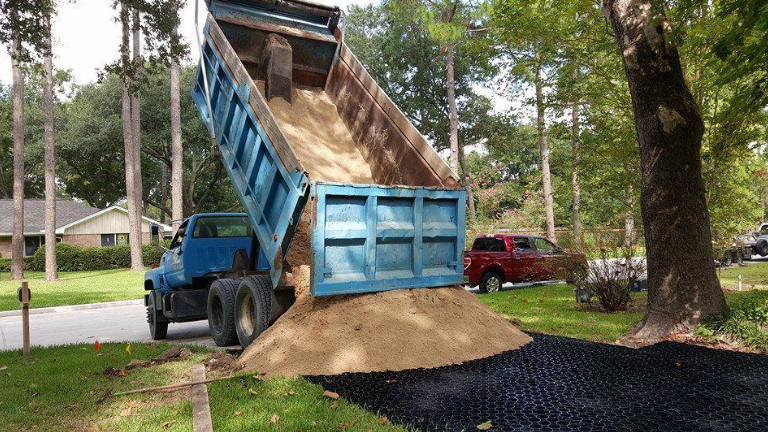
Time and labor costs matter just as much as materials. Gravel and recycled concrete can be installed quickly but require grading equipment. Permeable concrete and asphalt demand specialized crews and curing time, which slows projects and raises labor expenses.
TRUEGRID installs faster than traditional paving methods because the modular grid system requires less heavy machinery. Crews can cover large areas quickly, reducing installation time and keeping projects on schedule — a direct cost saving that also minimizes disruption for homeowners.
Maintenance and Lifecycle Savings
Upkeep often determines whether a driveway is cost-effective long term. Gravel needs constant regrading, unsupported grass will require fixing rutting and wear spots, and permeable concrete must be cleaned to prevent pore clogging. Over time, these costs can exceed the initial savings of cheaper materials.
TRUEGRID eliminates many of these issues. Once in place, the grid requires little more than occasional surface maintenance of the gravel or grass fill. With no need for resealing, regrading, or resurfacing, the lifecycle savings compound over decades — making permeable grids one of the few driveway options that actually cost less over time than their initial price tag suggests.
Key Benefits of an Eco-Friendly Driveway
Beyond cost, sustainable driveways deliver measurable benefits to both homeowners and communities:
- Stormwater Control: Permeable surfaces cut flooding and erosion by letting rainfall soak into the soil instead of overwhelming drains.
- Durability Under Load: Grid pavers handle the weight of cars and trucks without rutting, keeping driveways stable long-term.
- Reduced Heat Island Effect: Eco-friendly surfaces stay cooler in summer than asphalt, improving comfort and protecting landscaping.
- Environmental Impact: Materials such as recycled plastic, reclaimed asphalt, and permeable stone reduce demand for virgin resources and cut carbon emissions.
- Compliance & Property Value: Driveways that meet stormwater management requirements avoid costly retrofits and often add value by aligning with modern green building standards — a growing expectation for any sustainable driveway design.
- Landscaping Health
Because permeable driveways allow water to soak into the soil, surrounding trees, lawns, and gardens stay healthier. Instead of water rushing away, it filters into the root zone, cutting back on irrigation needs and reducing stress on plantings during dry spells. - Soil Stability
Traditional paved driveways often compact soil beneath them, limiting root growth and increasing runoff. Eco-friendly alternatives, especially grid-based pavers, keep the subsoil looser and better aerated. This preserves drainage capacity over time and prevents the hidden damage that leads to costly yard or foundation repairs. - Meeting Codes and Community Standards
Many municipalities now require permeable surfaces for stormwater compliance, while homeowners’ associations emphasize uniform, attractive curb appeal. Grid paver systems satisfy both, blending easily with landscaping while ensuring projects pass inspection the first time. For contractors, that means fewer delays; for homeowners, it ensures peace of mind that their driveway meets modern standards.
These benefits explain why more cities are encouraging permeable surfaces and why homeowners increasingly view eco-friendly driveways as both a practical and future-proof investment.
Why TRUEGRID Is the Most Eco-Friendly Driveway Solution

Among today’s eco-friendly pavers driveways, TRUEGRID stands out for combining sustainability with unmatched durability. Made from 100% recycled plastic, these pavers are designed to support everything from family cars to commercial trucks without rutting or cracking.
Strength and Load Capacity
TRUEGRID pavers lock fill in place, distributing weight evenly across the base. This ensures the driveway surface remains stable even under heavy vehicles.
Stormwater Management & Drainage
TRUEGRID driveways are 100% permeable, allowing rainwater to infiltrate naturally and helping projects meet stormwater management requirements. For homeowners, that means less standing water. For builders, it ensures straightforward compliance with local drainage expectations and EPA stormwater standards.
Sustainable Materials & Green Building Goals
TRUEGRID products are manufactured from post-consumer recycled plastic. They contribute toward LEED certification and align with green building practices. Using recycled polymers also reduces demand for virgin plastic, cutting the lifecycle carbon footprint and keeping plastic waste out of landfills and the ocean.
Low Maintenance and Curb Appeal
A TRUEGRID system breaks the cycle of patching and resurfacing. Once installed, it delivers decades of consistent performance with only occasional fill maintenance. Fill choices include gravel or grass, giving homeowners flexibility in appearance while contractors know the system will remain consistent year after year.
Choose TRUEGRID for a Strong, Sustainable Driveway
TRUEGRID permeable pavers manage stormwater and require little upkeep. Unlike other eco-friendly options, they maintain a clean, modern look for years. Contact us today for more information.