Water problems around a home rarely begin as emergencies. They show up as puddles that linger after rain and soil that never fully dries. Understanding the benefits of permeable pavement starts with recognizing how conventional hard surfaces interrupt natural drainage and force water to move sideways instead of downward.
Why Water Behavior Matters Around Residential Surfaces
Water performance at the surface level determines whether rainfall is managed predictably or becomes a recurring site issue.
How Conventional Surfaces Redirect Water
Most residential pavement surfaces are designed to shed water as quickly as possible. Concrete, asphalt, and tightly set pavers push rainfall across the surface toward low points, concentrating flow instead of allowing it to drain. During heavier storms, this accelerated runoff exposes the limits of impermeable surfaces by directing water toward foundations, landscape beds, and drainage paths that were never designed to handle high volumes.
How Permeable Pavement Changes Water Movement
Permeable pavement alters this pattern by allowing water to move vertically through the surface instead of forcing it sideways. Open joints, void spaces, or grid structures let rainfall pass into a prepared aggregate base below, where it is temporarily stored and released gradually into the soil. This vertical movement changes how rainfall is managed before it reaches surrounding drainage features.
Common Residential Permeable Pavement Systems
In residential construction, permeable pavement systems typically take several forms, including:
- Pervious concrete or asphalt, which uses open-graded mixes to allow infiltration
- Permeable interlocking pavers, which rely on widened joints filled with aggregate
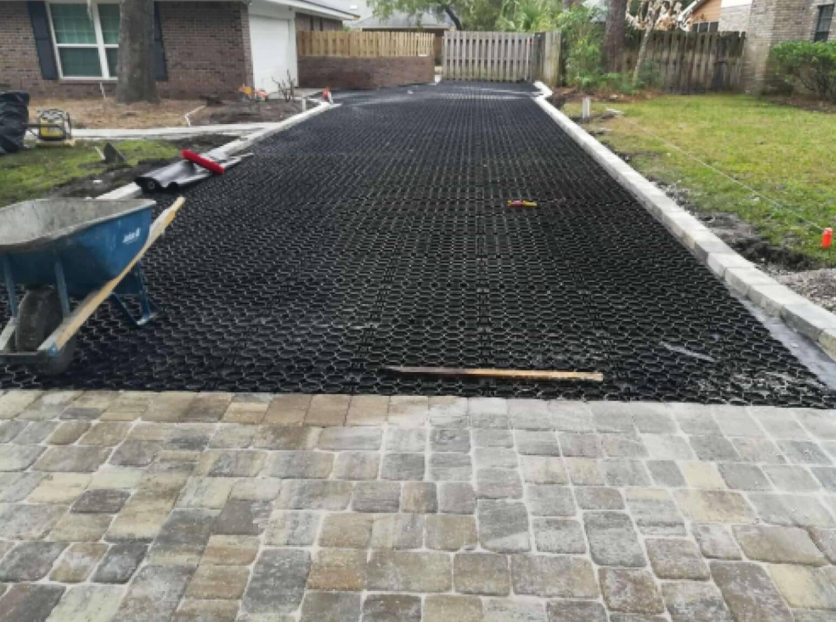
- Grid-and-aggregate systems, which confine stone while maintaining open pathways for water
While the materials differ, each approach relies on the same principle: allowing water to infiltrate through the surface rather than shedding it across the site.
Improved Drainage Reduces Pooling And Surface Saturation
When water can pass through the surface, standing water becomes far less common. Driveways dry faster after storms, walkways remain usable, and patio edges avoid persistent saturation. Drainage performance improves across the entire surface area.
Because water drains evenly across the surface, isolated low spots are less likely to collect water or need repeated fixes. Over time, that steady drainage helps the surface hold its shape and reduces wear caused by lingering moisture—one of the most noticeable benefits homeowners see after installation.
Runoff Reduction Supports Flood Prevention At The Property Level
Flood risk is influenced less by total rainfall and more by how quickly water moves across a property during and after storms.
How Permeable Surfaces Reduce Runoff Volume
As permeable systems absorb rainfall at the surface, runoff volume leaving the property decreases. Water enters the pavement system instead of accelerating across driveways, walkways, and patios, which reduces erosion pressure and limits the amount of sediment carried toward landscape edges and drainage paths.
Flood Mitigation During Repeated Storm Events
Flood mitigation benefits become more noticeable during repeated storm events rather than a single rainfall. By lowering peak runoff rates and allowing water to infiltrate gradually, permeable pavement reduces soil saturation near foundations and low-lying areas where water commonly collects. This slower release pattern helps prevent rainfall from overwhelming areas that are prone to pooling during consecutive storms.
Performance Limits And Planning Considerations
Reviewing the permeable pavement pros and cons clarifies where runoff reduction is reliable and where site conditions can still limit flood performance. Performance depends on soil type, slope, base design, and overall site drainage. Proper planning ensures that permeable surfaces work as part of a broader site strategy rather than being expected to resolve severe flood conditions on their own.
Healthier Soil And Landscaping Below The Surface
Traditional hardscapes block rain from reaching the soil beneath them, disrupting natural moisture cycles and groundwater recharge. Permeable systems restore this connection by allowing rainwater to filter through the pavement and into the soil profile.
As a result, adjacent lawns and planting areas experience more balanced moisture levels. Root zones remain healthier, compaction is reduced, and erosion pressure along pavement edges diminishes. The benefits of permeable paving extend beyond the surface and into the surrounding landscape system.
Lower Long-Term Maintenance Through Structural Flexibility
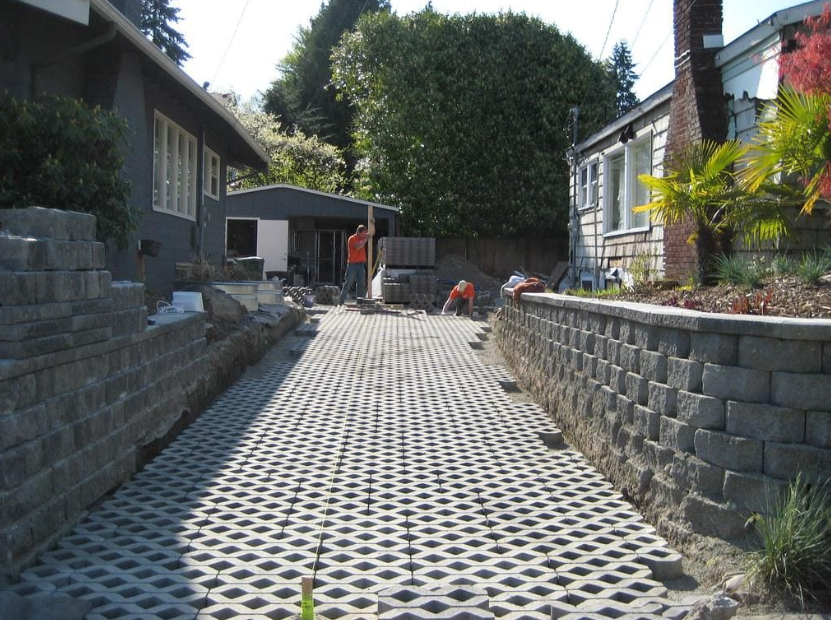
Long-term maintenance is shaped by how a pavement system responds to movement rather than how rigid it appears when first installed.
Why Rigid Pavements Create Ongoing Repair Cycles
Impermeable pavements rely on rigid slabs that crack under thermal movement, soil settlement, or minor subgrade shifts. Once cracking begins, repairs often require cutting, patching, or replacement that rarely blends seamlessly. Over time, those repairs tend to repeat because the underlying movement hasn’t been resolved.
How Permeable Systems Accommodate Movement
Because weight is spread through the base, permeable pavement can handle small ground shifts without cracking. That flexibility helps the surface last longer, and any repairs are usually limited to specific spots instead of the whole area.
Routine Maintenance Focused On Water Movement
Like any outdoor surface, permeable pavement may require occasional surface cleaning to maintain infiltration performance over time. That maintenance focuses on preserving water movement through the surface rather than restoring structural integrity.
Typical upkeep focuses on:
- removing sediment and organic debris that can reduce infiltration
- keeping joints or surface voids open so water can enter the system
- cleaning after heavy leaf drop or wind-driven soil movement in problem areas
Environmental Performance Driven By Filtration And Groundwater Recharge
Environmental outcomes are tied to how water is treated as it moves through the surface system. Among the less visible benefits of permeable pavement is how stormwater quality improves before runoff ever reaches surrounding soil or drainage infrastructure.
Filtration As Water Moves Through The Surface
As water passes through permeable surfaces and underlying aggregate layers, sediment and certain pollutants are filtered out before reaching surrounding soils or drainage systems. Slower-moving water allows particles to settle naturally instead of being carried directly into storm drains and surface waterways.
How Rainwater Stays On The Property Instead Of Rushing To The Street
Slower surface drainage keeps rain from rushing toward the street all at once, reducing strain on nearby drains. Instead of being pushed away, water is handled right where it falls.
Long-Term Environmental Outcomes For Residential Sites
Over time, this filtration improves local water quality while supporting groundwater recharge. For homeowners, that can mean fewer dirty washouts after storms, healthier planting areas that don’t stay waterlogged, and less muddy runoff moving off the driveway and into the street.
Durability Under Residential Loads
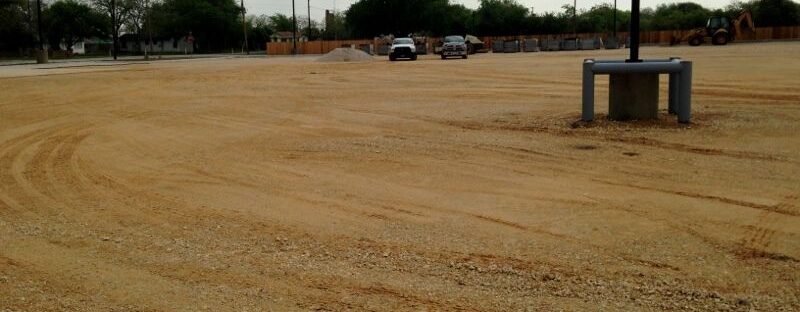
Driveways and access paths must support vehicle traffic without sacrificing performance. Permeable pavement systems rely on a properly built stone base that supports vehicles while leaving open space for water to soak in and temporarily collect beneath the surface.
When installed correctly, these systems handle normal residential traffic without blocking drainage. Weight is carried through the base instead of stressing the surface, which helps the pavement stay stable over time.
Design Flexibility For Residential Applications
Permeable systems adapt to a wide range of residential designs. Grid-based structures, permeable pavers, and aggregate-filled surfaces integrate easily into modern driveways, walkways, patios, and outdoor living areas.
This flexibility lets homeowners choose a surface that drains well without giving up the look they want. In practice, the benefits of permeable pavers often include a familiar paver style with fewer puddles and faster dry-out after rain.
Permeable Pavement In Renovation And Expansion Projects
Drainage behavior becomes increasingly important as residential surfaces are modified over time.
Why Conventional Surfaces Compound Drainage Problems
Surface upgrades rarely happen all at once on residential properties. Driveways are widened, patios are added, and outdoor living areas evolve as needs change. With conventional hard surfaces, each addition increases runoff volume and places added pressure on existing drainage paths, often creating new low spots or erosion issues that did not exist before.
How Permeable Pavement Supports Incremental Expansion
Permeable pavement lets you expand a driveway or patio without making drainage problems worse. Instead of sending more runoff toward the house or yard, the new surface absorbs rain where it lands and lets it soak in. That keeps added square footage from creating new puddles, washouts, or soggy edges as the paved area grows.
Planning Considerations For Phased Improvements
Common site considerations for permeable pavement should be revisited each time the paved area changes.
Key considerations include:
- drainage behavior across the finished surface and adjacent grades
- base preparation requirements tied to soil conditions and expected rainfall
- long-term maintenance planning to keep infiltration consistent
How TRUEGRID® Delivers Permeable Pavement Performance
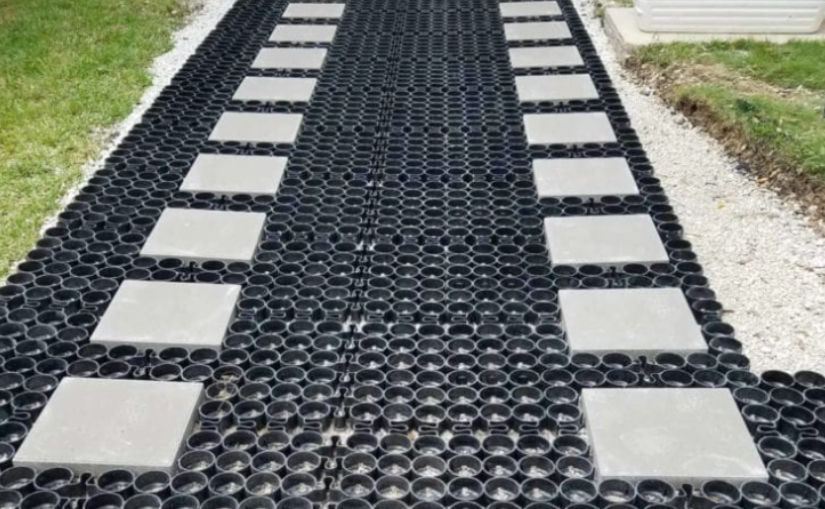
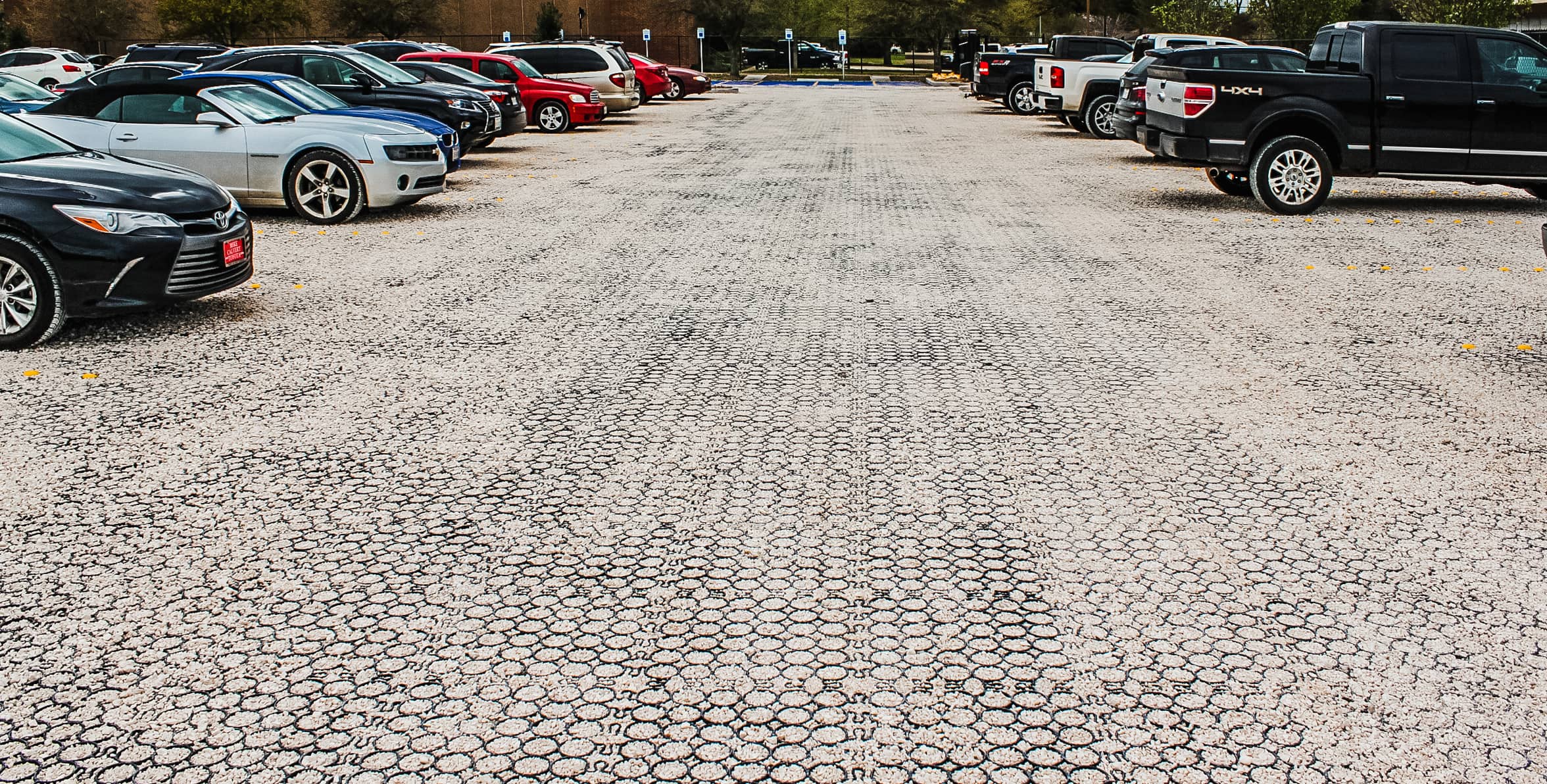
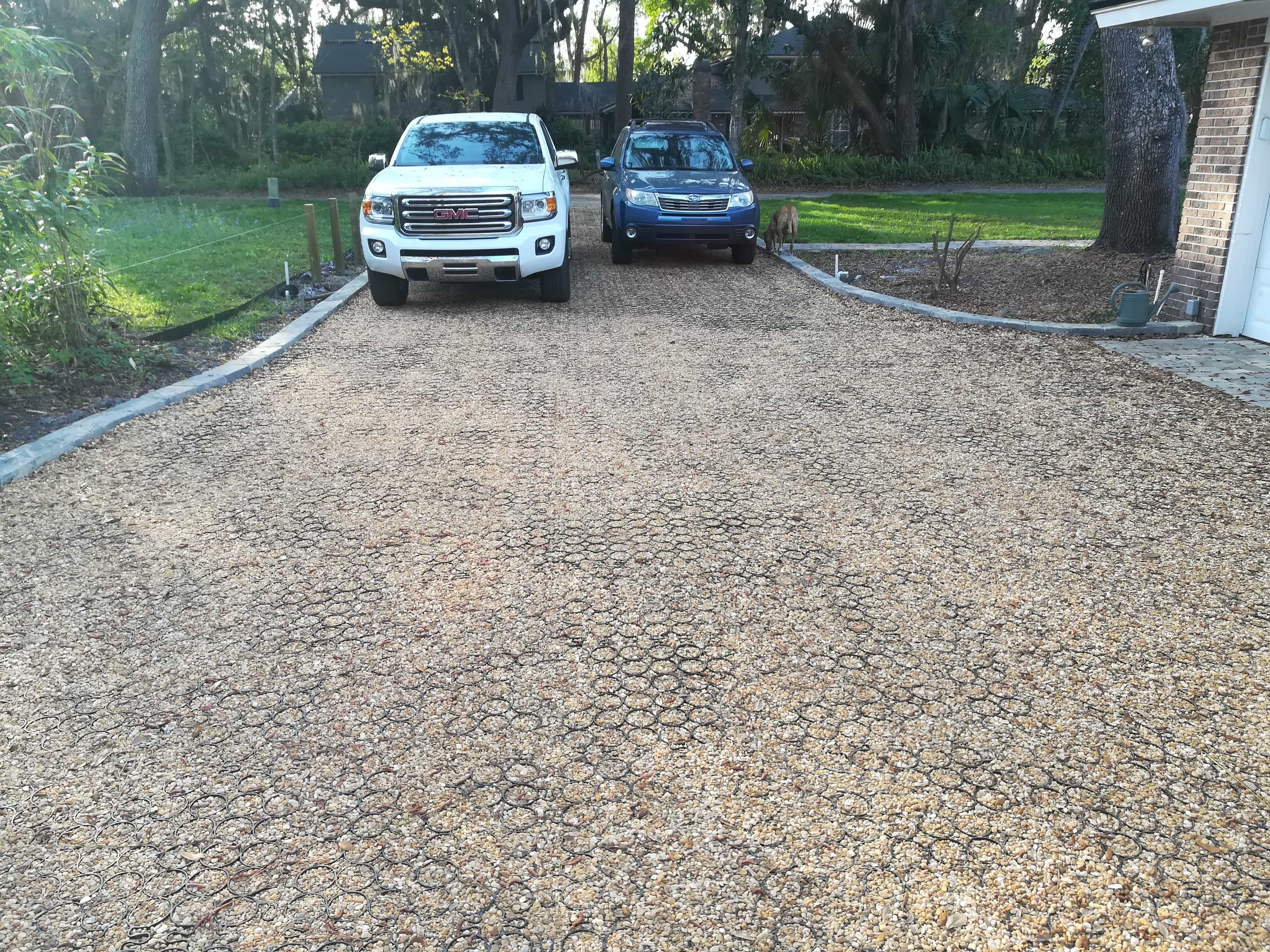
TRUEGRID® systems use a modular grid to keep gravel stable underfoot and under tires while allowing rainwater to drain straight through. That means driveways and walkways stay usable after storms without relying on surface runoff to move water away. The grid also helps the surface stay even over time, so ruts and loose stone are less likely to become a recurring issue as seasons and site conditions change.
Why The Benefits Of Permeable Pavement Add Up Over Time
Long-term performance emerges when individual surface behaviors are evaluated as a connected system rather than isolated features.
System-Level Performance Instead Of Isolated Fixes
Improved drainage means fewer puddles, less runoff, and fewer spots where soil stays soggy after storms. Those changes work together, so the yard and hardscape stay more consistent season after season. The payoff builds over time instead of hinging on one feature doing all the work.
Consistency Across Changing Conditions
Conventional hardscapes push water away fast, which can send it toward the garage, landscaping, or low spots. Permeable pavement lets rain soak in where it lands, so less water rushes across the yard during and after storms. The real test shows up over time, as the surface keeps draining well through different seasons and repeated heavy rains.
Why This Matters For Long-Term Residential Planning
For homeowners planning long-term upgrades, the benefits of permeable pavement reflect a shift toward working with natural water movement rather than against it. That long-term reliability is why more homeowners are choosing permeable surfaces when they want durability and fewer drainage problems over time.
Choose TRUEGRID® Permeable Pavers For Long-Term Residential Performance
TRUEGRID® manufactures permeable paver systems designed for residential driveways, walkways, and outdoor living areas where drainage, durability, and stability matter. TRUEGRID pavers can flex with temperature shifts, traffic patterns, and underlying moisture content without cracking. The open-grid design helps rain drain through faster and cuts down on muddy runoff that gets tracked onto patios and into garages. Contact us today for more information.