
Water decides how every pavement performs. When rain can’t drain through the surface, it collects at the edges or underneath, building pressure that cracks concrete and erodes soil. The choice between permeable pavers vs non-permeable pavers determines whether that runoff escapes safely or undermines the pavement over time.
What Is the Difference Between Permeable and Non-Permeable Pavers?
A permeable system lets rainwater flow through its surface and base layers. Open cells or spaced joints route water into a graded aggregate bed that stores and filters it before release into the soil. That underground layer acts like a small reservoir, preventing erosion,protecting foundations by keeping runoff in place, and releasing the water back into the ground water supply.
An impermeable surface, solid concrete, asphalt, or tight brick, blocks infiltration completely. Instead of soaking through, water must be diverted through slopes or drains. That physical contrast defines what is the difference between permeable and impermeable paving: one manages stormwater on-site, the other sends it away.
How TRUEGRID Permeable Pavers Work
Each TRUEGRID system manages water and weight at the same time, combining structural engineering with natural drainage. The result is a pavement design that filters runoff while staying firm under heavy use.
Engineered for Strength and Infiltration
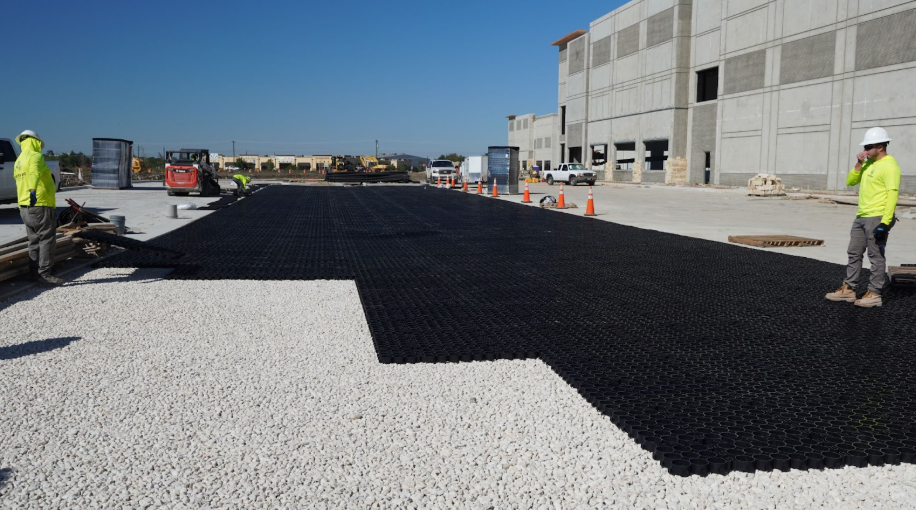
TRUEGRID’s permeable pavers take the same drainage principles and refine them for long-term strength. Each interlocking grid, molded from recycled polymer, locks angular gravel into place to form a rigid, permeable surface. Rainwater moves vertically through the cells into a compacted stone base, where it’s filtered before slowly recharging the soil.
Load Distribution and Surface Stability
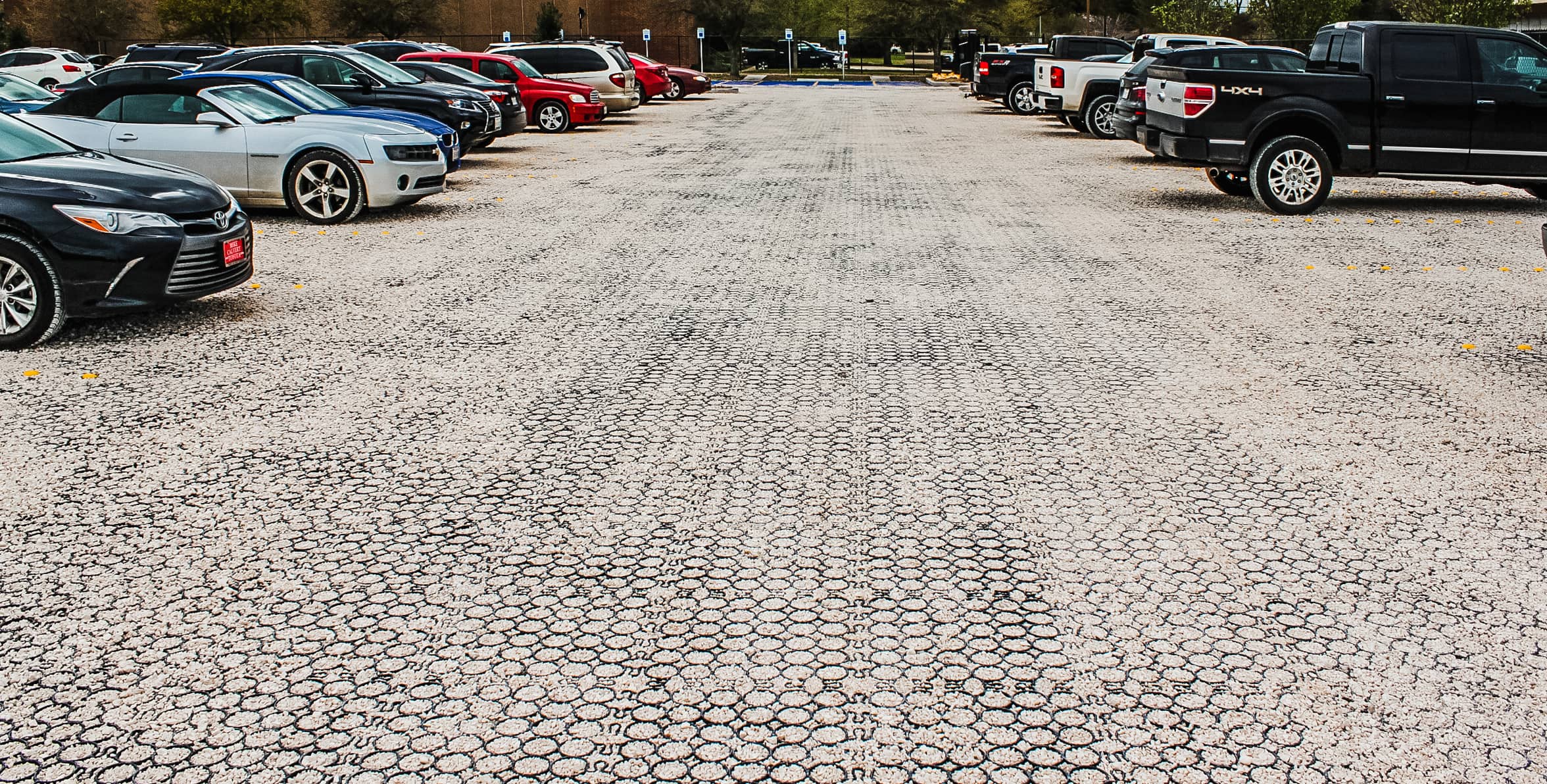
Unlike standard permeable blocks or open-joint pavers, TRUEGRID distributes loads through a continuous grid system that minimizes rutting and surface movement. When comparing permeable pavers vs non-permeable pavers, that uniform load transfer is what keeps driveways, parking areas, and fire lanes firm even under heavy traffic. Conventional slabs rely on slope and thickness alone, and once they crack, the system fails. That performance difference becomes most visible when you see how each surface handles rain in motion.
Drainage and Flood Control
Drainage defines the gap between permeable pavers vs non-permeable pavers. Permeable surfaces drain rapidly, over 1000 inches per hour, preventing puddles even in downpours. They recharge groundwater, stabilize soil moisture, and stop washout along edges. Non-permeable pavements rely on gutters and catch basins that can clog or overflow, causing flash-flooding that permeable designs help prevent.
Climate and Soil Compatibility

Permeable paving handles nearly any climate. In warm, wet regions it keeps surfaces dry and mold-free. In cold zones, the open base frequently drains meltwater before it can refreeze, reducing heave and surface damage. On clay soils, the graded stone under TRUEGRID acts as a stabilizing buffer, limiting movement that cracks rigid pavement. Proper base depth is adjusted for local frost lines and infiltration rates.
Installation and Cost
When cost and build time are compared between permeable pavers vs non-permeable pavers, the contrast comes down to purpose. Non-permeable pavements install as a solid surface that simply sheds water away. A permeable system is designed to do more, it builds drainage directly into the base so the finished surface manages runoff on its own.
Crews excavate only as deep as needed for structural support and water capacity, then compact the sub-soil, add aggregate, set the grid panels, and fill with gravel or turf. No curing. No sealing. Just strength and built-in drainage.
Installation, Accessories, and Long-Term Performance
TRUEGRID systems also install with delineation markers, and sometimes anchors, that lock panels in place and provide layout precision for high-traffic or sloped applications. These small details ensure long-term alignment and maintain uniform drainage over time.
- For most driveways, installation finishes in a single day.
- Typical installed cost estimates for TRUEGRID systems range from about $8–$11 per sq ft, depending on base depth and fill.
- Concrete runs $10–$15 once formwork and drainage hardware are included.
- Although asphalt will most likely initially cost less than TRUEGRID, periodic sealing, resurfacing, and replacement cost make upkeep potentially expensive.
- Over 25 years, permeable assemblies usually cost less while performing longer.
These installation details support the long-term stability that defines how the system performs once traffic and weather start testing it.
Maintenance and Durability
TRUEGRID panels take whatever you park on them, from sedans to semis, with ease. The locked gravel flexes with ground movement, preventing surface fractures. Removing organic debris such as leaves prevents issues. Vary rarely, you many need to remove weeds and add some infill gravel to isolated areas. For grass permeable paver systems, regular watering, fertilizing, and mowing are typical. Aeration should not be done
Non-permeable slabs need seal coats and crack repair. Once water enters, freeze-thaw cycles widen gaps and increases problems. Water and temperature shifts can also crack impermeable surfaces from underneath and from tire pressure over time leading to full replacement of the surface. TRUEGRID’s PRO PLUS polymer grid stays stable from −58 °F to 180 °F, even under heavy commercial vehicle loads, and are engineered for long-term durability and rut-resistant performance.
Environmental Performance
Permeable pavements mimic natural hydrology by filtering pollutants and returning clean water to the ground.
- Infiltration and detention in the systems can eliminate polluted water runoff.
- They greatly reduce runoff volume and speed, reducing downstream water temperatures and therefore are less harmful to aquatic life.
- TRUEGRID products use 100 percent recycled HDPE and require no sealants.
- Organic and non-organic pollutants are removed from stormwater preventing contamination downstream.
- Their light color reflects sunlight, keeping the surface cooler.
Environmental comparisons of permeable pavers vs non-permeable pavers show clear sustainability benefits. Solid, impermeable surfaces push polluted water into drains, trap heat, and take more energy to produce. Permeable systems do the opposite, filtering runoff, cooling the surface, and helping neighborhoods stay cleaner and more resilient after heavy rain.
Design Flexibility and Aesthetics
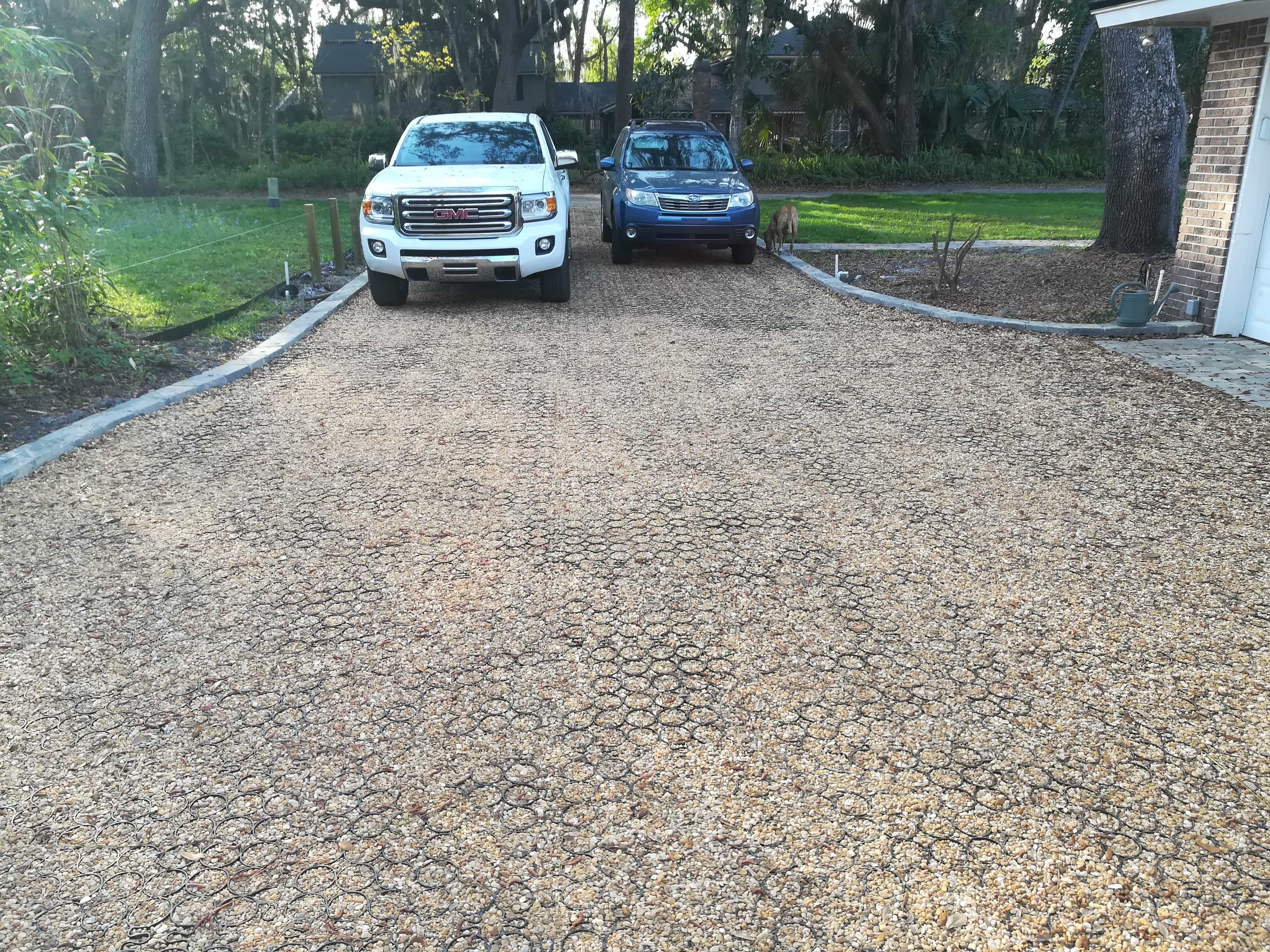
TRUEGRID’s modular pavers cut easily to follow curves or property lines. Fill options range from gravel for modern driveways to turf for green parking. This flexibility keeps infiltration performance intact. Non-permeable slabs restrict design freedom because every grade change or patch weakens the surface.
Real-World Applications

You can spot the difference after the first storm.
- Homeowners install permeable driveways to eliminate puddles.
- Landscapers specify grids for patios and walkways that stay level through rain and freeze cycles.
- Municipal projects use TRUEGRID for parking lots, fire lanes, and access roads that must meet stormwater management requirements.
- Engineers and developers can eliminate detention ponds, underground drainage, and filtering and water conveyance equipment.
Non-permeable options still work for interiors or drainage-controlled zones, but they offer no infiltration benefit. These examples show how infiltration directly reduces long-term maintenance needs and extends pavement life.
Lifecycle and Regulatory Advantages
Over decades, the performance gap widens between permeable pavers vs non-permeable pavers. TRUEGRID installations maintain full permeability and strength with minimal upkeep. Rigid pavements decline once small cracks appear and through use. Because permeable systems qualify for LEED and local stormwater credits, they streamline permits and reduce fees. Numerous municipalities and water districts now encourage or require permeable pavement in new developments, making early adoption both practical and compliant. Some agencies even offer tax benefits or stormwater credits for changing out impermeable surfaces to permeable ones.
Choose TRUEGRID Permeable Pavers for Durable Drainage Performance
TRUEGRID permeable pavers combine recycled materials with long-term structural strength. Each grid distributes load evenly, allowing continuous infiltration and eliminating runoff. The result is a pavement that stays level, drains quickly, and remains resilient through years of weather exposure without cracking or surface erosion. Contact us today for more information.

Leave a Reply