A walkway does more than move people through a yard. It sets the rhythm of the landscape and connects the garden beds, structures, and views into a single path people actually want to follow. A well-planned permeable garden walkway handles rainfall in a way the yard can absorb and still adds the structure and character the garden needs.
How Permeable Walkways Support Drainage and Garden Style
When a garden path drains predictably and stays comfortable under foot traffic without fighting the yard’s natural slope, it becomes a reliable foundation for planting design, lighting, and long-term stability.
The surface should let rainfall settle into the base or move across a gentle cross-slope rather than forming puddles at edges or low points. When that drainage behavior aligns with curves, planting offsets, and lighting, the walkway reads as an intentional part of the garden’s layout instead of an add-on.
Plan the Route, Shape the Grade, and Match It to Drainage
A good garden walkway starts on paper by matching where people need to walk with the path rainwater already wants to take through the yard.
Choose a Walkable Alignment
Paths feel natural when people move without adjusting stride or posture. Set widths based on how the route will be used: wider where two people walk together, narrower through planting beds or side-yard connectors. Curves settle into the landscape more naturally when they follow a broad radius, which also keeps gravel, stone, or pavers from shifting under turning steps or wheelbarrow tires.
Set Slopes That Support Permeability
A functional layout works with water’s natural pathway rather than against it. Keeping the path between about one and five percent in the walking direction, with a gentle one to two percent cross-slope, lets rain find natural exit points without making the walkway feel like a ramp. These subtle grade changes help the permeable garden walkway absorb rain where possible and shed only what the base cannot hold.
Prepare Subgrade Conditions Early
Grade the subgrade to a consistent fall and remove organic pockets that hold moisture. Soil should feel firm under a boot heel without pumping water to the surface. Once the ground is shaped, the permeable garden walkway works with it, letting water move through the surface and settle into the base before it feeds the surrounding ground.
Select Materials That Stabilize Footing and Support Natural Drainage
The right base and surface combination keeps the walkway stable through seasonal wetting and drying.
Gravel and Decomposed Granite for Flexible, Permeable Surfaces
Angular stone measuring between one-half and five-eighths inch stays in place, provides traction, and drains readily. A compacted base helps gravel or decomposed granite stay in place underfoot as the seasons change. Decomposed granite binds more tightly and works well where a smoother finish is preferred, especially when combined with edging that stops migration.
TRUEGRID for High-Stability Permeable Walkways
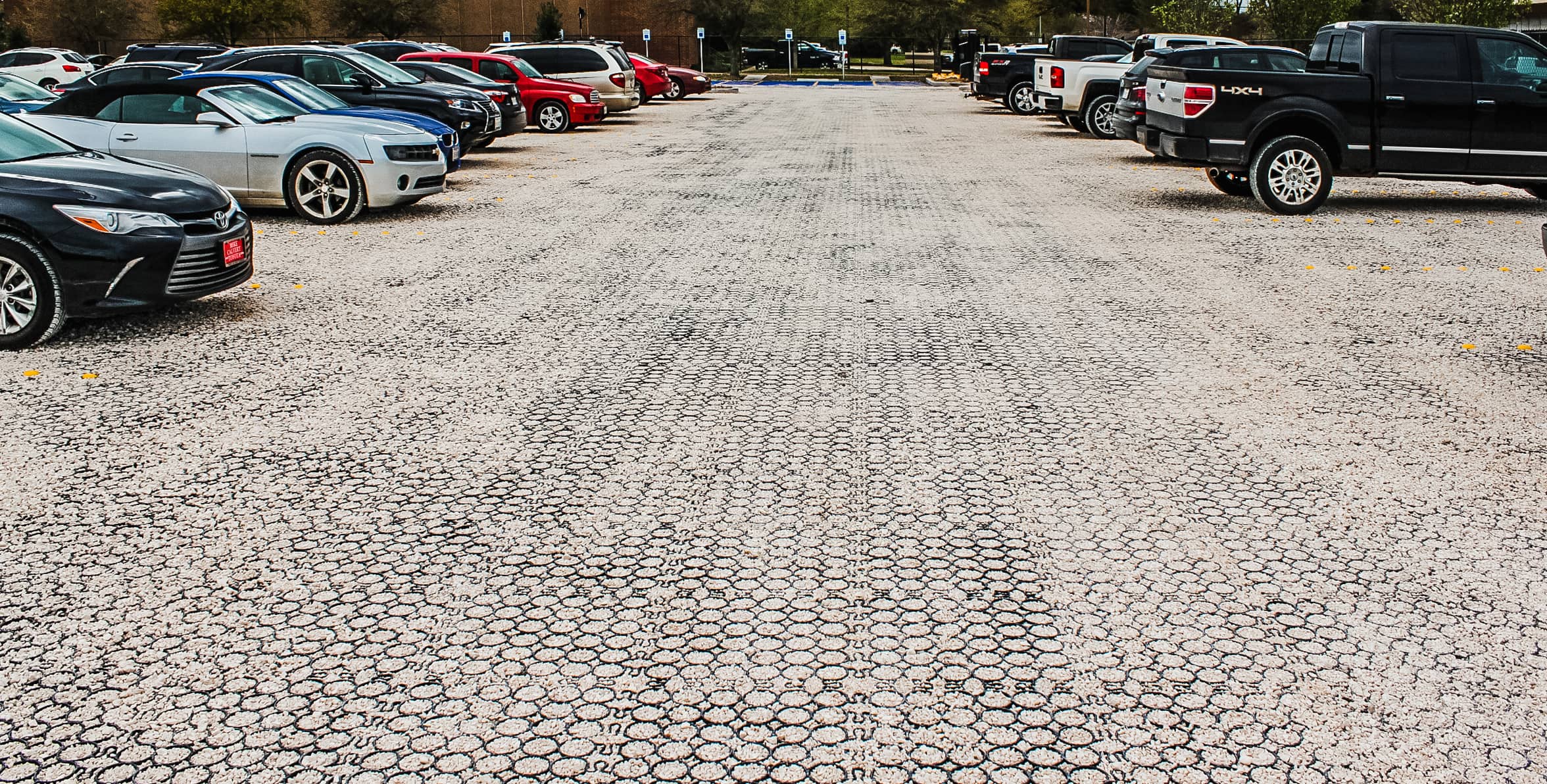
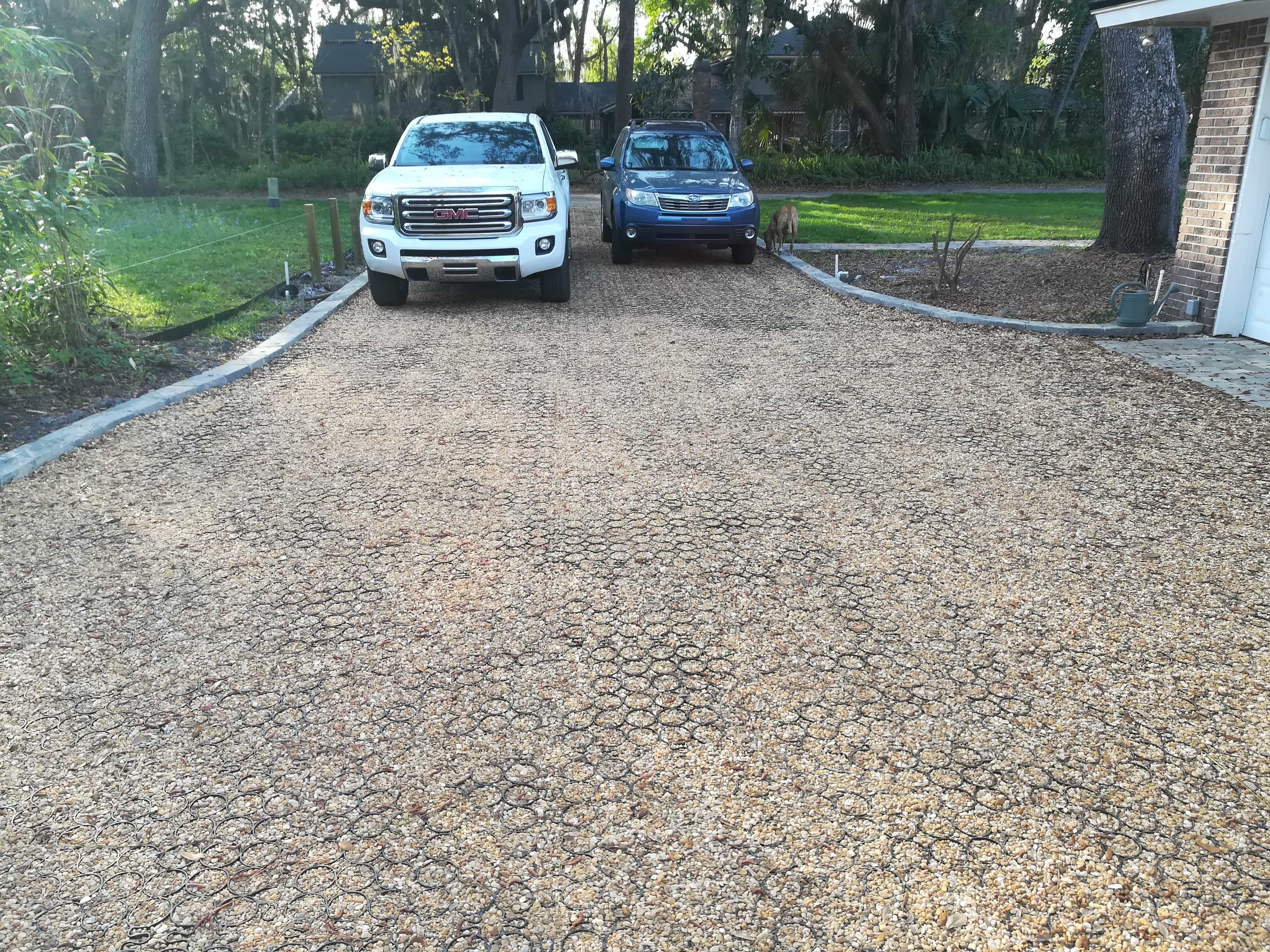
TRUEGRID’s paver design locks gravel in place so the surface stays steady and predictable under everyday use. Built from durable recycled polymer, the system forms a synthetic permeable garden walkway that manages rainwater well and stays in shape even when weather shifts. This creates a consistent walking surface that behaves predictably in every season.
Natural Stone and Pavers for Structure and Clean Edges
Stone or concrete pavers give clear geometry and firm footing. Large stone pieces need full support from a level bedding layer so corners do not rock, while permeable paver assemblies rely on clean aggregate in place of dense bedding sand. Joint width and edge restraint matter: consistent joints keep lines clean, and strong edging prevents slow drift into planting.
Prepare the Ground and Manage Water Before It Reaches the Walkway
A walkway lasts longer when rain is directed away from its edges and base instead of pooling on or under the path.
Subgrade Shaping That Protects the Base
Drainage begins with the soil beneath the walkway. Shape the subgrade so soft pockets are cut out, the ground falls toward a natural outlet, and there are no flat runs where rain can sit after a storm. Finer soils perform better when separated from the base with a non-woven geotextile that stops fines from migrating upward.
Install the Walkway in a Simple, Predictable Sequence
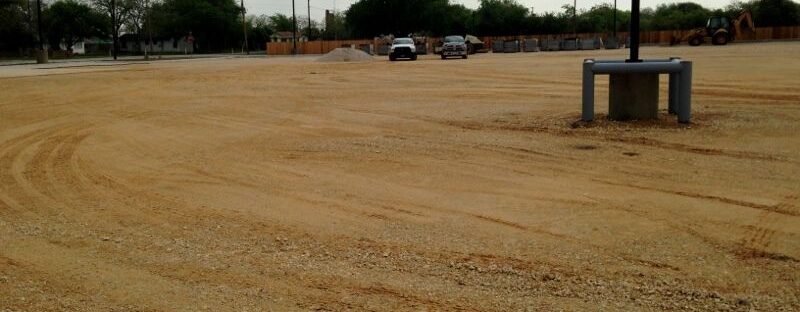
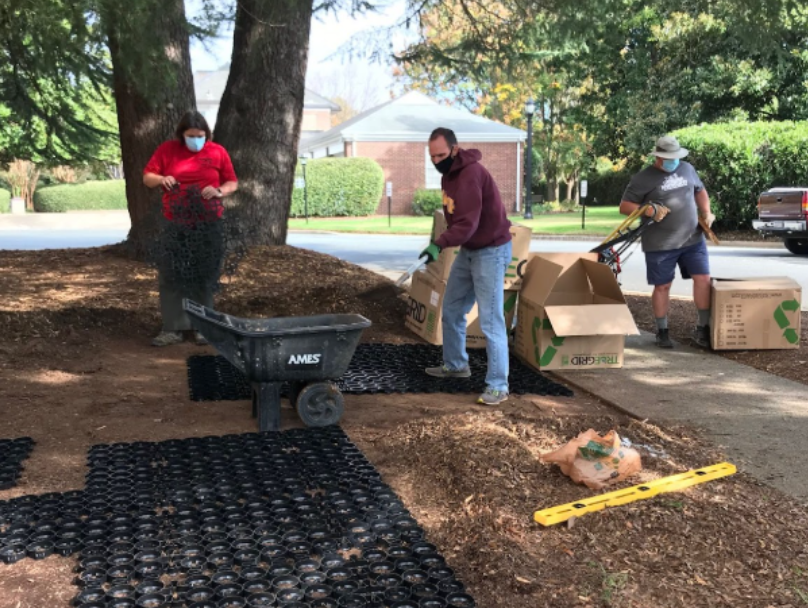
The installation of a permeable walkway comes together in a straightforward order. Lay out the route, excavate to a uniform depth, and shape the subgrade so water naturally falls toward a safe outlet. Add a non-woven geotextile if the soil is soft, place base stone in compacted lifts, and screed the bedding layer so the surface material sits evenly. Once the edges are restrained and the surface is set, the walkway drains cleanly and holds its shape through changing weather.
Control Runoff at the Source
Redirect downspouts away from the path, trim high points that push water across the route, and correct depressions that trap runoff after storms. Interceptor swales above the path catch sheet flow on sloped yards. These small adjustments reduce the load on the walkway and prevent erosion at the edges.
Choose How Your Walkway Handles Rain
Some walkways let rain soak through into the ground, and others shed water off the surface. Where the path runs next to beds and trees that like steady moisture, a permeable garden walkway over open-graded stone lets rainfall filter into the soil instead of running away. In spots that collect heavy leaf drop or need fast cleanup, a tighter path that drains to one edge is often the easier choice. Match the design to foot traffic, nearby planting, and the way water already moves through the yard.
Integrate Edging, Planting, and Lighting for a Cohesive Garden Walkway

A walkway feels like part of the garden when edging, plants, and lighting help people move easily and give rain a clear path away from the surface.
Set Edges That Hold Shape
Edge restraint keeps material where it belongs and frames the route from eye level. Steel or aluminum strips work well with gravel or decomposed granite, while stone or paver borders suit more formal areas. Path edges should sit flush with the finished grade so brooms, wheels, and trimmers glide cleanly.
Place Plants to Maintain Width and Drainage
Keep plants six to twelve inches off the hard edge so foliage does not snag clothing or push gravel into beds. Use taller shrubs and small trees to frame the outside of curves or sit behind seating areas, and keep lower, finer growth closer to the path so people can still read the edge clearly. With the borders set and plants pulled back from the line, the route reads as a clean, durable permeable garden walkway that handles movement and drainage without fuss.
Use Lighting That Guides Without Glare
Low, shielded fixtures spaced several feet apart illuminate texture and help walkers read slopes and curves. Warm color temperatures blend naturally with planting and reduce nighttime glare. That steady lighting rhythm helps the walkway read as part of the larger garden, not a separate feature.
Design Choices That Prevent Common Walkway Failures
Small decisions determine whether the path holds its shape over time.
Avoid Flat or Negative Grades
Flat spots slow drainage and encourage slick, shaded patches that raise maintenance demands. Keep the ground sloping gently away from structures, and set transitions at doors, patios, and drives just high enough that water clears the threshold instead of pooling at it.
Build an Adequate Base
A walkway settles when the base is too thin or uneven. Proof-roll the subgrade, add a geotextile where needed, and compact base stone in controlled lifts so the surface stays level through wet and dry seasons.
Protect Curves and Narrow Points
Tight bends rut quickly, especially in gravel builds. Broader radii and slight flares at entrances or gates improve comfort and reduce maintenance.
Design a Walkway That Looks Good and Handles Rain Naturally
A well-designed permeable garden walkway blends the visual rhythm of curves, borders, and planting with the practical demands of drainage and traffic. When alignment, base depth, material choice, and finishing details work together, the walkway becomes a long-lasting structure that holds its form from season to season.
Build With TRUEGRID for Durable, Permeable Walkways That Stand Up to the Elements
TRUEGRID pavers stabilize gravel, support foot traffic, and drain naturally through open-graded aggregate. Each interlocking panel provides long-term surface stability without the shifting or rutting common in loose-laid materials. Contact us today for more information.