
Gravel is one of the lowest-cost common parking surfaces, with material prices often around $1 to $3 per square foot. Its lower upfront cost and the drainage potential of open-graded aggregate make gravel attractive, but loose stone can migrate, rut, and require recurring maintenance under traffic. The performance of gravel parking depends heavily on the aggregate selected and whether the stone is left loose or mechanically stabilized.
What Gravel Parking Costs
Gravel materials commonly cost about $1 to $3 per square foot, although the final price depends on aggregate type, local availability, depth, and delivery. Decorative stone and specialty aggregates can cost considerably more, so a basic crushed-stone parking pad and a premium stone parking pad should not be assumed to carry the same material price.
Gravel pads are usually less expensive upfront than asphalt or concrete. Where tires repeatedly push loose aggregate out of position, recurring raking, replenishment, and surface correction should be part of the long-term cost calculation.
Choosing Gravel That Can Handle Vehicle Traffic
Aggregate shape directly affects how much the stone moves under repeated tire loads. Angular crushed stone tends to interlock with neighboring particles, giving gravel for parking more resistance to lateral movement than rounded stone.
A pea gravel parking pad can look clean and uniform, but the rounded particles roll past one another more easily when tires turn, brake, or accelerate. If stabilization is planned, follow the grid or geocell manufacturer’s approved infill specification rather than assuming pea gravel is suitable. Leaving rounded gravel loose increases the likelihood that stone will migrate under vehicle traffic. A gravel-filled paver parking pad or cellular grid system also needs aggregate that matches the application and the grid manufacturer’s fill requirements.
Why Unstabilized Gravel Parking Fails
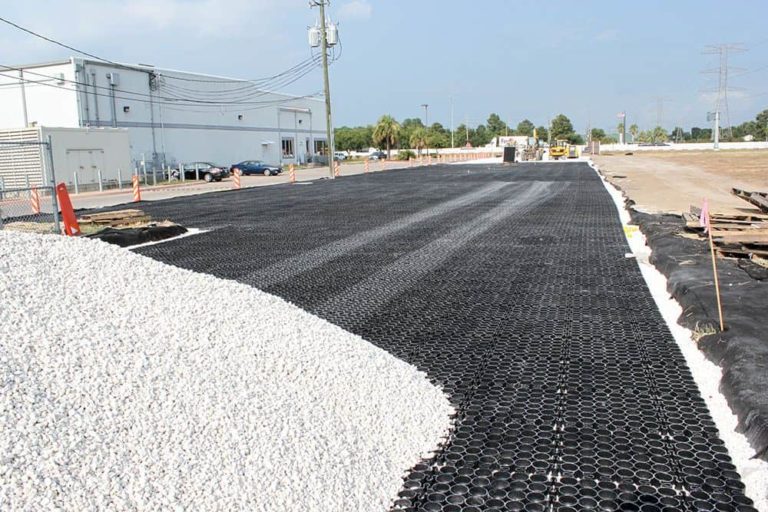
The solution to unstabilized gravel pads is to stabilize them. Instead of just digging out an area and filling it with gravel, there’s one more step that needs to be taken. This is where TRUEGRID PRO PLUS pavers come in. Built from incredibly durable, 100%- recycled plastic, TRUEGRID pavers stabilize the gravel and trap it into place.
Each individual paver is built with S-Flex Joints and a hoop strength design that allows it to bend but not break when handling the weight of even the heaviest vehicles. The X-Anchors within each paver trap the gravel inside and weigh the pavers to the ground, preventing any shifting or moving.
The pavers are made from Hi-Impact recycled polymer that can withstand the weight of a monster truck landing on them without breaking. The 3-Point locking tabs on the end of each paver can be snapped together effortlessly and quickly, slashing installation time and preventing the pavers from accidentally coming apart.
An Affordable and Long-Lasting Solution to Gravel Parking

Unstabilized gravel parking pads are more of a temporary solution, but gravel parking stabilized with the TRUEGRID PRO PLUS paver system will give you the best of both worlds as a homeowner or a business owner.
Since this paving system is so easy to install, it takes only a fraction longer to complete than an unstabilized gravel pad. Once the parking area has been excavated and filled with gravel, the pavers can be snapped into place over the top and filled in with more gravel, using a heavy vehicle or roller to press it into the top of the pavers.
Once the installation is completed, your gravel parking pad will never suffer from shifting gravel, ruts, or flooding again. There are plenty of different-colored aggregates to choose from for your filler material, and the end product will look very professional and stylish.

Parking pads surfaced with loose gravel have no built-in mechanism to keep individual particles from moving sideways under repeated vehicle loads. Tires push stone outward during turning and braking, and those small movements accumulate until high-traffic paths begin to develop ruts, low spots, or piles of displaced aggregate.
Traffic can loosen and grind fine particles, contributing to dust in dry conditions, and runoff moving across an unconfined surface can carry smaller particles away or concentrate gravel in low areas. A gravel parking area can still be permeable, but permeability alone does not guarantee good drainage because the underlying soil, base, and path of surface water still influence how the site handles rainfall. Adding more stone may temporarily fill low areas, but it does not address the lack of confinement that allowed the surface to move.
How Stabilization Changes a Gravel Surface
A cellular stabilization system divides loose aggregate into smaller confined sections. The cell walls resist lateral movement, and an interconnected grid helps spread vehicle loads across a broader area rather than allowing the tires to concentrate movement in the same loose surface paths.
Confinement reduces lateral gravel movement without creating a solid paved slab. With clean, open-graded aggregate and a permeable base, water can move through the stabilized surface. Grid and geocell systems both use cellular confinement, although their geometry and role within the pavement section can differ. The cell structure restrains stabilized gravel, while loose gravel relies more heavily on particle interlock and base conditions.
Additionally, grid stabilizers protect the infill gravel from pulverization over time. This can dramatically reduce dust and erosion on site.
Cost Comparison: Plain Gravel, Stabilized Gravel, Asphalt, and Concrete
The figures below use different cost bases. Plain and stabilized gravel represent material components, while the asphalt and concrete ranges represent installed surfaces.
| Surface | Typical Cost / Planning Range | Cost Basis |
|---|---|---|
| Plain gravel | About $1–$3 per sq. ft. | Materials only |
| Stabilized gravel with TRUEGRID PRO PLUS | About $5.38–$7.38 per sq. ft. for grid + gravel materials at current online box pricing | Calculated from the current $175-per-40-sq.-ft. PRO PLUS box price plus the general $1–$3-per-sq.-ft. gravel-material range; excludes base layer, geotextile fabric, delivery, labor, and site preparation. Volume pricing may differ. |
| Asphalt pad | About $7–$13 per sq. ft. | New installation |
| Concrete | About $8–$20 per sq. ft. | Installed |
These figures are planning ranges rather than project quotes. Aggregate type, local pricing, delivery, site preparation, base requirements, and labor can change the final cost.
Stabilizing Gravel With TRUEGRID PRO PLUS
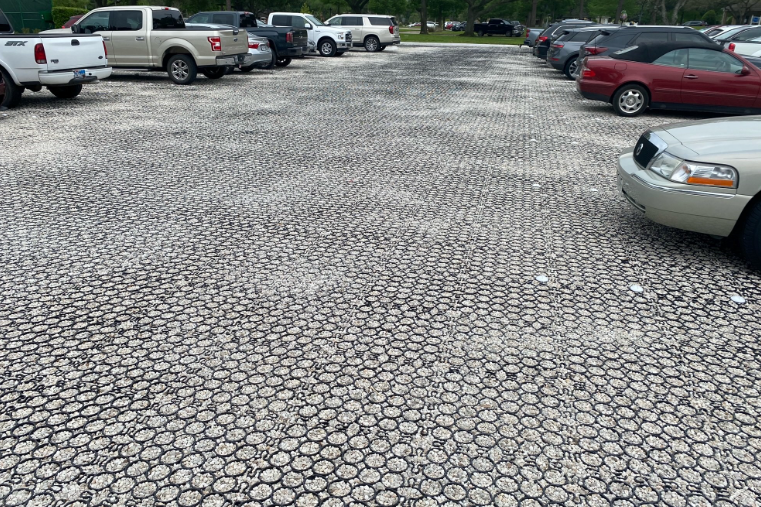
TRUEGRID PRO PLUS confines gravel within interconnected cells and is made from 100% post-consumer recycled high-density polyethylene. For vehicular applications, TRUEGRID recommends clean, washed angular rock with 1/2- to 3/4-inch infill for PRO PLUS. Installation requires base and subgrade conditions appropriate to the project, with aggregate filled to the top of the cells and compacted or settled as needed.
For projects where loose stone movement is the main problem, TRUEGRID PRO PLUS adds mechanical confinement while preserving the gravel surface. TRUEGRID’s gravel parking lot construction guidance applies the same stabilization principles at larger scale. Broader parking pad ideas include materials and design approaches beyond gravel.
Get More From a Gravel Surface
TRUEGRID can help match a permeable grid system to residential, commercial, and industrial applications where aggregate confinement is part of the project requirements. A properly specified grid can stabilize the aggregate while retaining a gravel finish. Contact us today for more information.
Frequently Asked Questions
How Long Does a Gravel Parking Pad Last?
There is no single service-life estimate for every gravel pad because aggregate type, traffic, base conditions, drainage, and maintenance all affect performance. Stabilization can reduce aggregate movement and rutting, but periodic inspection and surface maintenance may still be necessary.
How Do You Keep Gravel From Shifting?
Angular aggregate helps stone interlock, while a cellular grid adds mechanical confinement that limits lateral movement. Stabilization is especially useful where repeated turning or braking would otherwise push loose gravel out of position.
How Much Does a Gravel Pad Cost?
Gravel materials commonly cost about $1 to $3 per square foot before delivery, labor, or site preparation. Stabilized gravel (permeable grid pavers) adds the cost of the grid and any additional base requirements.
Does Gravel Drain Well?
Gravel allows water to move through spaces between aggregate particles, but drainage depends on the full pavement section and the soil below it. A permeable gravel surface cannot compensate for an underlying layer that does not accept or route water effectively.
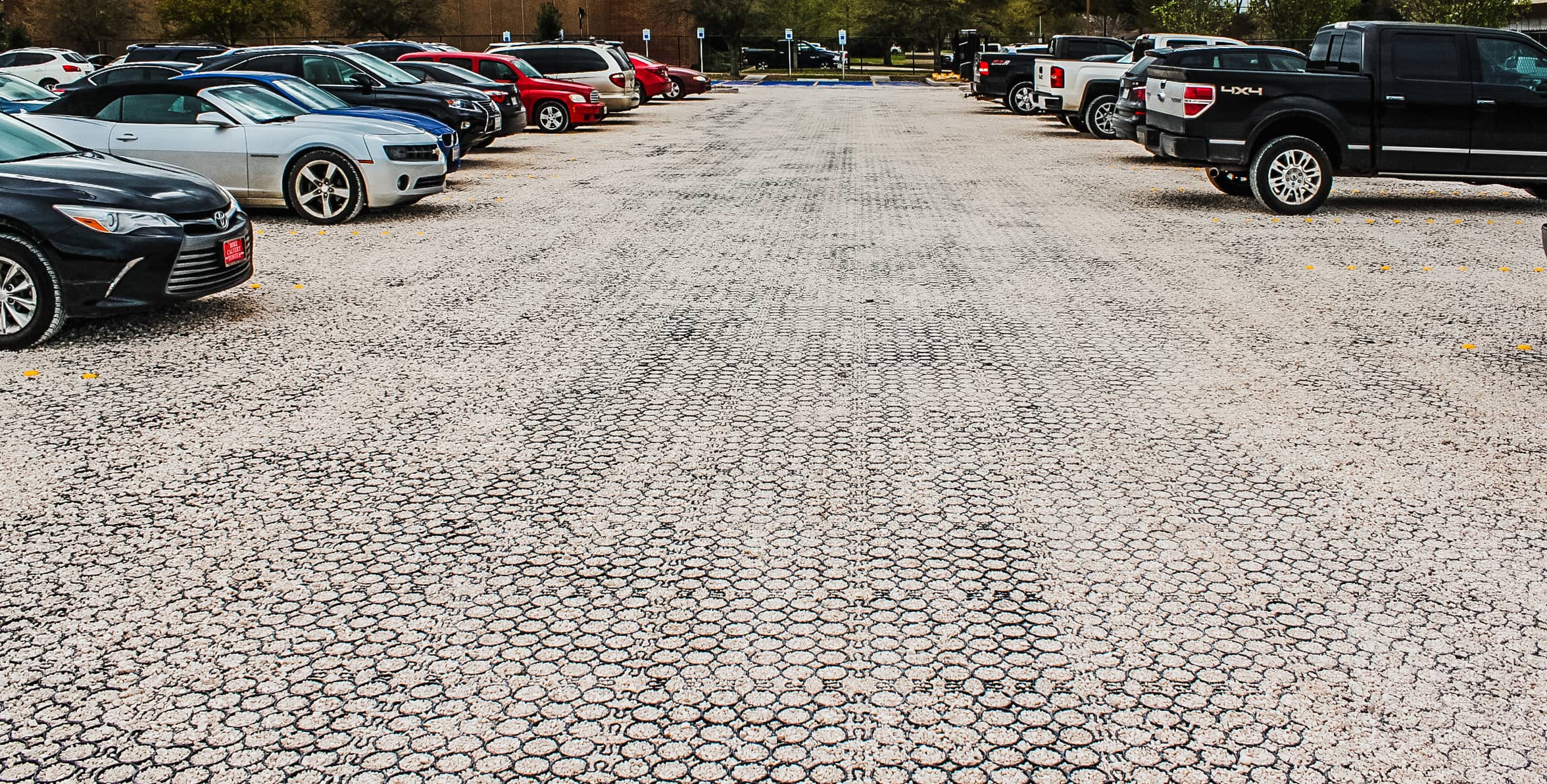
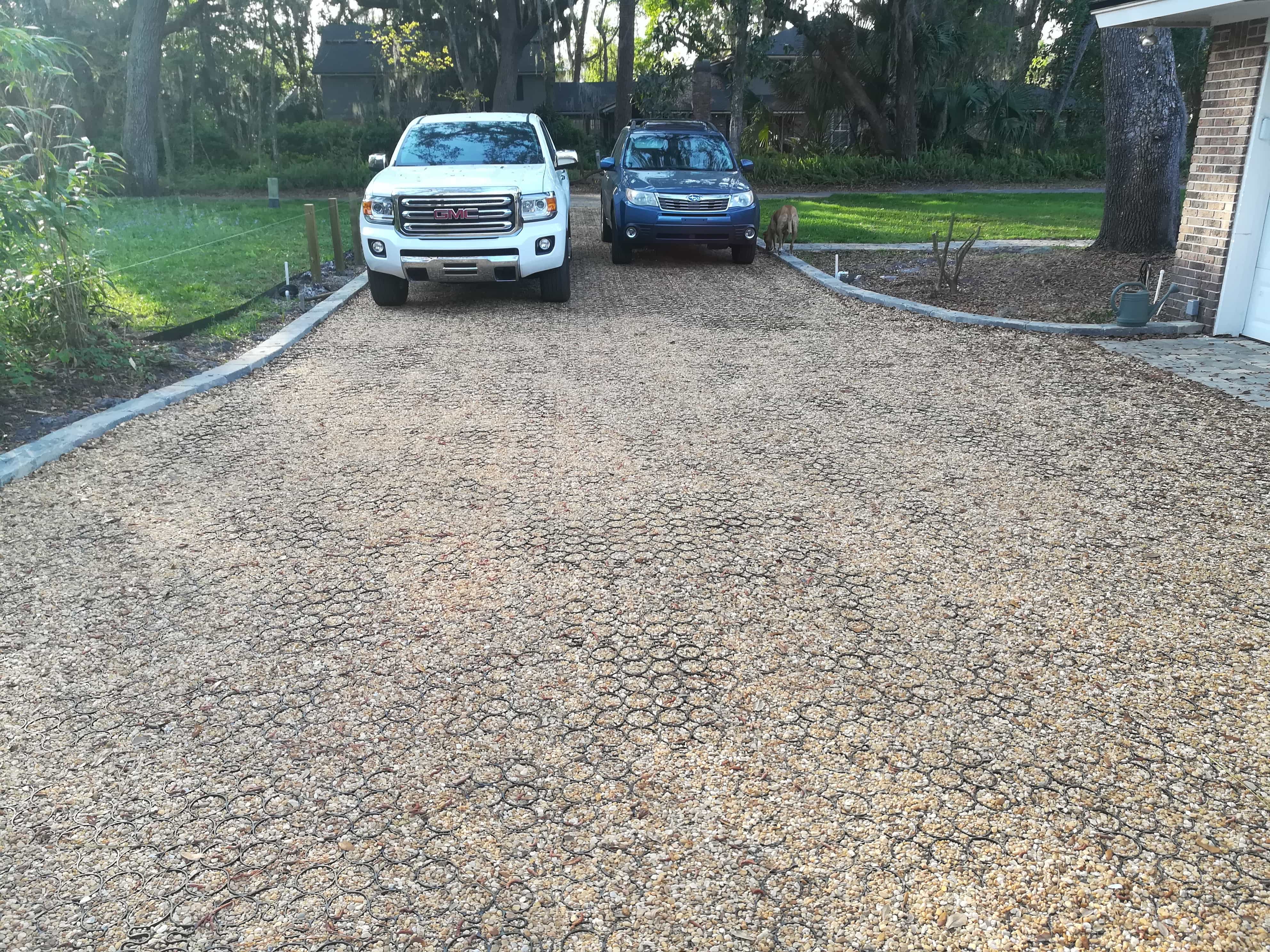
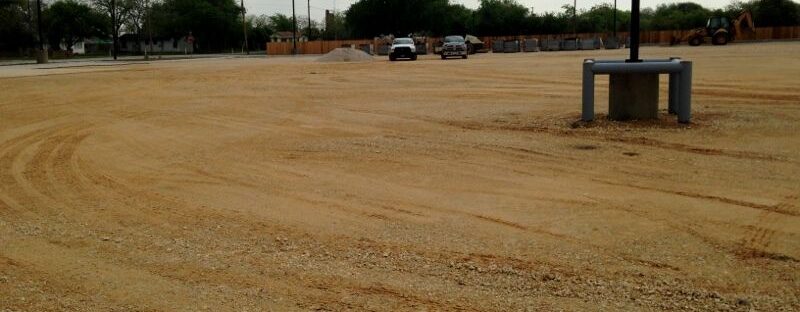

[…] you need to prevent ruts and divots in gravel parking lots or lock gravel into its crisp, well-defined walkway border, TRUEGRID has precisely what you […]
[…] Permeable systems are gaining traction for daily-use surfaces that need both durability and drainage performance. […]