Gravel has become a defining material in modern landscape design. It manages water, supports load, and creates visual separation without locking a surface into a rigid system. When designers and homeowners choose gravel between pavers, they are responding to drainage demands, maintenance realities, and a preference for clean, contemporary outdoor spaces.
How Gravel Between Pavers Changes Surface Drainage
Hardscape surfaces fail most often when water has nowhere to go. Solid patios and walkways shed rainfall across the surface, forcing runoff toward edges, joints, or adjacent structures where it can undermine the base over time.
Open joints interrupt that pattern.
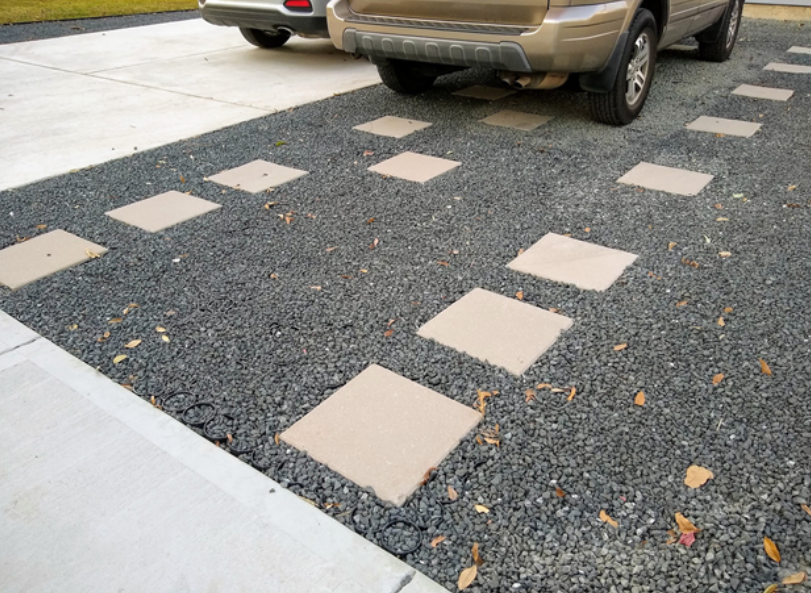
- Gravel between pavers creates vertical drainage paths that allow water to move through the surface instead of building pressure beneath it.
- That behavior reduces saturation at the edges of the installation and limits the conditions that lead to settlement or heaving.
- In freeze–thaw climates, this drainage relief becomes even more important.
- Moisture trapped under rigid surfaces expands as it freezes, stressing both the base and the pavers above.
Gravel-filled joints reduce that risk by giving water a place to go before it becomes a problem.
Why Permeable Joints Improve Long-Term Stability
Drainage performance does not stop at the surface. What happens below the pavers determines whether the system remains stable over time. A properly prepared aggregate base works with gravel joints to spread moisture evenly through the structure instead of letting it concentrate at a few weak points, which reduces soft spots that lead to settlement.
Joint permeability also protects surrounding soils. By limiting lateral runoff, gravel joints reduce edge erosion at borders and transitions, helping adjacent planting areas and restraints stay intact.
Load Distribution And Flexibility Under Foot Traffic
Rigid surfaces transfer stress directly from the walking surface into the base. Any minor movement below shows up as cracking, rocking, or uneven pavers above.
Gravel joints introduce controlled flexibility.
- The loose aggregate absorbs small shifts without forcing stress into the paver units themselves.
- For walkways, patios, and seating areas dominated by foot traffic, this flexibility helps preserve alignment without constant correction.
Use conditions still matter. Areas that see frequent gatherings or heavier furnishings benefit from joint materials and base designs that resist migration. In these cases, the joint gravel operates as part of a broader assembly rather than as a standalone detail.
Choosing The Right Gravel For Paver Joints
Not all gravel performs the same way between pavers. Particle shape directly affects stability and maintenance expectations.
Rounded Vs. Angular Aggregate
Rounded pea gravel drains well and offers a softer visual profile, but it moves more easily under traffic. Angular stone interlocks under pressure, resisting displacement and maintaining joint depth more consistently.
Size And Color Selection For Clean Layouts
Uniform aggregate sizing helps joints compact consistently. Consistent color and gradation reinforce geometry, especially in large-format layouts where joint spacing becomes a visible design element.
Weed Control And Maintenance Expectations
Weeds do not appear because gravel is present. They emerge when organic material accumulates and moisture lingers near the surface.
- Gravel joints dry more quickly than sand-filled or mortar-set joints, limiting the conditions weeds need to establish.
- When joint depth is sufficient and the base is properly prepared, weed pressure becomes occasional rather than constant.
- Maintenance with gravel joints is predictable. Instead of repairing cracked mortar or replacing eroded sand, upkeep typically involves topping up displaced aggregate.
Many homeowners prefer this approach because it avoids demolition and keeps repairs localized.
Design Flexibility For Modern Patios And Walkways
From a visual standpoint, gravel joints create intentional separation between pavers. Large-format pavers with consistent spacing emphasize layout and proportion, which aligns well with modern landscape design.
Gravel also allows for smoother transitions:
- Walkways can curve without tight cuts.
- Patios can blend into surrounding gravel zones or planting areas without abrupt edges.
These transitions reduce hard boundaries and help outdoor spaces feel connected rather than compartmentalized.
Installation Principles That Affect Performance
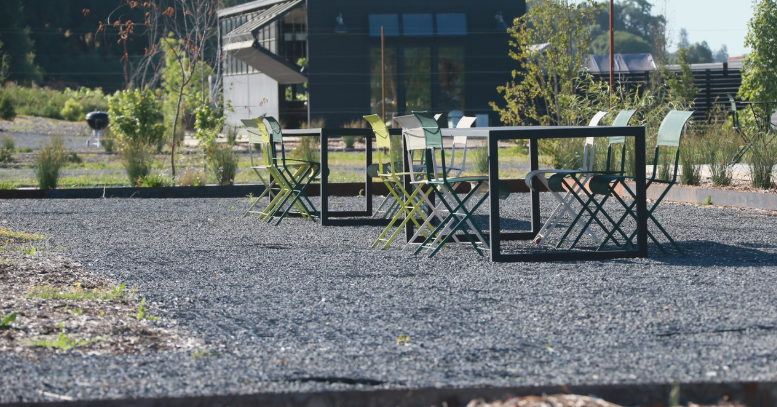
Long-term performance depends on base uniformity, perimeter restraint, and joint behavior working as a single assembly.
Base Compaction And Grade Control
A compacted aggregate base supports load and limits settlement, and proper grading keeps water moving downward instead of pooling beneath the surface.
In practice, drainage performance depends on maintaining consistent slope across the finished surface rather than relying on isolated low points to move water.
Industry standards commonly reference gentle grading in the range typically associated with hardscape drainage to keep water moving without introducing erosion or instability. When slope varies across the installation, water concentrates in joints and transitions, increasing the likelihood of settlement and gravel migration even when the base is otherwise well compacted.
Joint Depth Consistency
Joint depth must remain consistent to avoid thin spots that loosen under traffic and encourage migration.
Edge Restraint And Perimeter Containment
Edge restraint must be continuous, since even well-graded gravel will migrate laterally if the perimeter allows movement.
Confinement For Higher-Use Zones
Areas subject to repeated use or cleaning benefit from confinement beneath the surface to stabilize aggregate over time.
System-Level Outcome
When these conditions are met, gravel joints function as intended rather than becoming a recurring maintenance issue.
Design Context For Material Selection
A comparison of paving stones vs gravel clarifies how base behavior and drainage pathways shape long-term surface outcomes.
Preventing Gravel Migration With Confinement
Loose aggregate moves when it is not restrained. Foot traffic, rainfall, and routine cleaning can gradually displace joint material if nothing limits lateral movement, and that displacement shows up fastest at edges, transitions, and high-use zones.
Confinement systems address this issue by stabilizing gravel beneath and around paver installations. By holding aggregate in place while preserving drainage, confinement reduces maintenance demands and protects joint integrity over time. This approach also supports permeable design goals because water stays on site and runoff decreases without trading stability for infiltration.
How TRUEGRID Supports Paver-And-Gravel Systems
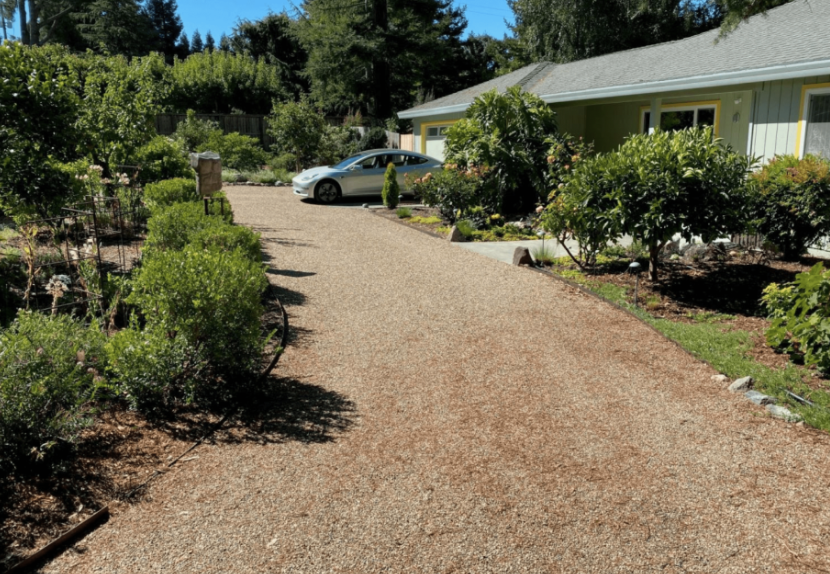
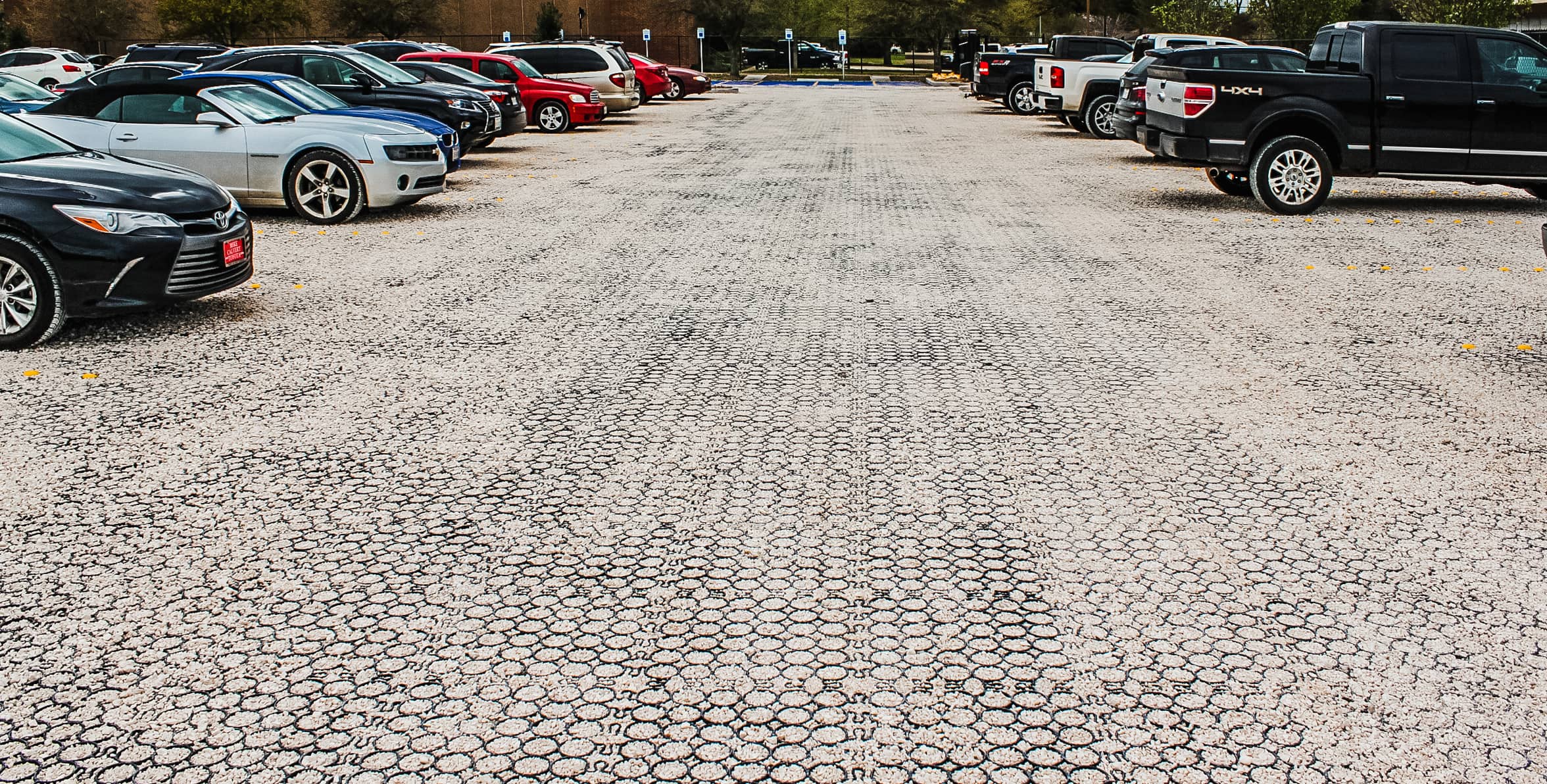
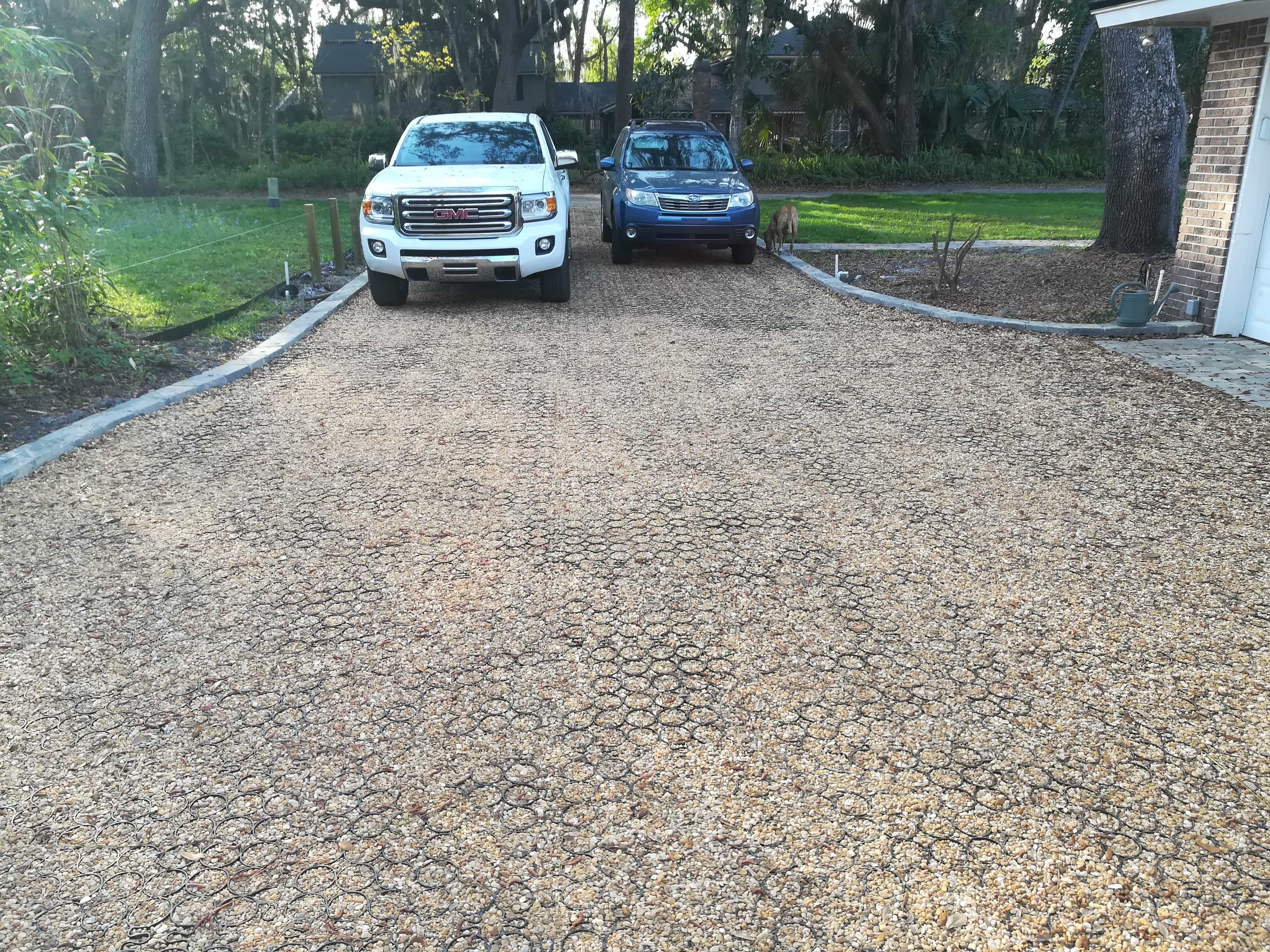
TRUEGRID permeable pavers confine gravel while maintaining drainage through the finished surface. Their grid structure stabilizes aggregate below the walking surface, which limits migration and keeps gravel zones consistent under regular use.
In hybrid layouts that pair paver units with gravel joints or adjacent gravel areas, TRUEGRID permeable pavers help stabilize the loose aggregate so the overall hardscape stays cleaner and easier to maintain. The grid remains visually unobtrusive, preserving clean lines while improving long-term surface stability.
Why Gravel Between Pavers Works As A System
Using gravel between pavers performs best when every layer is designed to work together.
- Pavers define the walking surface.
- Gravel joints manage water and accommodate movement.
- The base supports load and drainage. Confinement stabilizes loose aggregate.
- Site conditions decide whether that system stays predictable over time.
- Sloped grades, downspout discharge, and fine or expansive soils can concentrate water and amplify movement if the base and drainage path are not designed to match the setting.
When one element is undersized or omitted, performance suffers. When each component is properly selected and installed for the site, the surface remains level, drains efficiently, and requires minimal intervention.
Build Durable Outdoor Spaces With TRUEGRID Permeable Pavers
TRUEGRID manufactures permeable paver systems engineered to stabilize gravel, manage stormwater, and support long-term surface performance in patios, walkways, and mixed hardscape designs. Each system is designed to work with aggregate bases and open-joint layouts for predictable results. Contact us today for more information.