Every home’s first impression begins at the curb. The driveway leads the eye toward the façade and sets expectations for what lies beyond the front door. Choosing materials and patterns that balance design, durability, and drainage defines the foundation of lasting driveway curb appeal.
The Driveway’s Impact on Home Design
The driveway acts as a visual threshold, shaping first impressions through its color, texture, and proportion. Its color, texture, and geometry determine how seamlessly it connects to the landscape and architectural style. A wide, uniform surface can make a home feel grand and ordered, while narrow or uneven approaches break visual rhythm.
Long-term aesthetics depend on more than looks. When water pools, stains form, or cracks spread, the surface loses appeal and value. Materials that manage moisture and resist wear maintain their clean lines year after year. That blend of form and function defines true curb appeal for any home style.
Driveways built with modern designs that perform beneath the surface maintain their visual balance because drainage and structure work together from the base up.
Popular Materials and Design Approaches
Homeowners have more options than ever when planning curb appeal driveway ideas. Each surface type changes both appearance and maintenance needs.
Concrete
Concrete does the job, but it’s prone to cracking and fading as sealers age. That’s the trade-off. It can be broom-finished for traction or stamped for texture. Light colors keep the approach bright but highlight tire marks and patch repairs.
Brick
Brick offers traditional symmetry and natural color depth. Patterns like herringbone or basket-weave create visual energy and frame the entryway. Keep it swept and rinsed, and brick keeps its crisp, timeless look that always stands out at the entry. Mortar joints between bricks can host weeds or show efflorescence if drainage is poor.
Gravel
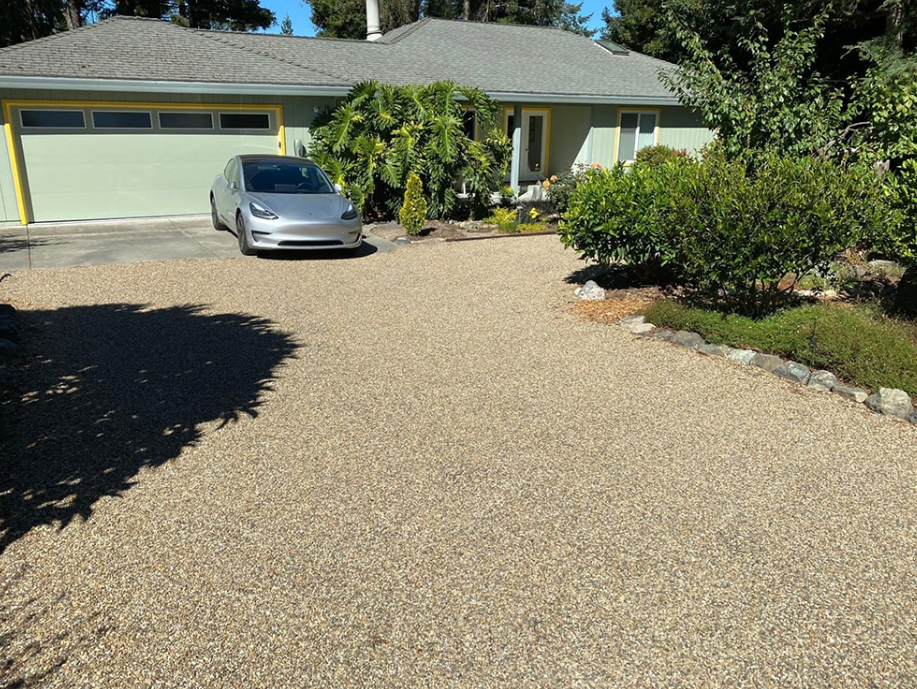
Gravel is affordable and naturally drains, making it a staple material for rustic or coastal homes. Proper edging, metal, stone, or timber, keeps stones in place and defines the border line. Periodic raking and top-offs, however, are required to maintain a level surface, especially where tires pivot or water flows downhill.
Pavers
Interlocking pavers combine modular precision with easy repair. If one unit chips, it can be replaced without disturbing the rest of the field. Concrete or clay pavers come in numerous tones and sizes to suit modern or classic façades. The joints between pavers allow minimal flexing under load, preventing cracks while still requiring joint-sand upkeep.
Modern and Sustainable Driveway Curb Appeal Ideas
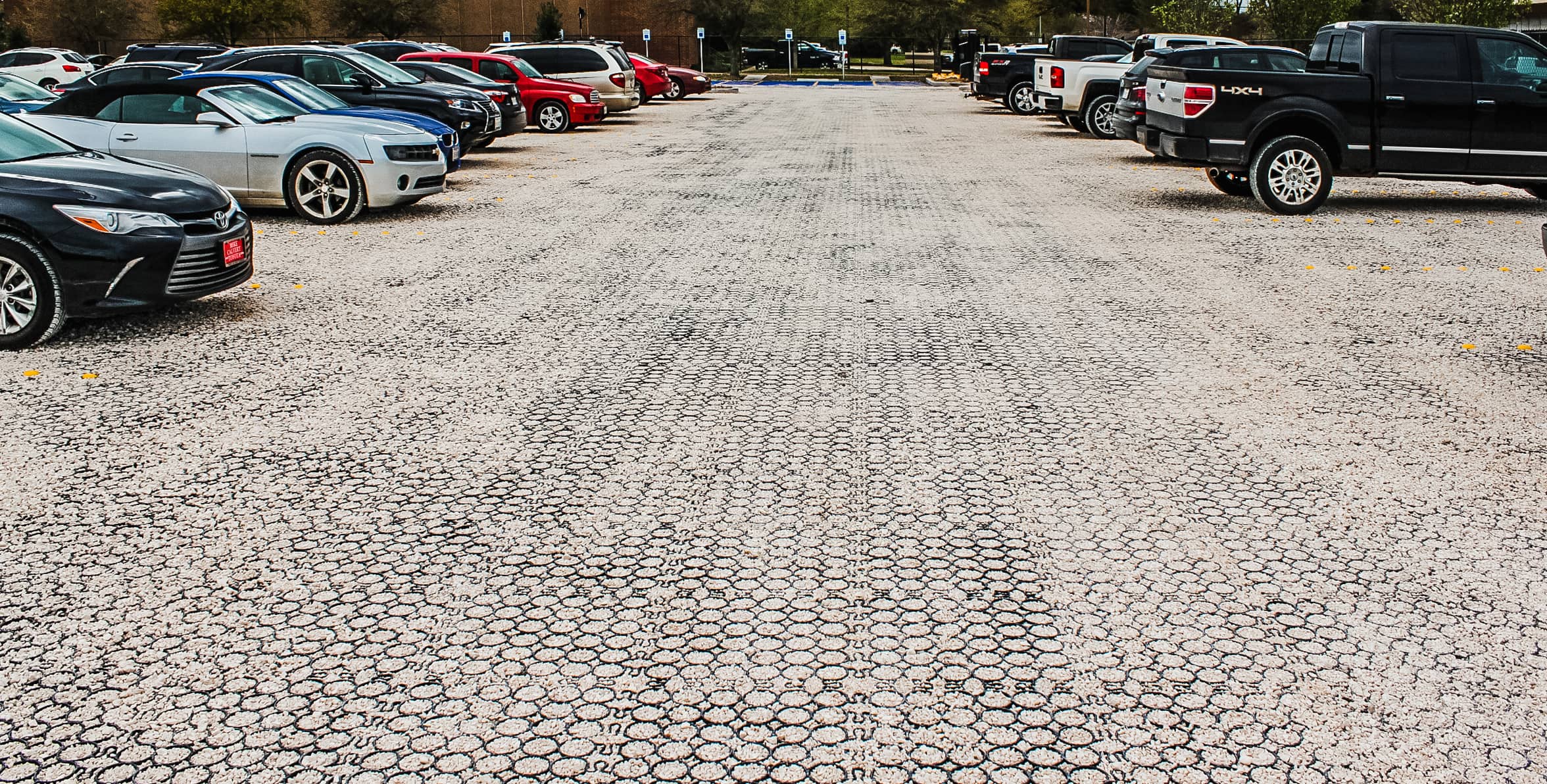
A growing number of homeowners want materials that look refined while reducing runoff. Permeable systems achieve both. Their open cells let rainwater pass through rather than sheet across the surface, reducing runoff and preventing puddles.
The clean grid geometry complements contemporary architecture as well as updated mid-century homes, aligning perfectly with mid century modern driveway curb appeal trends. By filtering water into a prepared stone base, these systems restore natural infiltration and reduce heat buildup under summer sun.
Spotlight on TRUEGRID Permeable Pavers
The TRUEGRID permeable paving system delivers strength, drainage, and design flexibility that conventional slabs can’t match.
Structural Performance and Strength
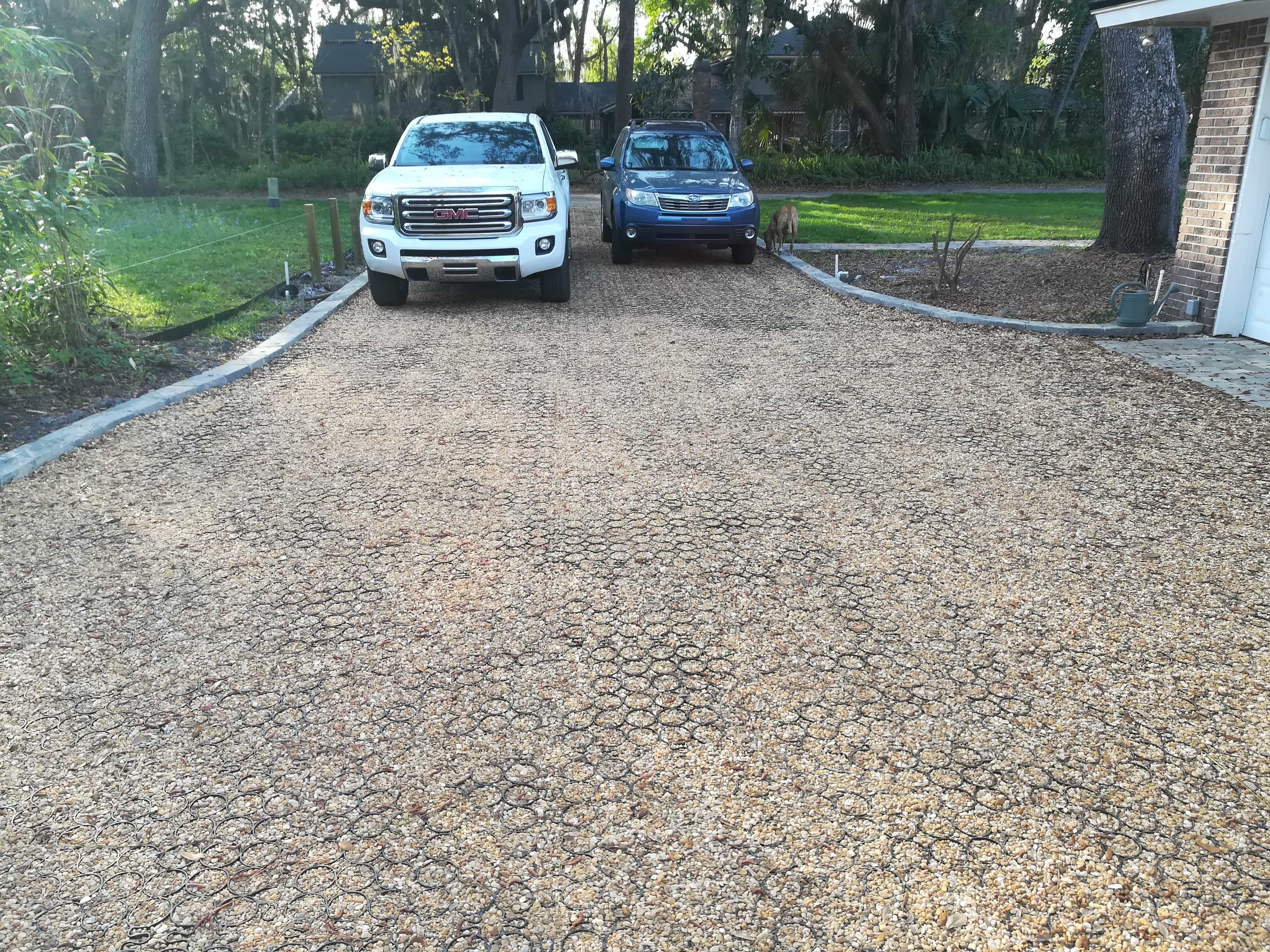
TRUEGRID’s recycled-plastic pavers redefine curb appeal driveway entrances with durability that outlasts poured slabs. Each interlocking panel locks aggregate in place. The result is a rigid, permeable surface strong enough for heavy vehicles. The grid structure spreads load evenly while preserving the natural look of gravel or turf infill.
Drainage and Environmental Stability
Because the system is open-cell, rainwater travels vertically into the base layer where it’s stored and released slowly into the soil. This prevents erosion along edges and keeps landscaping intact through every storm. The panels resist ultraviolet degradation and freeze-thaw damage, maintaining shape and alignment for decades.
Design Flexibility and Aesthetic Integration
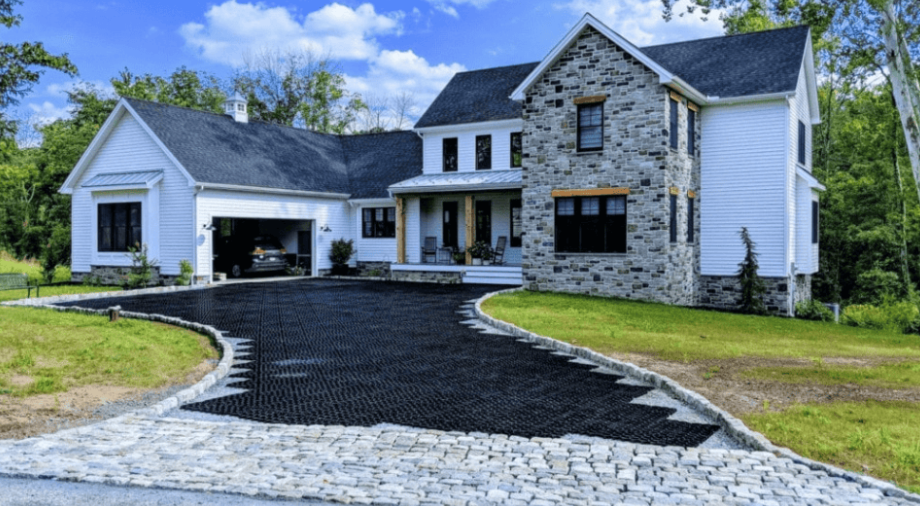
Design flexibility extends the system’s value, combining structural strength with a clean, intentional look. TRUEGRID pavers, such as PRO LITE, can frame clean straight runs, sweeping curves, or circular drives. Homeowners seeking drive-through entry curb appeal can pair wider radii with contrasting infill colors for a polished transition between the street and the residence.
Their clean grid layout transitions naturally into edging, lighting, and landscaping details that complete the overall visual composition.
Design Details That Elevate Driveway Curb Appeal
Beyond the core paving system, visual detail comes from how the surface meets its surroundings, the borders, patterns, and lighting that shape every approach.
Edging and Border Definition
Much of the surface’s visual impact comes from finishing touches. Edging materials define the line where paving meets landscape. Steel edging creates minimalist borders for modern façades, while stone or brick bands provide texture contrast. Vegetated strips planted with hardy groundcovers soften edges without hiding the geometry.
Patterns and Surface Rhythm
Patterns matter as much as borders. Alternating light and dark aggregate creates subtle stripes that guide the eye toward the entry. For homeowners exploring curb appeal driveway upgrades on sloped lots, alternating patterns can also visually reduce slope by breaking up long runs of surface.
Lighting and Nighttime Composition
Lighting completes the composition. Because the panels stay flat, your lights stay level, no wobble, no tilt. Recessed path lights or low bollards highlight the entry alignment at night and accentuate surface texture.
Integrating Landscaping and Architecture

A successful design ties surface material to the home’s lines and plant palette. For ranch or mid-century architecture, linear patterns emphasize horizontal rhythm. Colonial or cottage façades benefit from curved drives framed by hedges or ornamental trees. Native grasses and perennials along edges absorb overflow water and blend the surface into its setting.
Matching tones between façade materials, roofing, trim, or masonry, and paving infill colors creates cohesion. A gray-tone grid paired with charcoal siding reads sleek and modern; tan stone within TRUEGRID panels harmonizes with warm brick or stucco. These subtle choices determine how natural the transition from street to structure feels.
Bring Driveway Curb Appeal and Sustainability Together with TRUEGRID
TRUEGRID permeable pavers let you design a driveway that looks sharp, drains efficiently, and lasts for decades. Each paver is molded from 100% recycled plastic to create a clean, stable surface that handles daily traffic without runoff or rutting. Contact us today for more information.