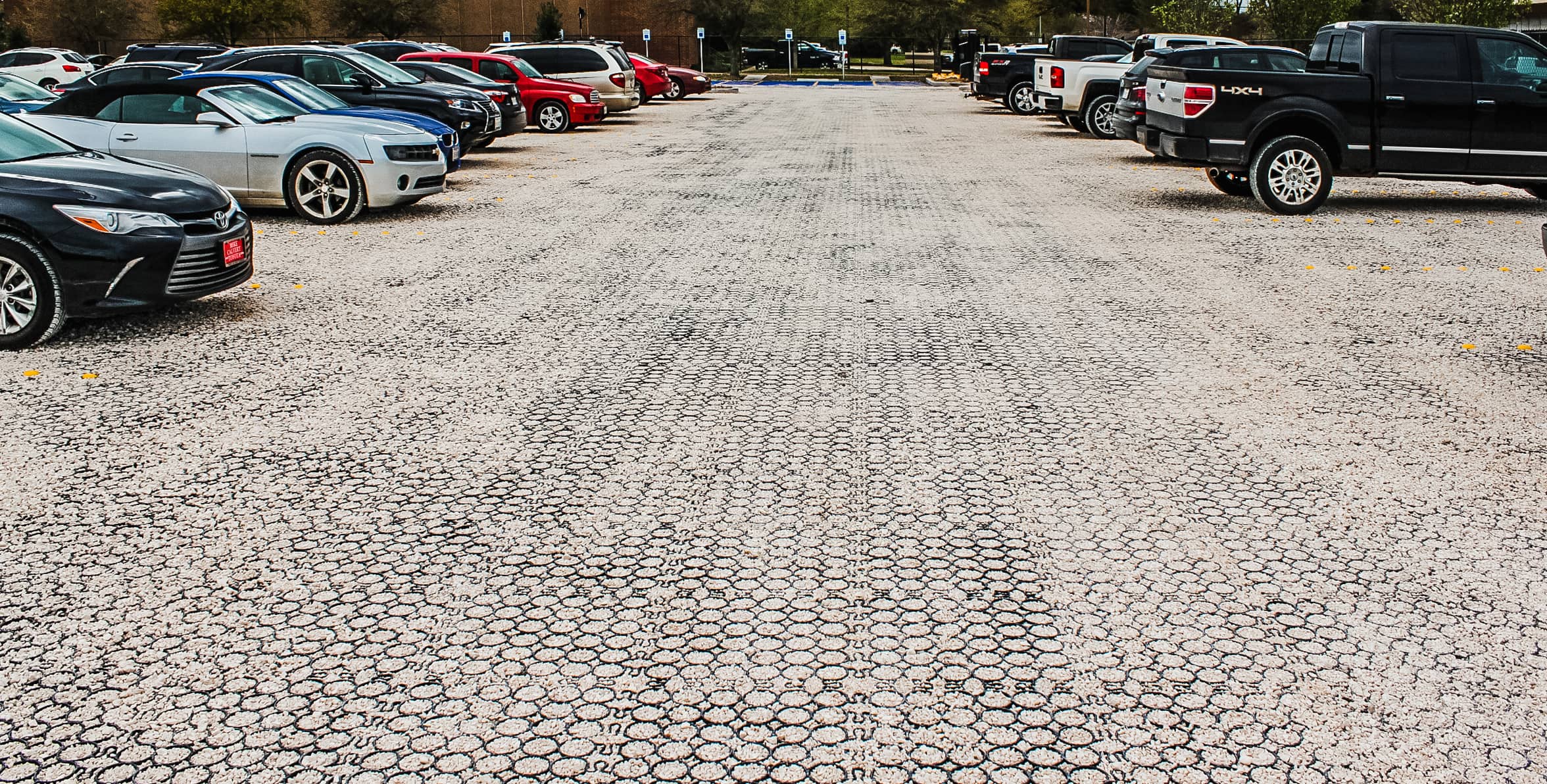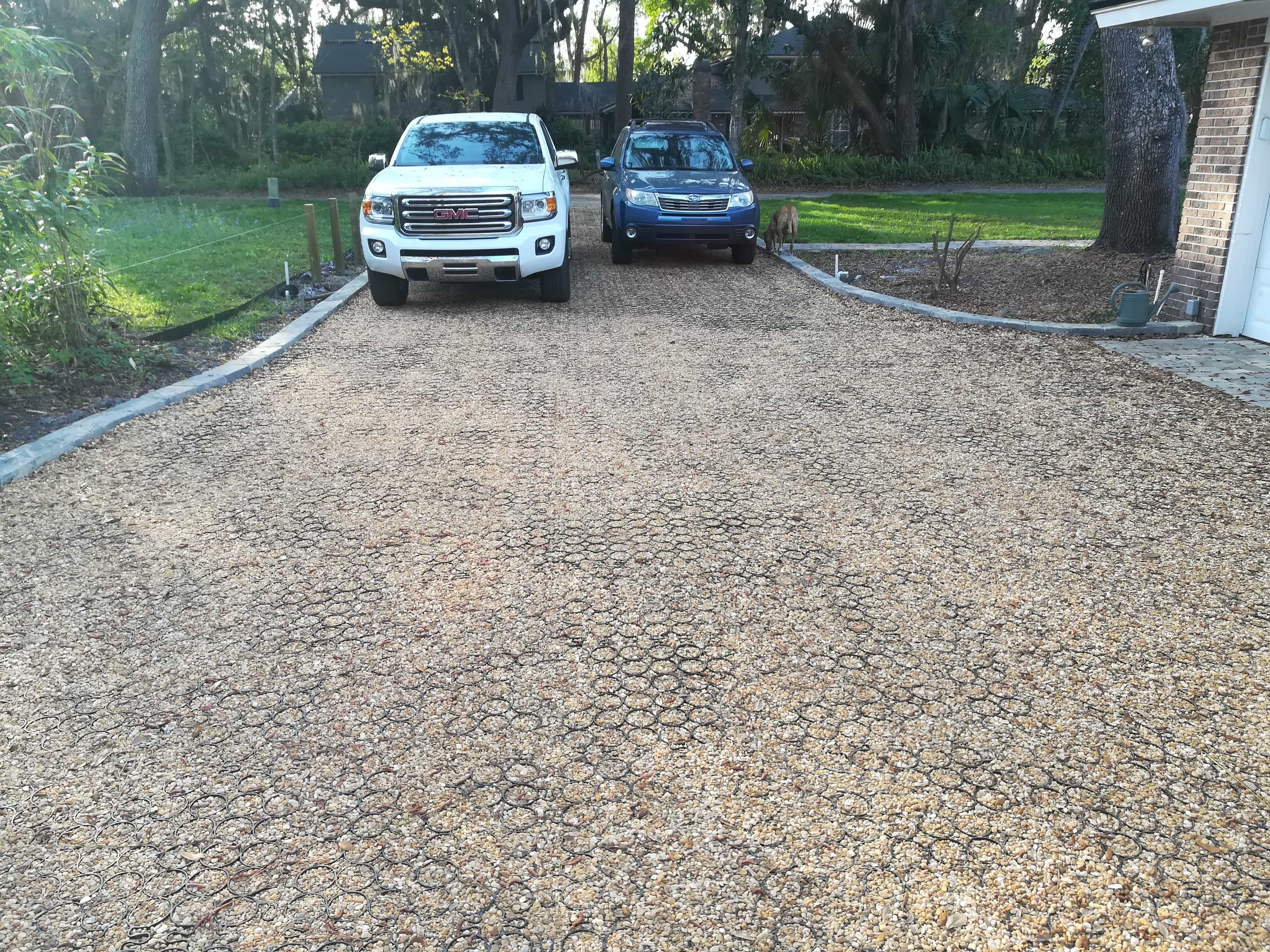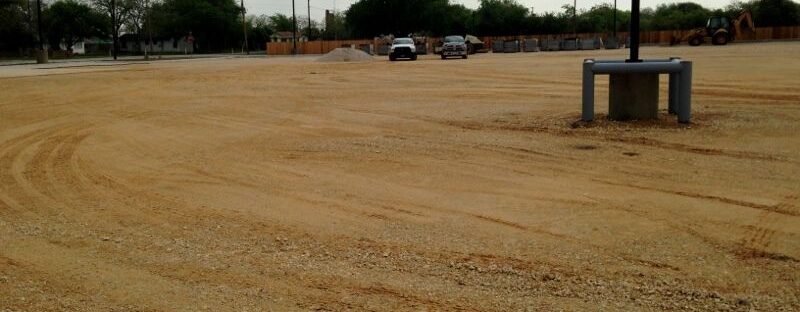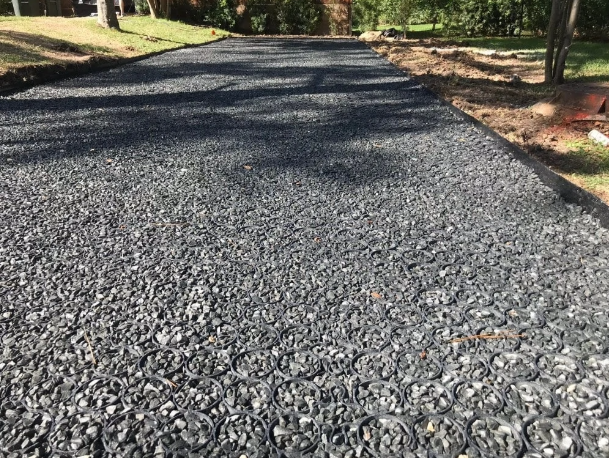
Every paved surface begins with the same challenge, controlling where rainwater goes. When it can’t pass through, runoff floods, erodes, and undermines the base beneath. The benefits of permeable pavement come from its ability to manage that flow, turning water from a liability into a working part of the surface system.
How Permeable Pavement Solves Common Drainage and Maintenance Problems
When rainfall overwhelms sealed pavement, cracks, rutting, and washouts follow. Permeable systems stop that cycle by draining water through the surface instead of around it. They protect the base, extend service life, and simplify code compliance. The benefits of permeable pavement below show how grid-based pavers outperform rigid materials through installation, performance, and long-term use.
1. Manages Runoff and Flooding
Permeable pavers tested under ASTM C1781 deliver high infiltration rates. Rain moves vertically through open cells into a compacted stone base and back into the soil.
Hydraulic Control: Vertical flow eliminates ponding, lowers flood risk, and protects landscaping. Residential driveways built with TRUEGRID PRO LITE often clear within minutes after a storm, visible proof of performance. The stored base layer disperses sustained rainfall evenly instead of channeling toward low spots.
Continuous infiltration also reduces hydrostatic pressure at foundations, limiting seepage and structural stress. This advantage prevents both surface flooding and hidden water damage, a defining benefit of permeable pavement in every environment.
2. Stops Base Erosion
Water under pressure always finds a path. When that path runs sideways beneath an impervious surface, the base begins to wash out. Because these grids drain vertically, the subgrade stays compact and supported, equalizing pressure and preventing migration of fines.
Contractors in coastal and high-rainfall regions rely on this performance to maintain stability. The system resists settlement where rigid pavement fails because it works with the soil instead of against it. Loads remain distributed through the infill stone rather than concentrated along joints, reducing voids and subsidence.
That ability to stabilize the ground without costly underdrains shows another key benefit of permeable pavement, built-in protection for the foundation of every surface.
3. Cools the Surface
Hot pavement shortens its own life.
Dense, dark materials trap heat and radiate it into their surroundings. The open-grid design of permeable pavement vents warmth through evaporation, while light-colored aggregate reflects sunlight and lowers surface temperature.
Across commercial lots and residential patios, that cooling effect improves comfort and limits thermal-expansion cracking. In urban heat-island zones, permeable grids moderate surface temperatures and protect nearby vegetation, a practical environmental benefit of permeable pavement often overlooked until asphalt becomes too hot to use.
4. Filters and Cleans Runoff
Drainage only matters if the discharged water is clean. As stormwater passes through gravel and soil, sediment drops out and microbes digest hydrocarbons, turning polluted runoff into cleaner recharge water.
Proven Filtration:
• Removes suspended solids before they reach storm drains
• Reduces strain on municipal systems
• Replicates the natural infiltration of healthy soil
Permeable installations combine structural strength with hydrologic function, helping projects meet storm-water regulations and lowering treatment loads. Cleaner discharge isn’t theory, it’s documented performance across multiple field sites. Cleaner water adds to the environmental benefits of permeable pavement that protect local waterways and surrounding soil.
5. Spreads Heavy Loads
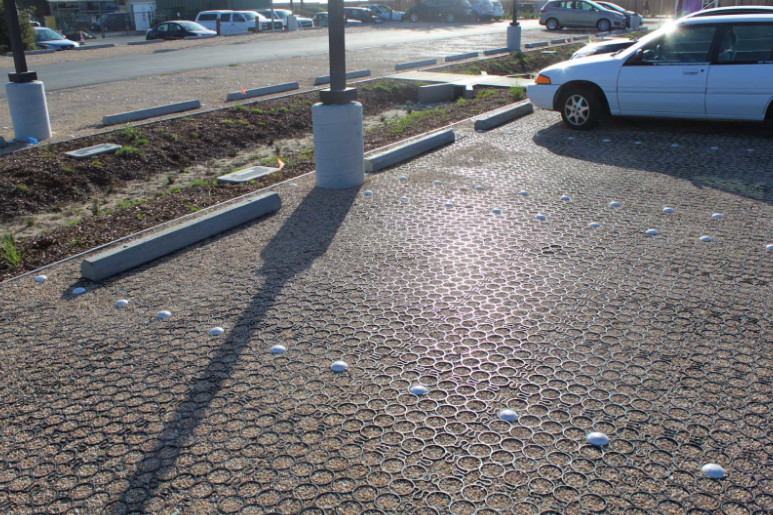
PRO PLUS panels achieve compressive strength above 17,000 psi, verified by ASTM D695.
Key Performance Points:
• Carries trucks and emergency vehicles without rutting
• Maintains infiltration under full load
• Resists lateral movement during turns
Each grid cell confines gravel, transferring weight straight into the base instead of across the surface. The flexible matrix prevents cracking under shock loads, keeping access routes stable, a structural benefit of permeable pavement proven in heavy commercial and municipal applications.
6. Reduces Long-Term Maintenance
Permeable surfaces require no sealing or overlay. Routine care is simple, keep the surface clear so water can move.
Locked aggregate resists displacement, eliminating the regrading common to loose gravel. Decades of use mean no crack repair, joint sealing, or costly resurfacing. Facility managers and homeowners save time and money year after year, confirming that one of the most practical benefits of permeable pavement is long-term financial durability.
7. Handles Freeze–Thaw Cycles
Frozen water destroys sealed surfaces from within. Because these grids drain continuously, little moisture remains to freeze, preventing internal expansion that cracks pavement each winter.
Cold-Climate Advantage: The polymer structure flexes with subgrade movement, keeping surfaces level and intact, no heave, no spalling, no call-backs. Surface ice is reduced since no water is trapped below. For cold-region facilities, this reliability is a proven benefit of permeable pavement backed by field results.
8. Reuses and Restores Resources
Sustainability begins with reuse.
Each panel is molded from post-consumer recycled HDPE, about 3,000 lb of plastic diverted per 1,000 sq ft installed for PRO PLUS with slightly less for PRO LITE. The base replenishes groundwater and reduces reliance on storm-sewer systems.
Using recycled or locally sourced stone adds further environmental value. Builders pursuing LEED certification count this design toward storm-water and recycled-content credits. By keeping rainfall on-site, the system limits erosion and runoff pollution, a measurable benefit of permeable pavement combining structural and ecological performance.
9. Adapts to Any Design

Permeable grids accept a range of aggregates such as limestone or granite — and some specialty infills – so designers can match architectural colors and textures. Turfgrasses, native grasses, and ground cover vegetation can also be used. Panels cut cleanly for curves or edges, and crews appreciate their light weight and fast installation.
Because the interlocking grid maintains full capacity across joints, aesthetic changes never weaken the surface. The result is functional strength with refined appearance, proving the practical benefits of permeable pavement extend to design flexibility.
10. Eases Code Compliance
Modern standards require on-site storm-water control. Permeable pavement meets those demands at the surface, often eliminating underground detention systems.
Compliance Highlights:
• Aligns with EPA MS4 objectives
• Supports LEED v4 SS Credit 6.1
• Simplifies municipal plan review
Verified infiltration and load data speed approvals and reduce design complexity. With fewer buried structures to maintain, public and private projects gain faster permitting and lower lifecycle cost, the final benefit of permeable pavement linking performance to compliance.
TRUEGRID: Delivering Strength, Drainage, and Long-Term Value
TRUEGRID permeable pavers combine load-bearing strength, open-cell drainage, and sustainable materials in one modular system. Each installation supports traffic while allowing rainfall to recharge the ground below. Contact our team today for specification support or detailed performance data.