
ADA Compliant Permeable Paver Case Study: Boy Scouts Improve National Park Access With TRUEGRID
An ADA compliant permeable paver helps parks, civic sites, and public facilities improve access without turning every route into a conventional concrete path. At New River Gorge National Park & Preserve, Boy Scouts helped complete accessibility improvements at Glade Creek, where accessible work included a fishing area, trailhead and trail section, picnic area, camping area, and parking site. For planners evaluating ADA compliant pavers, the project shows how accessible paving can support public access, stormwater movement, and natural-site sensitivity at the same time.
The Project At New River Gorge National Park
At Glade Creek, the accessibility work tied multiple public-use areas into one coordinated park project.
Glade Creek Accessibility Improvements
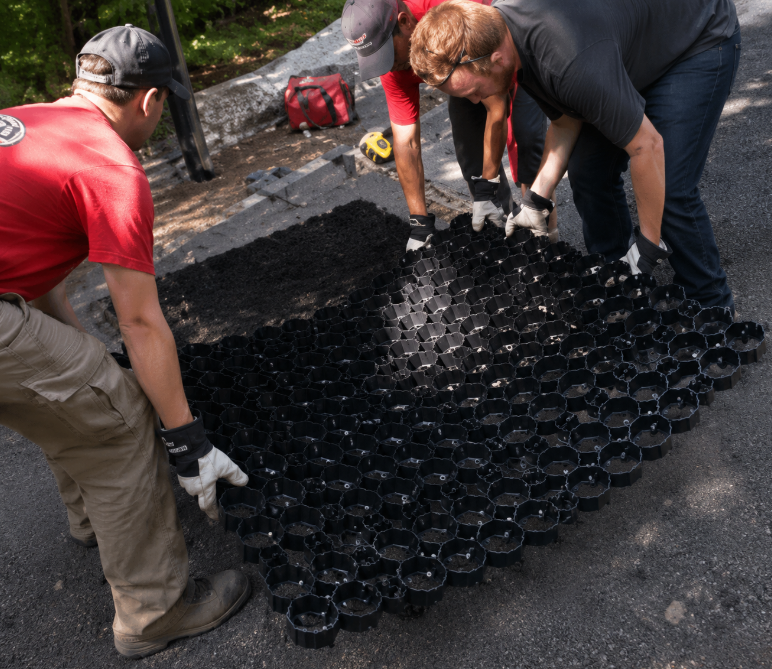
The Glade Creek Accessibility Project was completed during the 2013 National Scout Jamboree near New River Gorge National Park & Preserve. In July 2013, 212 scouts worked with National Park Service staff and access specialists to complete improvements across Glade Creek recreation areas. The Boy Scouts project connected TRUEGRID permeable paving with ADA-focused access work in a historic national park.
The work extended beyond one access point. The larger Glade Creek project included an accessible fishing area, trailhead and trail section, picnic area, and camping and parking site. Accessible park design often has to connect vehicles, paths, outdoor recreation areas, and scenic destinations through surfaces that remain usable after rain, foot traffic, and routine park use.
A Civic Access Project With Park Design Value
Park access is different from building-entry access. A park surface may need to handle rain, soil movement, gravel migration, erosion pressure, tree roots, and historic landscape character in a protected outdoor setting.
Accessible permeable paving helps parks and civic sites stabilize outdoor routes while allowing stormwater to move through the pavement profile. TRUEGRID systems are also used in parks where pathways, parking areas, and high-use outdoor spaces need stable footing and drainage control.
Why Permeable Pavers Fit Park Accessibility Projects

Accessible outdoor routes have to perform in weather, traffic, and changing ground conditions. They need to remain usable for people using wheelchairs, walkers, canes, carts, and other mobility aids.
That means the surface must resist the loose, shifting conditions that make some gravel paths difficult to navigate. A properly specified permeable system can also reduce standing water and rutting when the base, grid, infill, edge conditions, and maintenance plan are designed for the site.
In protected landscapes, surface choice affects both access and site character. ADA compliant permeable pavement can support a more stable route without imposing the same hardscape profile as conventional concrete.
What Makes TRUEGRID ADA Compliant When Installed Per Spec
ADA compliance depends on the finished surface condition, not the grid product alone.
Firm, Stable, And Slip-Resistant Surface Requirements
Permeable pavers can be ADA compliant when the finished surface is designed, installed, and maintained as a firm, stable, and slip-resistant route. ADA surface requirements evaluate whether the completed route remains usable, consistent, and accessible for mobility devices, pedestrians, and parking users.
The grid is only one part of compliance. The finished surface must control movement, level changes, loose material, slope, drainage, and ongoing maintenance conditions.
Aggregate Fill, Flush Finish, And Transition Control
For gravel-filled TRUEGRID ADA applications, the key specification is the finished surface: angular aggregate fill, installed flush level, with transitions kept under ½ inch by maintaining the surface periodically.
Those details determine whether an ADA compliant gravel surface performs as a usable field condition. Angular aggregate helps lock the fill in place. A flush finish keeps the grid from becoming a raised edge. Controlled transitions help wheels, walkers, and foot traffic move from one surface to the next without catching or dropping.
Product Specs At A Glance
Different ADA applications need different TRUEGRID configurations. Product selection for ADA compliant pavers should account for load, route purpose, maintenance access, infill, turning movements, and whether the project needs gravel-filled or gravel-free surface behavior.
| TRUEGRID Product | ADA Use Case | Surface Type | Best Fit |
|---|---|---|---|
| TRUEGRID PRO LITE | Light-to-moderate pedestrian, cart, trail, and light vehicle areas where the project conditions support the surface design | Gravel or grass infill | Paths, pedestrian areas, trails, community green space, and lower-load civic areas |
| TRUEGRID PRO PLUS | Commercial, public, parking, and heavier-use ADA applications when installed per spec | Gravel or grass infill | Accessible parking, park lots, municipal sites, civic facilities, and high-use public routes |
| TRUEGRID ROOT | Grass stabilization and reinforcement for pedestrians, carts, and light vehicles | Existing grass areas prone to rutting | Overflow parking, walkways, venue surfaces, amphitheaters, and grass trails |
TRUEGRID paver systems are made from 100% post-consumer recycled HDPE and manufactured in the USA, which supports projects where accessibility, permeability, material sourcing, and site context all matter.
Product selection starts with the way the surface will be used, not the product name alone. PRO LITE fits lighter pedestrian and moderate-use areas, PRO PLUS fits heavier public and parking applications, and ROOT provides protection on existing grass surfaces to prevent sinking.
For long-term planning, surface life should be evaluated by product selection, base design, loading, infill condition, drainage, and maintenance, because ADA performance depends on the finished surface remaining usable over time.
Other ADA TRUEGRID Applications
Beyond the national park setting, TRUEGRID can support accessible routes in parks, campuses, municipal facilities, trailheads, event areas, and public parking environments when the correct product and installation details are matched to the site.
For an ADA compliant parking surface, permeable accessible parking design must account for access aisles, markings, slopes, transitions, route connections, and maintenance. For park paving, the surface must also respond to drainage, erosion, landscape context, and visitor movement.
Plan Accessible Permeable Surfaces With TRUEGRID
TRUEGRID helps project teams evaluate accessible paving options for parks, civic spaces, parking areas, and public routes. ADA parking requirements affect stall dimensions, signage, route planning, surface conditions, and compliance details before a project moves from concept to specification. Use those requirements to evaluate the route and product configuration before final specification.
Frequently Asked Questions
Accessible surface decisions usually come down to compliance, infill, route use, and product selection.
Are Permeable Pavers ADA Compliant?
Permeable pavers can be ADA compliant when the finished route is installed and maintained as firm, stable, and slip-resistant. The design must also control transitions, slope, loose material, drainage, and route continuity.
What Makes A TRUEGRID Surface Firm, Stable, And Slip-Resistant?
A compliant TRUEGRID surface depends on the correct product, base preparation, infill, compaction, flush finish, edge restraint, and maintenance. The grid and fill must work together so the surface does not shift, rut, pond water, or create abrupt level changes.
What Aggregate Size Should Be Used For ADA Compliant Gravel Surfaces?
For gravel-filled TRUEGRID ADA applications, use ½” to ¾” angular aggregate and install it filled flush with the grid. Transitions should remain under ½ inch so wheels, walkers, and foot traffic can move across the surface without abrupt changes. Areas should be checked periodically for fill levels.
Can TRUEGRID Be Used For Accessible Park Paths And Trailheads?
TRUEGRID can be used for ADA pathway pavers and accessible permeable paving in parks when the product, infill, slope, base, and maintenance plan fit the route. The Glade Creek project shows how accessible outdoor improvements can connect recreation areas, trail access, parking, and public-use spaces.
Has TRUEGRID Been Used In A National Park Accessibility Project?
Yes. The Boy Scouts national park project connects TRUEGRID’s ADA compliant permeable paver application with accessibility improvements in a National Park Service setting at New River Gorge National Park & Preserve. The Glade Creek work reached multiple public-use areas in the park.
Which TRUEGRID Product Works Best For ADA Applications?
Choose PRO PLUS for heavier gravel-filled parking and public-use areas, PRO LITE for lighter pedestrian or moderate-use routes, and ROOT when existing grass areas need to be stabilized for light use.
